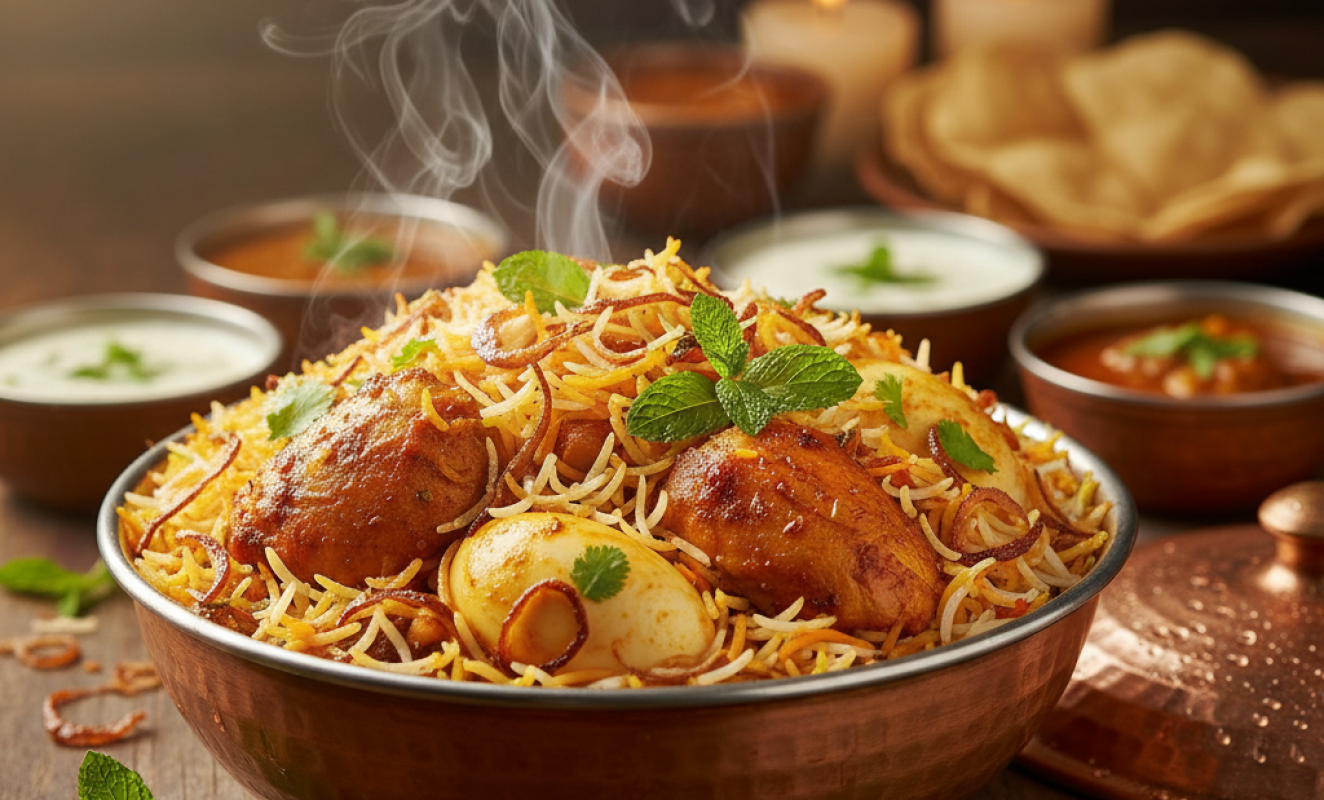
What Makes a Biryani Worth the Wait? The Science of Patient Cooking
There’s a moment in every biryani lover’s journey when they realize something important: the best dishes aren’t rushed. They’re built. Layer by layer, spice by spice, grain by grain. If you’ve ever wondered why your attempts at home never quite matched the biryani you get from an authentic indian restaurant—or why you should seek out best indian restaurant brampton has to offer—it comes down to one word: patience. At 7 Spice Bistro, we’ve spent years perfecting this ancient craft, and today we’re pulling back the curtain on exactly what goes into creating a biryani that’s truly worth savoring.
QUICK ANSWER
Biryani requires 45-90 minutes of careful cooking because each step—from parboiling rice to slow-cooking meat with spices—cannot be accelerated without compromising flavor, texture, and the delicate balance that makes authentic biryani exceptional. Shortcuts destroy the very essence of the dish.
Understanding the Biryani: More Than Just Rice and Curry
If you’ve been searching for “indian food near me” in Brampton or Mississauga, you’ve likely encountered biryani on menus. But do you know what you’re actually eating?
Biryani isn’t a curry served over rice. It’s not rice mixed with spices and meat. Biryani is a complete, unified dish where every component must reach perfect harmony at the exact same moment. The rice grains must be separate yet infused with flavor. The meat must be tender and aromatic. The spices must be balanced—present but not overwhelming. And the dum (the steam-cooking process) is what brings it all together.
Think of it like orchestral music. You wouldn’t have each instrument play at random times and expect a symphony. Every note, every timing, every crescendo must align. That’s biryani. At our Brampton location, we approach every biryani we prepare with this exact philosophy. When you visit 7 Spice Bistro in Brampton, you’re not just ordering food—you’re experiencing the result of meticulous timing and technique.
The Five Critical Phases of Biryani Preparation
Professional biryani cooks follow a time-tested sequence. Let’s break down what happens behind the scenes:
Phase One: The Marination
The journey begins hours before cooking. Meat (whether lamb, chicken, or goat) is marinated in yogurt, ginger-garlic paste, and spices. This isn’t decoration—it’s foundation-building. The yogurt’s acid begins to break down proteins, making the meat more tender. The spices begin their slow infusion. We typically marinate for 4-6 hours, sometimes overnight. This phase alone eliminates any possibility of shortcuts.
Phase Two: Parboiling the Rice
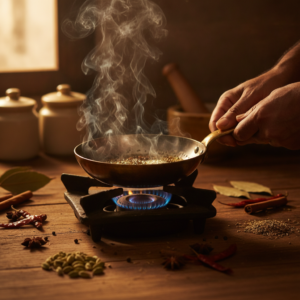
Biryani rice (typically basmati) must be parboiled to exactly 70% doneness. Too little cooking, and the final product will be crunchy and uneven. Too much, and you’ll have mush. This precision is why restaurant biryani tastes different from home attempts. We use a ratio of 1 part rice to 3 parts water with whole spices—cinnamon, bay leaves, cardamom, and cloves. The rice cooks for roughly 5-6 minutes. This creates a neutral base that will absorb the meat’s flavors during the final dum phase.
Phase Three: Creating the Biryani Base
While rice parboils, the meat cooks separately in a heavy-bottomed pot with ghee, onions, and aromatics. Onions are fried golden—not brown, not dark—golden. They’re removed and set aside. The marinated meat then begins cooking in this ghee and onion-infused oil, releasing its juices and beginning to tenderize. This phase takes 15-20 minutes of active cooking.
Phase Four: The Dum Assembly
Here’s where the magic happens. In a heavy, sealed pot, we layer: meat with its juices, followed by parboiled rice, then fried onions, fresh herbs (mint and cilantro), and sometimes a small amount of saffron-infused milk. The pot is sealed—traditionally with dough, though we use fitted lids. This traps all the steam inside.
Phase Five: The Dum Cooking (30-45 minutes)
Heat is applied (traditionally on both top and bottom of the pot), and the steam circulates. The rice finishes cooking in the meat’s steam and aromatics. The meat finishes cooking in the gentle, moist environment. Everything flavors everything else. This cannot be rushed. Lower heat for longer is always preferable to high heat for shorter. A good biryani requires 30-45 minutes of dum cooking, depending on the meat and quantity.
Why Shortcuts Don’t Work: The Science Behind Each Step
You might be thinking: “Couldn’t I just cook the rice and meat together from the start?” Or “What if I skip the marination?” The answer reveals why authentic biryani preparation is non-negotiable.
According to research from the Journal of Culinary Science & Technology, protein marinades require a minimum of 2-4 hours for noticeable enzymatic breakdown and flavor penetration. Attempting biryani without proper marination means you’re serving underflavorred meat—no matter how good the final dish looks. The proteins simply haven’t begun their structural transformation.
The parboiling step is equally critical. Rice grains have a specific starch structure. When you parboil rice to 70% doneness, you’re partially gelatinizing the outer starch while maintaining structural integrity in the core. During dum cooking, the remaining starch gelatinizes gradually, absorbing the meat’s flavorful juices without becoming mushy. Cook it fully before the dum phase, and the rice becomes a stodgy paste. Skip parboiling entirely, and you’ll end up with a crunchy, unevenly cooked disaster.
Then there’s the dum phase itself. This ancient technique, documented in historical Indian cooking texts dating back centuries, works because steam is an extraordinarily efficient heat conductor. At atmospheric pressure, steam transfers heat evenly without the harsh, drying effects of direct heat. The sealed environment also ensures that every drop of moisture stays inside the pot, meaning flavors concentrate rather than evaporate. Attempting to cook biryani in an open pot is like trying to create a steam room while leaving the windows open—technically possible, but absolutely ineffective.
“Good biryani requires patience because each chemical transformation—from protein denaturation to starch gelatinization—operates on its own timeline. You cannot compress these processes without breaking the science itself.”
The Temperature Paradox: Why Lower Heat Is Actually Faster
This seems counterintuitive, but it’s fundamental to biryani mastery. Many home cooks and even some restaurants try to speed things up by using high heat during the dum phase. The logic seems sound: higher temperature equals faster cooking.
But here’s what actually happens: high heat causes water to boil violently, creating chaotic steam pockets. The rice on top of the pot cooks faster than the rice at the bottom. The meat’s exterior toughens before the interior becomes tender. Flavors don’t marry—they separate. You end up with a dish that’s technically “done” but completely unbalanced.
At 7 Spice Bistro, when guests from Brampton and Mississauga ask why our biryani takes 45-50 minutes while they’ve had “faster” versions elsewhere, we explain this trade-off. We use moderate heat during dum cooking. The steam rises gently. Heat penetrates gradually and evenly. The meat becomes fall-apart tender. The rice stays separate and fluffy. Is it slower? By maybe 10-15 minutes. Is it better? Infinitely.
According to culinary research from the International Journal of Gastronomy and Food Science, low-temperature cooking (between 180-200°F) results in significantly higher collagen-to-gelatin conversion in tougher meat cuts, producing more tender results than high-temperature cooking (above 300°F) for the same total time investment. This is thermodynamics, not opinion.
What Separates Restaurant Biryani from Home Attempts
When you visit 7 Spice Bistro or search for 7 spice bistro menu options online, you’re looking at dishes created in professional kitchens with dedicated equipment, trained hands, and decades of accumulated knowledge. But what are the actual differences?
Equipment
Professional kitchens use heavy-bottomed brass or copper biryani pots (called handi) that heat evenly and retain heat consistently. Home cooks often use regular stainless steel pots that develop hot spots. The difference in final texture is noticeable.
Temperature Control
We have burners that let us maintain precise, low-to-moderate heat for extended periods. Most home stoves make this difficult, especially on electric or induction cooktops where temperature fluctuates significantly.
Ingredient Freshness
Our spices are purchased in volume and used regularly, ensuring they’re fresh and potent. Home cooks often use spices that have been sitting in cabinets for months or years, losing aromatic compounds and effectiveness.
Ratio Precision
We measure everything by weight and volume, following tested recipes refined over years. Home attempts often rely on “pinches” and “handfuls,” creating inconsistent results.
Experience
Our team knows what properly marinated meat looks and feels like. We can tell by sound when the dum phase is finishing. We understand how different meats behave differently. This intuition develops only through repetition.
This is why when you’re searching for “best indian restaurant brampton” or considering whether to try making biryani at home, the answer becomes clearer. You’re not just paying for ingredients—you’re paying for expertise, equipment, and consistency that take years to develop.
The Hidden Layer: Why Saffron Timing Matters More Than Quantity
One of the most misunderstood aspects of biryani is saffron. Home cooks often load it in liberally, assuming more saffron equals better biryani. Professional cooks know better.
Saffron’s compounds—crocin (which provides color) and safranal (which provides aroma)—are volatile and sensitive to heat. Safranal begins to degrade above 160°F. This means:
If you add saffron too early, it loses its aromatic punch long before eating. If you add it too late, it doesn’t fully infuse. The perfect technique involves soaking saffron strands in warm milk (not boiling) for 15-20 minutes before the dum phase. Then, it’s drizzled over the rice layering—late enough to preserve aroma, early enough to provide color and subtle flavor.
At our Brampton bistro, we use approximately 0.3-0.5 grams of saffron per serving—enough for color and subtle fragrance, never overwhelming. Many restaurants use twice this amount, which actually diminishes the eating experience by creating a harsh, medicinal flavor.
Respecting the Tradition While Moving Forward
At 7 Spice Bistro in Brampton and Mississauga, we’re passionate about honoring the centuries-old tradition of biryani while applying modern food science to ensure consistent excellence. This isn’t about reinventing the wheel—it’s about understanding exactly why the wheel works.
When you eat biryani that’s been prepared with patience and precision, you’re tasting the accumulated wisdom of generations. You’re experiencing chemistry and tradition in perfect harmony. And yes, you’re waiting a bit longer than you might at a fast-casual spot that prioritizes speed over quality.
But that wait? It’s part of the experience. It tells you that care is being taken. That shortcuts aren’t being considered. That someone in the kitchen respects both the tradition and you enough to do things right.
The next time you’re searching for 7 spice bistro or any authentic indian restaurant near you, remember this: the best dishes aren’t rushed. They’re built. And the wait is absolutely worth it.
Ready to Experience Biryani Done Right?
Stop wondering why restaurant biryani tastes different. Visit 7 Spice Bistro in Brampton and taste the difference that patience and precision make. Our team is excited to share the craft behind every dish on our menu.
✍️About the Author
The 7 Spice Bistro culinary team brings together twenty years of combined experience in authentic Indian cooking, food science, and hospitality. We’re committed to educating our Brampton and Mississauga community about the craft behind every meal we prepare.
Written by the 7spicebistro.com Team
Our team brings deep expertise — 7spicebistro.com.
Related Articles
- The Rice Situation: Basmati, Jasmine & Brown—Which Base Matters Most for Your Curry
- The Coconut Milk Spectrum: Light, Medium & Rich—Why Your Curry Thickness Matters
- The Biryani Renaissance: Why Brampton Foodies Are Finally Getting It
- Seafood in Indian Cuisine: What Makes 7 Spice Bistro's Fish & Shrimp Dishes Stand Out