The Humble Bowl That Started Everything
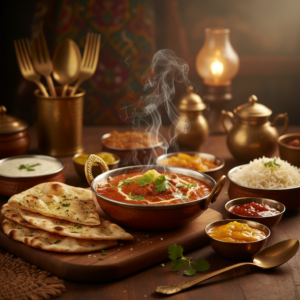
The lentil love story: why dal dishes are more complex than they seem is a question we get asked surprisingly often — usually by a first-time guest who has just taken their first spoonful of our slow-cooked dal makhani and gone very, very quiet. That kind of quiet is our favourite sound in the restaurant. It means something clicked. It means a dish that looks simple on the surface — a pot of simmered lentils, a ladleful of warmth — has done what great food always does: it has told a story without words.
Here in Brampton, where our community stretches across cultural roots from Punjab to Gujarat to Tamil Nadu and beyond, dal is not a side dish. It is not an afterthought. In 2026, as more families and food enthusiasts across Brampton and Mississauga rediscover traditional Indian cooking with fresh eyes, we find ourselves talking about lentils more passionately than ever before. And honestly? We think it is long overdue.
According to the Food and Agriculture Organization of the United Nations (FAO), lentils are among the oldest cultivated crops on Earth, with evidence of cultivation dating back over 8,000 years in the Near East and South Asia. The FAO’s International Year of Pulses report highlights lentils as one of the most nutrient-dense, sustainable protein sources available to humanity. But here is the thing — knowing that a lentil is ancient and nutritious tells you almost nothing about why a bowl of dal tastes the way it does when it is made right. That part is all technique, tradition, and a great deal of love.
⚡ QUICK ANSWER
Dal dishes are far more complex than they appear because authentic preparation involves multi-stage cooking, layered spice blooming, precise heat management, and the careful selection of lentil variety — each choice dramatically changing the final flavour, texture, and nutritional profile. At 7 Spice Bistro, we treat every dal on our menu as a full culinary composition, not a simple soup.
What Makes Dal So Different From Other Indian Dishes?
Dal is unique because it demands patience at every single stage — there is no shortcut that does not show up on the plate. Most people assume that cooking lentils is straightforward: boil, season, serve. But authentic Indian dal preparation involves a series of deliberate decisions that begin long before a single lentil touches water.
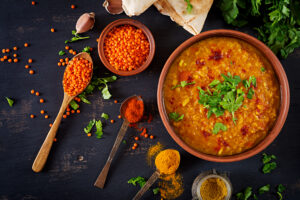
The first decision is variety. India alone recognizes more than fifty commercially cultivated types of lentils and legumes used in dal preparations. Masoor dal (red lentils) breaks down into a silky, almost creamy consistency. Chana dal (split chickpeas) holds its shape and delivers a nuttier bite. Urad dal (black lentils) absorbs fat beautifully and becomes indulgently rich when slow-cooked with butter and cream — as in the beloved dal makhani. Toor dal (split pigeon peas) is the everyday staple of South Indian and Gujarati cooking, light and tangy when paired with tamarind. These are not interchangeable. Swapping one for another does not simply change a flavour — it changes the soul of the dish.
The second decision is the tarka — or tadka — the bloomed spice tempering that is poured hot over the finished dal. A tarka is where a cook’s personality lives. Mustard seeds that pop in ghee, curry leaves that crackle, dried red chilies that deepen and sweeten in the heat, fresh garlic that turns golden in seconds before it would burn — every element must hit the pan in precise sequence. Time the garlic wrong by thirty seconds and the entire tarka turns bitter. This is not exaggeration. This is chemistry.
“A great tarka is the difference between a dal that nourishes the body and one that nourishes the memory. We’ve seen guests close their eyes on the first spoonful — that moment is what we cook for every single day at 7 Spice Bistro.”
When guests searching for the best Indian food near me find their way through our doors — whether at our Brampton location or when they discover us as an Indian restaurant near me — we want them to understand that they are not eating simple food. They are eating one of the most technically demanding comfort foods on the planet.
Why Does Dal Makhani Take 12 Hours to Make Properly?
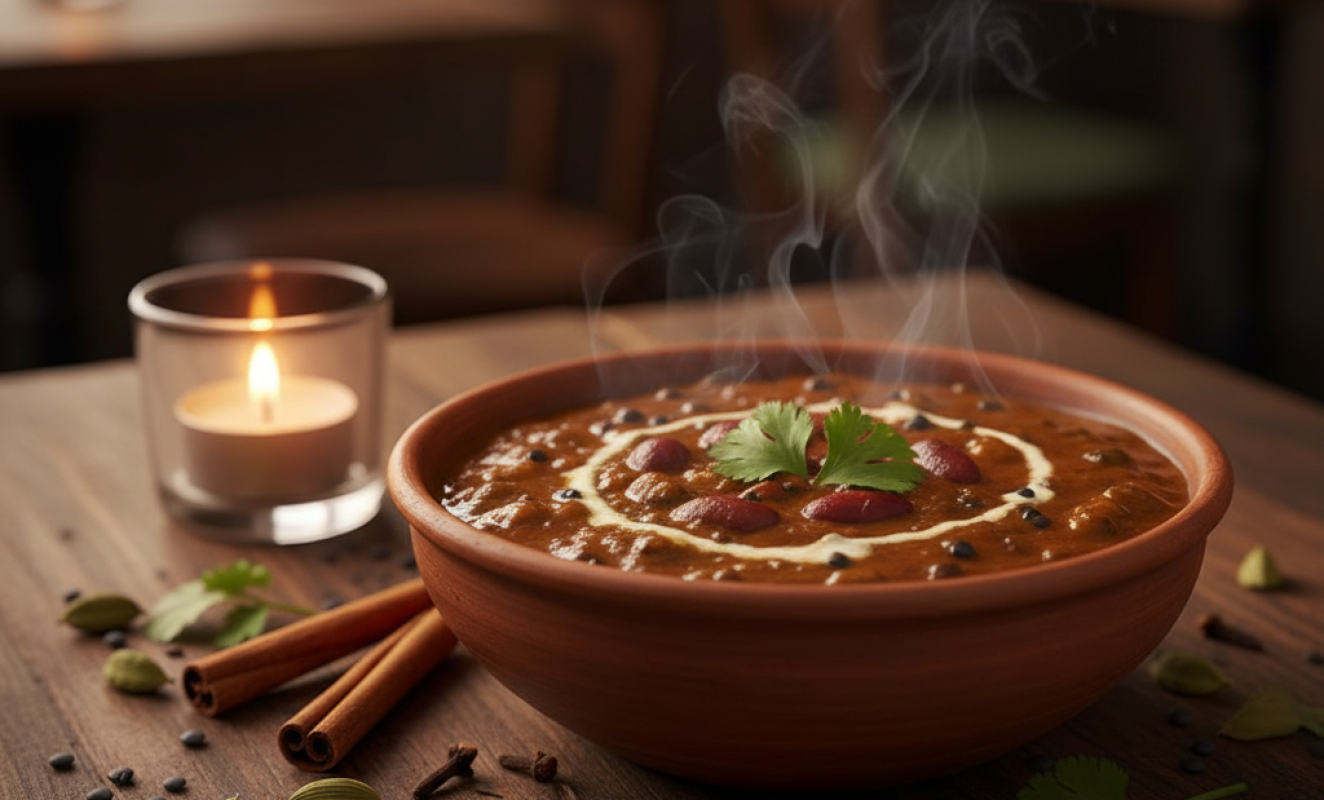
Dal makhani takes 12 or more hours to prepare authentically because the black urad lentils and kidney beans at its core need extended slow cooking to fully soften, absorb the spiced butter base, and develop the deep, layered richness that defines the dish. Speed is the enemy of dal makhani — and any version that arrives in under an hour was not made with traditional technique.
Our dal makhani begins the night before service. The whole black urad lentils are soaked for a minimum of eight hours. This is not optional — it begins the softening process at a cellular level and reduces the cooking time needed without sacrificing depth. After soaking, they are slow-cooked with ginger, garlic, and tomato in a heavy-bottomed vessel at a very low flame. The Punjabi tradition calls for simmering dal makhani on a wood-fired oven — a dhungar technique — overnight, where the residual heat from dying embers does the final work. We honour that spirit with our own slow-heat method in the kitchen.
Then comes the butter. Real butter, stirred in gradually as the dal reduces. Then cream, folded in just before service so it does not split. The result is something that sits at the intersection of hearty and elegant — a bowl that feels like a hug from someone who has been cooking for you all day. Because, quite literally, someone has.
According to a 2023 study published by the National Institutes of Health (NIH), slow-cooked legumes retain significantly higher levels of bioavailable iron and folate compared to quick-pressure-cooked versions — meaning the long preparation method is not just about flavour. It is actually better for you. At 7 Spice Bistro, we take that seriously. Every hour in the pot is an investment in the person sitting across from the bowl.
When people browse the 7 Spice Bistro menu and see dal listed, we always hope they will ask us about it. Because the story behind that single entry is longer and richer than any menu description could hold.
How Dal Fits Into the Larger World of Indian Food in Brampton and Mississauga
Dal fits naturally alongside the full spectrum of Indian cuisine because it acts as both a flavour anchor and a cultural connector — no matter the regional tradition, from Punjabi to Hyderabadi to Goan cooking, there is always a version of dal that belongs. In Brampton and Mississauga, where our guests come from a beautiful mosaic of Indian regional backgrounds, that universality matters deeply to us.
Brampton has one of the highest concentrations of South Asian communities in Canada, and our guests carry their food memories with them. A guest from Rajasthan remembers panchmel dal — five lentils cooked together with bold spices. A guest from Maharashtra recalls varan, a simple toor dal with minimal seasoning that lets the legume speak for itself. A Tamil Nadu family might crave sambar, a thin and tangy lentil broth thick with vegetables and tamarind that bears almost no resemblance to a Punjabi dal tadka — yet both are profoundly, essentially dal.
This is why we approach our menu the way we do at 7 Spice Bistro. We are not trying to flatten Indian food into a single narrative. We are curating a conversation between regional traditions, and dal is one of the most eloquent voices in that conversation. Whether you are joining us in Brampton or visiting our 7 Spice Bistro Mississauga vs. Brampton: How We Serve Two Communities with One Philosophy location, our kitchen philosophy remains the same: cook with intention, cook with context, and never underestimate a bowl of lentils.
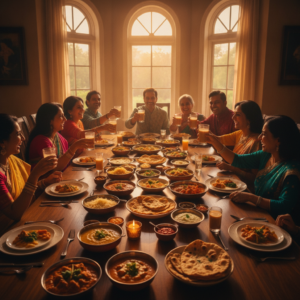
Our menu also reflects the broader dining culture of the area. We know that families who come in for Indian food are often multi-generational — grandparents who grew up eating dal over a wood fire, parents who want a taste of home after a long week, and children discovering these flavours for the first time. A well-made dal threads through all three generations at the same table. We have watched that happen, and it never gets old.
Dal pairs beautifully with the bread traditions of Indian cuisine too. If you are curious about how different breads change the experience, our piece on The Butter Chicken Debate: Traditional Recipe vs. Modern Brampton Interpretations explores how preparation choices shape the entire meal — the same principles apply to your dal pairing decisions. And if you are planning a gathering, our Catering Your Brampton Event: Why Indian Food Impresses Corporate Teams and Family Reunions page will show you how dal and other comfort dishes translate beautifully to larger tables.
Is Dal the Most Underrated Dish on Any Indian Restaurant Menu?
Yes — dal is almost certainly the most underrated dish on most Indian restaurant menus, precisely because its complexity hides behind an unassuming appearance. A richly layered dal that took all night to prepare and a hurriedly made version can look identical in a photograph. The difference only reveals itself in the eating.
We have read the 7 Spice Bistro reviews where guests mention being surprised — genuinely surprised — by how much flavour a bowl of dal delivered. That surprise is bittersweet for us, because it reflects a broader misunderstanding of what dal is. People come in expecting to be wowed by a biryani or a paneer dish, and they leave talking about the dal. We love that. We want more of that.
Part of what makes 7 Spice Bistro stand apart as an Indian restaurant in Brampton — and as a destination for anyone searching for Indian food in Brampton — is our refusal to treat any dish as secondary. The dal on our menu received the same level of recipe development, tasting, and refinement as any protein-forward main. That is a commitment we make to every guest, whether they are dining in for the first time or the fiftieth.
We also want to say something to the families and food enthusiasts who have been exploring Indian food near me searches and have perhaps visited a few places that left them underwhelmed: dal quality is one of the most honest indicators of a kitchen’s overall care. A restaurant that makes dal well, makes everything well. It is a kitchen truth we stand behind completely.
Beyond the restaurant walls, dal has also become a celebrated subject in the global food conversation. Food writers, chefs, and nutritionists have increasingly spotlighted lentil-based dishes as the intersection of sustainability, health, and culinary depth. That recognition is long overdue. We have known it all along — because we grew up eating it, and because we have watched it bring people together across tables in Brampton and Mississauga in ways that are quietly extraordinary.
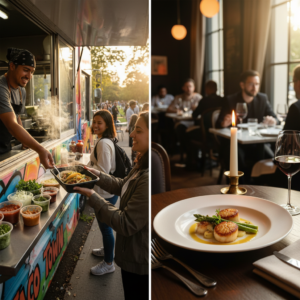
If you have ever walked past a food truck in Brampton or spotted an Indian food truck near me result on your phone and wondered whether you could get a proper dal outside of a sit-down setting — the answer is yes, and the search for it is always worth it. But when you want the full experience, the slow-cooked version, the one that has been on the heat since the night before, a proper dining table is where that story is best told.
Dal Beyond Lentils: The Flavour Companions That Complete the Story
Dal never exists in isolation on a great Indian table — it is always part of a conversation with rice, bread, pickles, raita, and sometimes a protein dish that plays against its warmth. Understanding those companion relationships is part of understanding why dal tastes the way it does in context.
Plain basmati rice is the most traditional partner. The rice absorbs the dal and becomes something greater than either ingredient alone — a combination so fundamental to Indian home cooking that it has its own name in many regional languages. Dal-chawal in Hindi. Pappu annam in Telugu. Paruppu sadam in Tamil. The pairing is ancient, beloved, and nutritionally complete — a full amino acid profile from two plant sources, a fact that traditional cooks understood intuitively long before modern nutrition science confirmed it.
At 7 Spice Bistro, we encourage guests to think about their entire table order when dal is involved. A rich, buttery dal makhani calls for something acidic alongside it — a tomato-onion kachumber salad, or a sharp mango pickle. A lighter, tangy toor dal wants something neutral and absorbent — plain jeera rice or a soft phulka roti. These pairings are not rules so much as they are listening — to the dish, to the season, to what your palate needs in that moment.
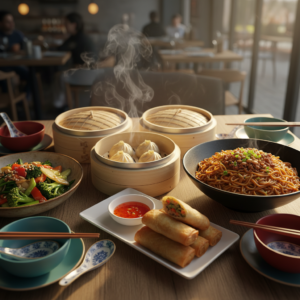
We also serve dishes that complement the dal experience from an entirely different regional angle — our hakka food options bring a distinct Indo-Chinese depth that many of our Brampton and Mississauga regulars love to explore alongside a traditional Indian meal. The interplay between the earthy warmth of a well-made dal and the bold, stir-fried intensity of Hakka-style cooking is, frankly, one of the most interesting flavour journeys on our menu. We love when guests are adventurous enough to try both in the same visit.
The seven spice bistro name itself is a nod to this philosophy of layered complexity. Seven spices. Not one. Not two. Seven — because great Indian cooking, from a slow-simmered dal to a boldly seasoned protein dish, is always about balance, always about the relationship between elements, never about a single dominant note. That philosophy starts in a pot of lentils and radiates outward across everything we cook.
Ready to Taste the Real Story?
Whether you are a long-time lover of dal or discovering it properly for the first time, our team at 7 Spice Bistro is ready to serve you a bowl that changes the way you think about lentils. Join us in Brampton or Mississauga — and let the food do the talking.
✍️ Written by the 7 Spice Bistro Team
We are the cooks, hosts, and food storytellers behind 7 Spice Bistro in Brampton and Mississauga — a team that believes every dish has a history worth knowing. From slow-cooked dals to bold Hakka-inspired plates, we write and cook from the same place: genuine love for Indian cuisine and the communities we serve.
Frequently Asked Questions
What is the difference between dal tadka and dal makhani?
Dal tadka is typically made with yellow toor or chana lentils and finished with a hot spice-bloomed tarka poured over at the end, giving it a bright, punchy flavour profile. Dal makhani uses whole black urad lentils slow-cooked for hours with butter and cream, producing a richer, more indulgent result. The two dishes share a name category but are entirely different in technique, texture, and taste — at 7 Spice Bistro, both are prepared with full traditional method and neither is ever rushed.
How do I know if a restaurant is making authentic dal or a shortcut version?
Authentic dal has a depth and body that develops only through slow cooking — you will taste layers of flavour that unfold rather than a flat, one-note broth. If a dal arrives within minutes of ordering and tastes thin or overly salty, it is likely a pressure-cooked or pre-packaged version. At 7 Spice Bistro, our dal is prepared in large, slow-cooked batches using traditional technique — our guests consistently note in their reviews that the depth of flavour is what sets it apart from other Indian restaurants in Brampton and Mississauga.
Why is the tarka (tadka) poured on at the end of dal preparation?
The tarka is added last because the high-heat blooming of spices in fat releases fat-soluble flavour compounds that would be lost or dulled if cooked into the dal from the beginning. Pouring it hot over the finished dal preserves the brightness and aromatic intensity of ingredients like mustard seeds, curry leaves, and dried chilies — creating a layered flavour contrast between the slow-cooked base and the vivid, crackling tarka on top. This technique is one of the foundational skills that distinguishes authentic Indian cooking from simplified versions.
Can I order dal as a complete meal at 7 Spice Bistro, or is it just a side dish?
Absolutely — dal paired with rice or bread is a deeply satisfying, nutritionally complete meal and many of our guests in Brampton and Mississauga order it exactly that way. We encourage it. A bowl of our dal makhani with jeera rice and a side of pickled vegetables is a full, balanced, and incredibly flavourful dining experience on its own. We never present dal as an afterthought on our menu — it is a centrepiece dish that deserves to be ordered with as much enthusiasm as any main course we serve.