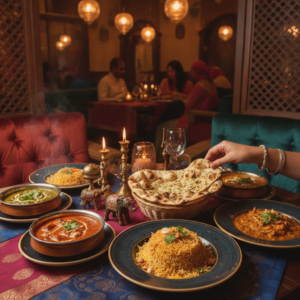
The question of restaurant vs. food truck in summer: temperature, freshness & why it matters for your meal has never been more relevant than it is right now in 2026, as Brampton and Mississauga’s dining scene continues to explode with options ranging from mobile carts to full-service kitchens — and as customers grow increasingly savvy about what actually goes into the food on their plate.
Every summer, we hear the same conversation play out: someone searches “food truck near me” or “indian food truck near me” while standing in the heat of a Brampton parking lot, grabs a quick plate, and wonders why the flavours feel a little flat, the chicken seems slightly off, or the curry tastes nothing like what they had at a sit-down Indian restaurant near them last week. There’s a real, practical answer to that — and it has everything to do with temperature control, ingredient freshness, and the structural differences between a licensed restaurant kitchen and a mobile food unit operating in 35°C summer heat.
At 7 Spice Bistro, we’ve built our entire philosophy around delivering restaurant-quality Indian and Hakka cuisine with the rigour that temperature-sensitive cooking demands. We want to share what we know — not to dismiss food trucks wholesale, because many are excellent — but to help you make an informed, delicious choice, especially when the summer sun is working against food safety and flavour.
⚡ QUICK ANSWER
In summer, a full-service Indian restaurant like 7 Spice Bistro in Brampton offers significant advantages over food trucks in three critical areas: temperature-controlled storage for fresh proteins and dairy-based sauces, professional kitchen infrastructure that maintains food-safe cooking temperatures regardless of outdoor heat, and the ability to prepare complex dishes like biryani, tandoori items, and Hakka food to order — rather than holding them in warming trays under the sun. If you’re searching for the best Indian restaurant in Brampton or Mississauga this summer, indoor dining isn’t just more comfortable — it’s measurably safer and more flavourful.
Why Does Summer Heat Actually Affect the Food on Your Plate?
Summer heat directly compromises food safety and flavour quality because bacteria multiply rapidly between 4°C and 60°C — the temperature range that food scientists call the “danger zone.” When outdoor temperatures climb above 30°C in Brampton and Mississauga, a food truck’s refrigeration and holding systems face enormous strain just to keep ingredients within safe parameters, let alone to maintain the precision that Indian cooking requires.
According to Health Canada’s food safety guidelines, perishable foods left in the danger zone for more than two hours should be discarded — and in outdoor summer conditions, that window can shrink to just one hour. For a busy food truck handling marinated chicken, paneer, cream-based sauces, and fresh chutneys simultaneously, that’s a genuinely narrow margin to operate within safely.
Indian cuisine specifically is vulnerable in ways that simpler street food isn’t. Dishes like butter chicken, dal makhani, and Hakka noodles rely on dairy, proteins, and fresh aromatics that degrade quickly under heat. A restaurant kitchen with proper walk-in refrigerators, line-coolers at every station, and controlled ambient temperature can maintain those ingredients at peak freshness from the moment they arrive from suppliers to the moment they hit your plate. A food truck operating on a sun-baked parking lot in the middle of July is fighting physics at every step.
“The single biggest flavour difference between a great sit-down Indian meal and a rushed food truck version in summer isn’t the recipe — it’s whether the cream was cold, the spices were freshly bloomed, and the protein was never compromised by ambient heat.”
This is why at 7 Spice Bistro, we invested heavily in our kitchen infrastructure in both our Brampton and Mississauga locations. Our team knows that a perfectly spiced masala means nothing if the chicken it coats was held at an unsafe temperature for even a short window during prep. Every dish starts cold and ends hot — and that chain never breaks.
What Are the Real Operational Differences Between a Restaurant Kitchen and a Food Truck in Summer?
The operational gap between a full-service restaurant and a food truck in summer is far wider than most diners realise. Restaurants have dedicated cold storage, separate prep areas, full ventilation systems, and the physical space to handle complex multi-component dishes simultaneously — advantages that fundamentally change what’s possible on the plate.
Storage and Refrigeration
A licensed restaurant kitchen operates with industrial walk-in coolers and freezers that maintain consistent temperatures regardless of what’s happening outside. Walk-in coolers typically hold between 1°C and 4°C, protecting marinated meats, fresh paneer, cream, yogurt, and produce at every stage of prep. Food trucks rely on commercial refrigerators and coolers built into a compact unit — equipment that works well in moderate weather but can struggle to maintain safe temperatures when ambient outdoor heat is 33°C or above and the unit has been running all day through lunch service.
For Indian food, this matters more than almost any other cuisine. Our marinades for tandoori items contain yogurt, which is a live dairy product. Our butter chicken sauce contains cream. Our Hakka food preparations include fresh vegetables and eggs. These aren’t ingredients that forgive poor refrigeration — they show it, in both flavour and safety.
Cooking Temperature Precision
Our tandoor oven in Brampton operates at approximately 480°C — a temperature that’s physically impossible to achieve consistently in a mobile unit. Tandoori chicken cooked at that temperature develops a specific char, a sealed crust, and a juicy interior that simply cannot be replicated on a flat griddle or a standard gas burner, no matter how skilled the cook. When someone searches for the best Indian restaurant in Brampton expecting authentic tandoor work, they’re expecting an infrastructure that costs tens of thousands of dollars to install and maintain properly.
Ventilation and Ambient Cooking Conditions
A full restaurant kitchen has commercial hood ventilation that removes heat, smoke, and steam from the cooking environment — keeping the kitchen temperature controlled even during peak service. Food trucks in summer become intensely hot internal environments. That heat affects the cook, affects timing, and ultimately affects your food. When a cook is working in 45°C conditions inside a truck while it’s 33°C outside, the margin for error on delicate spice-blooming, sauce reduction, and protein timing shrinks considerably. Great food requires focus, and extreme heat steals focus.
We say this with genuine respect for the food truck industry — running a mobile unit is genuinely hard work, and many operators do it beautifully. But when you’re choosing where to eat Indian food this summer, understanding these structural realities helps you set the right expectations for each format.
How Does Ingredient Freshness Translate Into Flavour — Especially for Indian and Hakka Cuisine?
Freshness in Indian and Hakka cuisine is the single most impactful variable in flavour quality — more than the recipe, more than the chef’s experience, and more than the spice brand. When ingredients are cold, properly stored, and cooked at the right moment, the result is a layered, vibrant dish. When they’ve been compromised by heat or time, every subsequent step of cooking compensates for something that was already lost.
According to a study published in Food Control (2021), temperature abuse during food storage and transport is among the leading contributors to both foodborne illness and measurable flavour degradation in cooked protein dishes — reinforcing what experienced Indian restaurant chefs have long understood intuitively: the cold chain is as important as the spice blend.
At 7 Spice Bistro, our approach to sourcing is built around this reality. We source fresh proteins and produce on a schedule designed to minimise time between delivery and service. Our team preps aromatics — ginger, garlic, fresh green chilies, curry leaves — daily, because these ingredients lose their volatile compounds within hours of cutting. The difference between freshly grated ginger and ginger that sat cut for six hours in a warm environment is something your palate will notice even if you can’t name it.
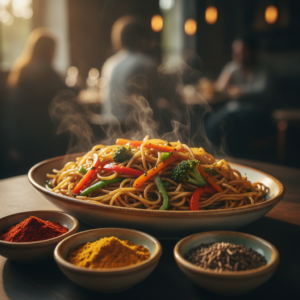
For our Hakka food menu — Indo-Chinese dishes like Hakka noodles, chili chicken, and Manchurian — freshness is equally critical. These dishes are wok-tossed at high heat over a very short cooking window, which means the vegetables need to be crisp, the proteins need to be properly marinated from cold, and the sauces need to be balanced before they hit the wok. There’s no room for pre-cooking and holding in Hakka cuisine — it’s a format that demands service from the cook to the customer in under three minutes.
“Hakka food is perhaps the most unforgiving format we cook — every element has to be fresh, fast, and fiercely hot when it leaves the kitchen. That’s why we never pre-batch and hold Hakka dishes; it would destroy everything that makes them great.”
If you’re looking for Indian food near you this summer and you want that freshness guarantee, a sit-down restaurant with a full kitchen is the format that can honestly make that promise. We do — and we back it up daily.
Our Seafood in Indian Cuisine: What Makes 7 Spice Bistro’s Fish & Shrimp Dishes Stand Out piece goes deep on exactly this topic — because seafood is the most temperature-sensitive protein category we handle, and it illustrates perfectly why our cold chain discipline exists.
Is a Food Truck Ever the Right Choice — and Where Does It Fall Short for Complex Indian Cuisine?
Yes — food trucks genuinely excel in specific contexts, and dismissing them entirely would be unfair and inaccurate. For certain simple, robust dishes that hold well and don’t require complex temperature management, a well-run food truck can deliver an excellent experience. The issue arises when the cuisine’s complexity exceeds what the format can reliably support — and Indian food, in its full traditional expression, almost always exceeds that threshold.
Here’s an honest look at where food trucks work well and where they structurally struggle when it comes to Indian and Hakka cooking in a Brampton or Mississauga summer:
| Dish / Category | Food Truck Capability (Summer) | Full Restaurant Capability | Key Limitation in Truck Format |
|---|---|---|---|
| Samosas / Fried Snacks | Good — holds well, simple fry | Excellent — fresh filling, consistent oil temp | Oil temperature fluctuates in heat; filling prep limited |
| Butter Chicken / Curry Dishes | Limited — cream sauces at risk | Excellent — fresh cream, precise simmer | Dairy safety risk in ambient heat; holding degrades sauce |
| Tandoori / Clay Oven Items | Not achievable — no tandoor possible | Authentic — 480°C clay oven | Physical impossibility of installing a tandoor in a truck |
| Hakka Noodles / Wok Dishes | Possible but compromised | Excellent — high BTU wok burners | Wok heat insufficient; vegetables suffer in heat holding |
| Biryani | Very difficult — pre-cooked, held | Authentic dum method achievable | Dum cooking requires sealed pots and consistent oven heat |
| Seafood Dishes | High risk — cold chain fragile | Excellent — dedicated cold storage | Seafood spoils fastest; outdoor heat is direct enemy |
The table above tells a consistent story: the more complex and temperature-sensitive the dish, the wider the gap between what a food truck can deliver in summer and what a full-service Indian restaurant like ours can produce. That’s not a criticism — it’s physics and kitchen science.
When families in Mississauga and Brampton search for restaurants near me on a summer evening, they’re often weighing convenience against quality. Our position is simple: for a quick snack at a festival, a food truck with samosas is a great choice. For a full Indian meal — with biryani, tandoori items, Hakka noodles, and a rich curry — come to a restaurant that has the infrastructure to do it right.
If you’re curious about how we approach the same standards across both our locations, 7 Spice Bistro Mississauga vs. Brampton: How We Serve Two Communities with One Philosophy explains the consistency we’re committed to, whether you’re finding us through “7 spice bistro mississauga” or pulling up at our Brampton home.
What the 7 Spice Bistro Menu Offers That Addresses Every Summer Freshness Concern
The 7 Spice Bistro menu is designed with temperature integrity built into every section — from starters through mains to our Indo-Chinese Hakka food selections. Every item on our menu exists because we can prepare it properly, not just quickly. We never list a dish we can’t execute to standard during a busy summer Saturday service.
Our starter section balances freshness-forward items — like our chaat preparations and fresh-made chutneys — with cooked starters that showcase our tandoor. Our curry section is built around dishes prepared in-service from cold, fresh base ingredients, never reheated from morning batches. Our Hakka food selection is wok-to-table, every time.
The 7 Spice Bistro reviews we consistently hear from families in Brampton and Mississauga echo the same themes: the food tastes “made fresh,” the flavours are “bright and clean,” and the proteins are “never dry or overcooked.” That feedback isn’t accidental — it’s the direct result of cold chain discipline, proper kitchen infrastructure, and a team that genuinely cares about every plate.
We’re proud to serve as the answer when people search for indian restaurant brampton, indian food brampton, or simply indian food near me on a summer evening when they want a meal they can trust completely. Our dining room is cool, our kitchen is disciplined, and your food arrives at the right temperature — every time.
For those exploring our full range, check out our thinking on The Butter Chicken Debate: Traditional Recipe vs. Modern Brampton Interpretations — a dish that, incidentally, is one of the most temperature-sensitive on any Indian menu and one we take enormous care with every service.
Whether you’ve known us as seven spice bistro, 7spice bistro, or simply that Indian and Hakka spot your colleagues keep recommending, you’re welcome at our table this summer. We’ll handle the freshness — you just bring the appetite.
Ready for Indian food done right this summer?
Visit 7 Spice Bistro in Brampton or Mississauga for authentic Indian and Hakka cuisine prepared with the kitchen standards and freshness discipline your meal deserves. Browse our full menu, check our hours, and plan your visit today.
✍️ Written by the 7 Spice Bistro Team — We’re the kitchen and hospitality crew behind one of Brampton’s most talked-about Indian and Hakka dining destinations. We write from daily experience, real kitchen knowledge, and a genuine love of sharing great food with our community across Brampton and Mississauga.
Frequently Asked Questions
How does summer heat specifically affect Indian curry dishes served from food trucks?
Summer heat accelerates bacterial growth in the dairy and protein components that define most Indian curry dishes. Cream-based sauces like butter chicken and korma are especially vulnerable — their dairy content can enter the unsafe temperature zone quickly in outdoor ambient heat above 30°C. Food trucks holding these dishes in warming containers under direct sun face a compounding challenge: the warming system must overcome the safety risk of dairy sitting near — or potentially within — the bacterial danger zone of 4°C to 60°C. At 7 Spice Bistro, our sauces are prepared fresh in a temperature-controlled kitchen and served immediately, eliminating that holding risk entirely.
What makes 7 Spice Bistro different from a food truck for Hakka food specifically?
Hakka food requires wok cooking at extremely high heat — typically achieved with commercial burners delivering 100,000 BTU or more — to create the characteristic char, texture, and smoke that define dishes like Hakka noodles and chili chicken. Food trucks rarely have the gas infrastructure to reach and sustain that heat level, especially when the unit’s system is already managing cooking, refrigeration, and the overhead of operating in summer temperatures. Our Brampton kitchen has the full wok infrastructure to prepare Hakka cuisine properly, which is why our dishes carry the flavour depth that casual mobile versions simply can’t replicate.
Why do 7 Spice Bistro reviews consistently mention freshness and flavour over other factors?
Because freshness and flavour are the tangible outcomes of every behind-the-scenes decision we make — sourcing schedules, cold chain management, daily prep of aromatics, and our commitment to cooking to order rather than holding pre-cooked dishes. When a guest notices that the ginger tastes bright, the cream sauce is silky, or the chicken is juicy without being overcooked, they’re experiencing the downstream benefit of kitchen discipline that happens hours before they sit down. That consistency is what drives our strong reputation among families searching for the best Indian restaurant in Brampton and Mississauga.
Can I order from 7 Spice Bistro for a summer event or outdoor gathering instead of using a food truck?
Absolutely — our catering service is designed precisely for this scenario. Instead of hiring a food truck that faces all the summer temperature and freshness challenges described above, families and organisations across Brampton and Mississauga can have restaurant-quality Indian cuisine prepared in our professional kitchen and delivered or set up for their event with proper food-safe handling throughout. Our <a href="https://7spicebistro.com/indian-food-catering-brampton" style="color:#2563eb;text-decoration:underline