When someone says chinese food, most people picture steamed dumplings, Cantonese dim sum, or the delicate broths of a Shanghainese kitchen. But walk into 7 Spice Bistro in Brampton, order a plate of Hakka noodles, and something entirely different lands on the table — something bolder, spicier, and unmistakably South Asian in spirit. In 2026, more diners than ever are discovering that Hakka cuisine and traditional Chinese cooking are not the same thing, and that distinction matters enormously when you are deciding what to order and where to eat.
The confusion is understandable. Both cuisines share a common heritage, a handful of overlapping ingredients, and a love of the wok. But the story of how Hakka cooking evolved — from the kitchens of Chinese immigrants in colonial India into the vibrant Indo-Chinese food tradition celebrated across the GTA today — is one of the most fascinating culinary journeys you will ever encounter. And once you understand it, you will never look at a menu the same way again.
⚡ QUICK ANSWER
Traditional Chinese cuisine draws from centuries of regional cooking across China — Cantonese, Sichuan, Hunan — with subtle, precise flavours and technique-driven preparation. Hakka cuisine, as served across Brampton and the GTA, is Indo-Chinese: a bold, spice-forward fusion born when Hakka Chinese immigrants adapted their cooking to Indian ingredients and palates. The result is a distinct culinary identity — fiery chilli sauces, aromatic wok cooking, and dishes like Manchurian and chilli chicken that exist nowhere in traditional Chinese cooking.
What Exactly Is Hakka Cuisine — and Where Did It Come From?
Hakka cuisine is a style of Indo-Chinese cooking that originated with the Hakka Chinese community who settled in Calcutta (now Kolkata), India, during the 18th and 19th centuries. It is not a regional variation of Chinese food — it is an entirely new culinary tradition born from cultural collision.
The Hakka people are a subgroup of Han Chinese with their own dialect, customs, and cooking traditions. When Hakka immigrants arrived in India, they brought their woks, their fermentation techniques, and their love of bold, rustic flavours. What they found was a country overflowing with chilies, ginger, garlic, turmeric, and aromatics unlike anything back home. The natural outcome was fusion — and not the trendy, chef-driven kind. This was everyday, survival-level adaptation. Families cooking with what was available. Communities developing recipes over generations.
The dishes that emerged — chilli chicken, Manchurian, Hakka noodles, fried rice tossed with Indian spices — had no direct Chinese counterpart. They were new. They were theirs. And they became wildly popular across India, eventually traveling with the Indian diaspora to cities like Toronto, Mississauga, and Brampton, where Indo-Chinese food has become a beloved staple.
At 7 Spice Bistro, our Hakka menu honours exactly that tradition — wok-fired, spice-kissed, and built on seven years of experience serving the Brampton community with recipes that feel both nostalgic and alive.
How Do the Flavours Actually Differ Between Chinese and Hakka Food?
The most immediate difference is heat and intensity. Traditional Chinese cooking — especially Cantonese cuisine, which dominates most North American Chinese restaurants — prizes balance, restraint, and the natural flavour of the ingredient. Hakka cooking, by contrast, is unapologetically assertive.
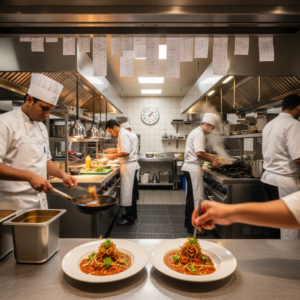
Here is a concrete example. A traditional Chinese stir-fried noodle dish might feature oyster sauce, a touch of sesame oil, and finely sliced vegetables cooked to retain their crispness. The seasoning enhances without overpowering. A Hakka noodle dish arrives at the table fragrant with soy, cracked black pepper, a generous hand with green chillies, and a wok char that you can smell across the room. Both use noodles and a wok. The similarity ends there.
The sauce profiles are equally divergent. Traditional Chinese sauces tend to be light, clear, or gently thickened — think the delicate gravies of a Hong Kong-style steamed fish. Hakka sauces are typically darker, richer, and built on a base of tomato, soy, vinegar, and dried red chilli. Manchurian sauce — one of the most iconic Hakka preparations — has no real equivalent in Chinese cooking. It is a product of India, full stop.
The use of Indian aromatics is the other defining feature. Hakka cooking relies heavily on ginger-garlic paste, whole green chillies, and the kind of high-heat wok technique that creates a smoky, caramelized depth that Indian diners instinctively recognize and crave. It speaks two culinary languages simultaneously — and that is precisely what makes it so compelling.
“Hakka cuisine is not Chinese food with Indian spices sprinkled on top. It is a fully independent tradition with its own logic, its own canon of dishes, and its own cultural identity — one that happens to be absolutely delicious.”
Chinese Food vs. Hakka Food: A Side-by-Side Comparison
To make the differences concrete and easy to reference, here is a direct comparison across the attributes that matter most to diners choosing between these two culinary traditions.
| Attribute | Traditional Chinese Cuisine | Indo-Chinese Hakka Cuisine |
|---|---|---|
| Origin | Regional cuisines of China (Cantonese, Sichuan, Hunan, etc.) | Hakka Chinese immigrants in colonial India (Kolkata) |
| Flavour Profile | Balanced, subtle, ingredient-forward | Bold, spicy, smoky, deeply savoury |
| Key Aromatics | Ginger, scallion, sesame, light soy | Ginger-garlic paste, green chilli, dark soy, vinegar |
| Signature Dishes | Dim sum, Peking duck, wonton soup, fried rice (plain) | Chilli chicken, Manchurian, Hakka noodles, chilli paneer |
| Heat Level | Varies by region; often mild to moderate | Consistently spicy; chilli is a defining ingredient |
| Sauce Style | Light, clear, or gently thickened | Dark, glossy, tomato-soy-chilli base |
| Where to Find It in Brampton | Cantonese or Szechuan-style Chinese restaurants | 7 Spice Bistro and dedicated Indo-Chinese kitchens |
Why Does This Distinction Matter When You Are Ordering?
Understanding the difference between Chinese and Hakka food directly affects how satisfied you will be with your meal — because expectations shape experience. If you sit down expecting traditional Chinese food and receive a plate of Hakka Manchurian, you might be surprised by the heat and the sauce intensity, even if the dish is outstanding. Conversely, if you are craving that smoky, chilli-laden Indo-Chinese flavour and order from a traditional Chinese menu, you will likely feel underwhelmed.
This matters even more when you are dining with a group — families, colleagues, friends — where everyone has different heat tolerances and flavour preferences. Knowing what cuisine you are ordering from means you can set the table correctly before a single dish arrives.
It also matters for vegetarians. Hakka cuisine, unlike many other Chinese-influenced traditions, has a rich vegetarian canon. Chilli paneer, vegetable Manchurian, Hakka noodles tossed with mixed vegetables — these are not afterthoughts on the menu. They are full, satisfying dishes with as much flavour complexity as any meat preparation. If you have been searching for indo chinese food near me with genuine vegetarian options in Brampton, the Hakka menu at 7 Spice Bistro is exactly where you want to be.
And if you are someone who loves Indian food but has never tried Hakka, the transition is remarkably intuitive. The bold spices, the wok heat, the generous use of ginger and chilli — it all speaks a flavour language that fans of Indian cuisine already understand and love. Hakka food sits at the intersection of two great culinary traditions, and it has the best of both.
For a deeper look at how Brampton’s dining scene has evolved to embrace diverse cuisines like these, our guide on Downtown Brampton Restaurants: A Diner’s Guide to the Neighbourhood’s Best Eats is well worth a read.
Is Hakka Food Right for You? What to Expect at 7 Spice Bistro
If you enjoy bold, layered flavours and are not afraid of a little heat, Hakka cuisine is absolutely right for you. At 7 Spice Bistro in Brampton, our Hakka menu is built for diners who want something more than safe and predictable — it is for people who want a meal that actually stays with them.
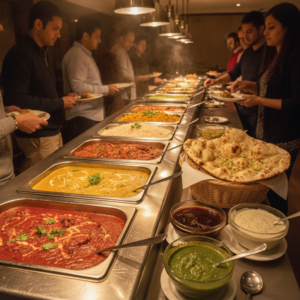
Our dine-in experience is designed to be welcoming for families, straightforward for solo diners, and lively enough for groups celebrating something worth celebrating. The menu moves naturally between our Indian and Hakka offerings, which means a table can order butter chicken alongside chilli chicken, or combine samosas with Manchurian as a starter spread, and everything works together beautifully. That range is intentional — it reflects the way Indo-Canadian families actually eat.
Budget-conscious diners will also appreciate that great Hakka food does not have to cost a fortune. One of the things we are proudest of after seven years serving Brampton is that our pricing remains genuinely accessible without any compromise on quality. You will not find shortcuts in our kitchen — just honest cooking, properly executed.
We also offer catering services for events across Brampton and Mississauga, which means if you want to introduce a crowd to Hakka food — or pair it with a full Indian spread — we can make that happen. Our catering menu includes Hakka noodles, fried rice, Manchurian preparations, and a full range of Indian dishes that together create the kind of spread guests talk about long after the evening ends.
Curious about how our broader menu holds up? Check out what diners have been saying in 7 Spice Bistro reviews — the response to our Hakka offerings has been consistently enthusiastic, particularly from families who discovered that it bridges the gap between the Indian food they grew up with and something genuinely new. And while you’re exploring what we offer, the Veg Biryani vs. Chicken Biryani: Which Version of India’s Most Loved Dish Is Right for You? guide is a great companion read if you are building out your full order.
Whether you are a longtime fan of the spice bistro experience or discovering us for the first time after searching for an indian restaurant near me or indian restaurant brampton, the Hakka menu is one of the most rewarding places to start your journey with us. It surprises people — in the best way.
Ready to Taste the Difference?
Come experience authentic Hakka cuisine and Indian food side by side at 7 Spice Bistro in Brampton. Whether you’re dining in, ordering for delivery, or planning your next catered event, we’re here to make it memorable — without breaking the budget.
✍️ Written by the 7 Spice Bistro Team
With over seven years of authentic Indian and Hakka cooking experience in Brampton, our team is passionate about sharing the stories behind every dish we serve. We believe great food starts with understanding where it comes from — and ends with a table full of happy guests.
Frequently Asked Questions
What makes Hakka food different from regular Chinese food?
Hakka food is a form of Indo-Chinese cuisine developed by Hakka Chinese immigrants who settled in India and adapted their cooking to local ingredients. While traditional Chinese cuisine prioritises subtle, region-specific flavours and techniques, Hakka cooking is defined by bold chilli heat, ginger-garlic-forward aromatics, and dark, glossy sauces like Manchurian — none of which exist in traditional Chinese culinary traditions. The two cuisines share a lineage but are genuinely distinct in taste, technique, and cultural identity.
How spicy is Hakka food, and can I ask for it milder?
Hakka cuisine is inherently spicy — chilli is a foundational ingredient, not an optional garnish. That said, at 7 Spice Bistro our kitchen can adjust heat levels to suit your preference. If you are new to Hakka food or dining with family members who prefer milder flavours, simply let our staff know when ordering and we will accommodate where we can. The core flavour profile — smoky, savoury, rich — remains even when the chilli is dialled back.
Why is Hakka cuisine so popular in Brampton and the GTA?
Brampton and the wider GTA are home to one of the largest South Asian communities in Canada, and Indo-Chinese Hakka food has deep roots in Indian culinary culture. For many families who grew up in India, Hakka noodles and Manchurian are comfort food — the kind of meal associated with weekends, celebrations, and restaurant outings as children. When those families settled in Brampton, their craving for authentic Hakka cooking came with them. At 7 Spice Bistro, we have spent seven years serving exactly that — food that feels like home.
Can I order Hakka food as part of a catered event at 7 Spice Bistro?
Absolutely. Our catering service at 7 Spice Bistro includes Hakka dishes alongside our full Indian menu, making it possible to offer guests a diverse spread that covers both traditions in a single event. Hakka noodles, fried rice, and Manchurian preparations travel beautifully and are crowd favourites at corporate events, family gatherings, and celebrations across Brampton and Mississauga. Reach out through our website to discuss your event and we will put together a package that fits your budget and your guest list.