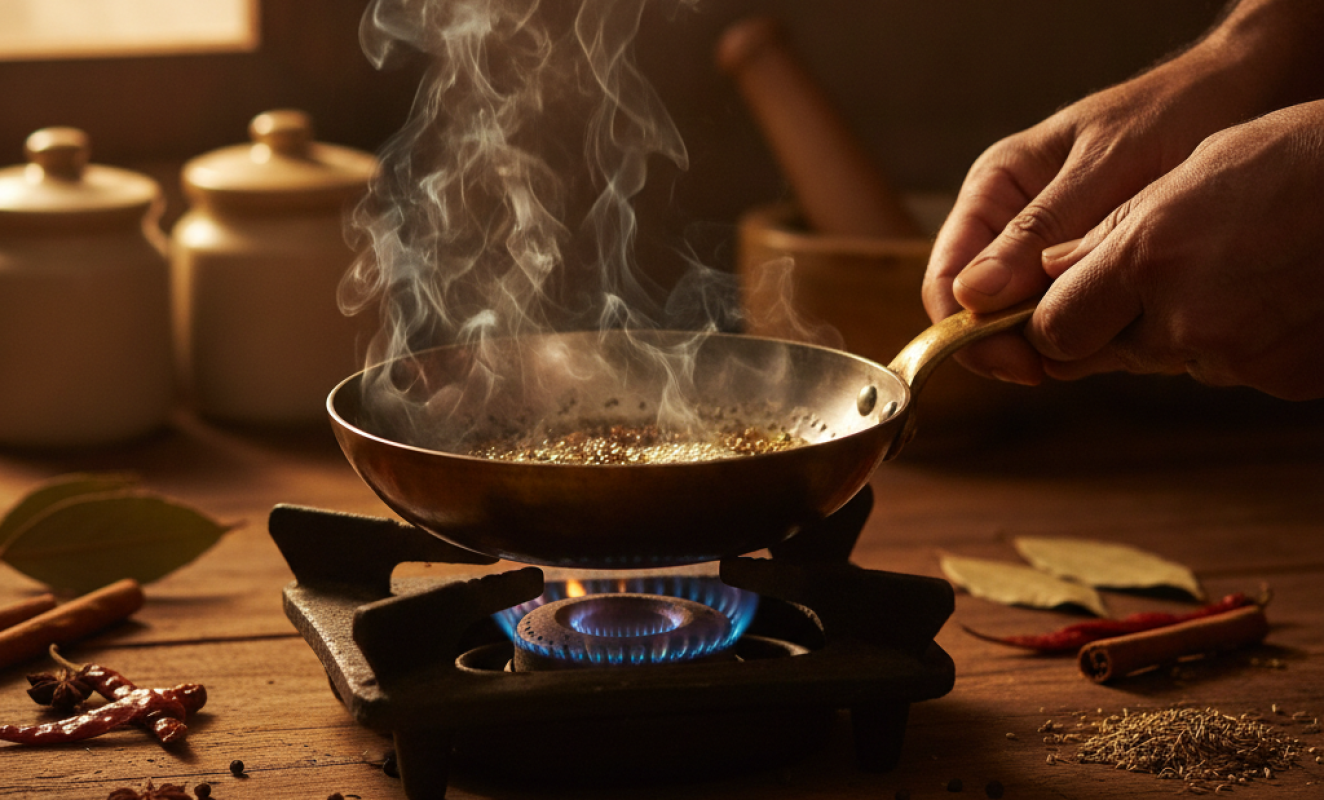
Authentic Indian dishes are not simply a matter of spice levels or plating — they are a window into decades of culinary tradition, regional technique, and the kind of quiet kitchen confidence that no shortcut can fake. In 2026, as Indian food continues to grow in popularity across North America, the gap between genuine, craft-driven cooking and its imitation has never been more visible — or more important to understand. Whether you are a lifelong lover of Indian food or someone newly curious about what all the fuss is about, knowing how to read a dish tells you everything you need to know about the kitchen behind it. At 7 Spice Bistro in Brampton, we have spent seven years cooking the dishes on this list the way they were meant to be cooked — and we want to share what separates the real thing from everything else.
QUICK ANSWER
The 10 benchmark authentic Indian dishes that reveal a kitchen’s true skill are: Dal Makhani, Rogan Josh, Butter Chicken, Masala Dosa, Chole Bhature, Biryani, Palak Paneer, Tandoori Chicken, Chicken Balti, and Hakka Noodles. Each one has specific textures, aromas, and preparation standards that a knowledgeable diner — or a discerning kitchen — can immediately identify.
Why Do These 10 Dishes Reveal Whether a Kitchen Is Truly Authentic?
These ten dishes are benchmarks because they each demand a distinct set of skills, specific ingredients, and time — none of which can be convincingly faked. A kitchen that masters these dishes has demonstrated real fluency in Indian culinary tradition, from slow-cooked lentils to live-fire tandoor work.
When we talk about authentic Indian cuisine, we are talking about a body of knowledge passed down through generations of cooks who understood that flavor is built in layers — from the quality of the ghee to the freshness of the whole spices, from the temperature of the tawa to the resting time of the dough. A restaurant that cuts corners on any of these steps produces a dish that looks the part but tastes hollow. The dishes on this list are unforgiving in that way, and that is exactly what makes them the best tests of a kitchen’s integrity.
For families and food enthusiasts across Brampton and Mississauga who are genuinely searching for indian food that delivers on its promise, understanding these benchmarks transforms you from a passive diner into an informed one. You stop guessing and start knowing — and that knowledge puts the best experiences firmly in reach.
What Authentic Dal Makhani, Rogan Josh, and Butter Chicken Should Actually Taste Like
These three dishes form the holy trinity of North Indian restaurant cooking — and each one has a specific flavor signature that tells you immediately whether the kitchen is working from tradition or from a corner-cutting script.
1. Dal Makhani
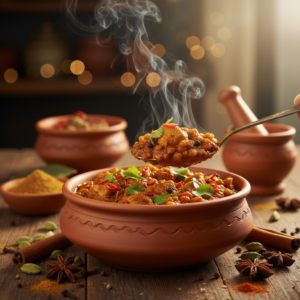
Dal Makhani — black lentils slow-cooked with butter and cream — is deceptively simple in description and extraordinarily demanding in execution. An authentic version is cooked for a minimum of six to eight hours, often overnight, allowing the lentils to break down gradually into a velvety, almost smoky gravy. The color should be a deep, rich burgundy-brown — never a thin, watery red. The butter and cream are added at the end, not as a flavoring shortcut but as a finishing layer that binds the dish’s complexity together. If your dal makhani arrives at the table in under twenty minutes and lacks depth, the kitchen has rushed a dish that simply cannot be rushed.
2. Rogan Josh
Rogan Josh originates in the valleys of Kashmir, and its defining characteristic is a brilliant red oil — “rogan” literally means “oil” — that rises to the surface of a slow-braised meat curry. The color comes not from chili heat but from Kashmiri dried red chilies, which give color and gentle warmth without aggression. A properly made Rogan Josh should be deeply aromatic, layered with whole spices — cardamom, cloves, cinnamon, and bay leaves — and the meat should fall apart tenderly without being mushy. If the dish tastes primarily of tomato, the kitchen has substituted a shortcut for the real Kashmiri technique.
3. Butter Chicken (Murgh Makhani)
Butter Chicken is perhaps the most recognized Indian dish in the world — and arguably the most frequently misrepresented. An authentic Murgh Makhani features tandoor-charred chicken, never boiled or pan-fried, folded into a tomato-cream sauce that has been cooked low and slow until it develops a natural sweetness. The sauce should be silky, never starchy, and the balance between tang and sweetness should feel effortless rather than jarring. The telltale sign of a great Butter Chicken is the faint smokiness from the tandoor that perfumes every bite — a quality no bottled sauce can replicate.
How to Evaluate Masala Dosa, Chole Bhature, and Biryani as Kitchen Benchmarks
These three dishes span different regions of India and different cooking disciplines — South Indian fermentation, North Indian deep-fry technique, and the art of long-grain rice cookery. Together they tell you whether a kitchen has range, not just a single area of competence.
4. Masala Dosa
A masala dosa is a thin, crisp crepe made from a fermented rice and lentil batter — and fermentation is the non-negotiable step. The batter must be left to ferment for a minimum of eight hours, which develops the subtle sourness that is the dosa’s defining quality. The outside should be lacy and golden, with a satisfying crunch that gives way to the spiced potato filling inside. The dosa should be served immediately from the tawa and accompanied by fresh coconut chutney and hot sambar. If the crepe is thick, pale, or soft, the kitchen has skipped the fermentation process entirely — and what you are eating is a pancake, not a dosa.
5. Chole Bhature
Chole Bhature is a Punjabi classic that tests two completely different skills simultaneously: the slow-cooked chickpea curry (chole) and the deep-fried leavened bread (bhature). The chickpeas should be cooked from scratch — never from a can — until they are tender but still hold their shape, bathed in a dark, deeply spiced gravy built on onions, tomatoes, and a generous hand with whole spices. The bhature should puff into an airy pillow the moment it hits hot oil, with a thin, blistered exterior and a soft, yielding interior. If either element falls short, the pairing falls apart — and a truly skilled kitchen makes both look effortless.
6. Biryani
Biryani is a dish that has sparked passionate debates across the subcontinent for centuries, and rightly so — it is one of the most technically demanding dishes in the Indian repertoire. An authentic dum biryani is cooked sealed, with the rice and meat or vegetables layered and then slow-cooked over a low flame so that the steam circulates and perfumes every grain. The rice should be long, separate, and fragrant with saffron, rose water, and whole spices. It should never be mushy. A biryani that looks like a mound of orange rice mixed with dried-out protein was not cooked by someone who respects the dish — it was assembled.
“Biryani is not a recipe — it is a commitment. Every grain of rice, every layer of spice, and every minute of slow cooking is a decision that shows up on the plate. At 7 Spice Bistro in Brampton, we make that commitment every single service.”
If you are looking for a deeper understanding of what sets genuinely skilled Indian kitchens apart from the rest, our guide to Authentic Indian Cuisine: 8 Hallmarks That Tell You a Restaurant Is the Real Deal breaks down the full picture in detail.
What Makes Palak Paneer, Tandoori Chicken, and Chicken Balti the Best Indian Dishes for Testing a Kitchen?
These three dishes expose a kitchen’s ingredient quality, fire management, and sauce-building technique — three completely different pillars of Indian cooking that cannot be separated from the final result.
7. Palak Paneer
Palak Paneer — spinach and fresh Indian cottage cheese — looks simple and is anything but. The spinach must be blanched and blended into a smooth, vibrant green purée that retains its color without turning grey or muddy. The paneer should be freshly made, soft, and absorb the sauce without crumbling. The spicing should be restrained and aromatic — cumin, garam masala, a touch of cream — with nothing overpowering the natural sweetness of the spinach. If the dish arrives at the table brown-green, bitter, or watery, the spinach was overcooked and the kitchen’s attention to technique is in question. Palak Paneer rewards precision, and a skilled kitchen treats it accordingly. For everything you need to know about paneer as an ingredient and the many ways it appears on an Indian menu, our guide to Paneer 101: Every Dish, Every Style, and Why Indian Cheese Deserves a Spot on Your Table is essential reading.
8. Tandoori Chicken
Tandoori Chicken is the dish that built Indian cuisine’s global reputation — and it is the one that most clearly separates restaurants with a real tandoor from those without one. The chicken must be marinated in yogurt and spices for a minimum of several hours, ideally overnight, before being cooked in a clay tandoor oven at temperatures exceeding 400°C. The result should have visibly charred edges, a smoky fragrance that hits you before the plate does, and meat that is juicy at its core despite the intense heat. If you are searching for tandoori chicken near me and you want the genuine article rather than oven-roasted facsimile, the tandoor is the single most important thing to ask about. At 7 Spice Bistro, our tandoor is central to how we cook — not a decorative feature.
9. Chicken Balti
Chicken Balti is a dish with a fascinating dual heritage — originating in the Baltistan region of northern Pakistan and popularized in British-Indian restaurants — but it has become a genuine staple of the Indian restaurant canon. A proper Balti is cooked and served in the same steel vessel, which retains heat and continues cooking the sauce at the table. The dish should be intensely aromatic, built on a base of fresh tomatoes, peppers, and whole spices, with a sauce that is thicker and more robust than a standard curry. Anyone searching for the best chicken balti near me should look for a kitchen that serves it in the traditional balti bowl — because the vessel is part of the experience, not just a presentation choice.
Where Does Hakka Cuisine Fit Into the Authentic Indian Dining Experience?
Hakka cuisine earns its place on this list because it is itself a benchmark of culinary authenticity — a wholly distinct cuisine born from the Indian Chinese community, with its own ingredients, techniques, and flavor standards that are entirely separate from both traditional Chinese cooking and mainstream Indian food.
10. Hakka Noodles
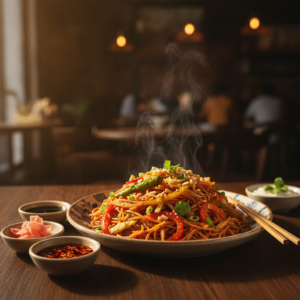
Hakka Noodles are the gateway dish to understanding Indian Chinese — or Hakka Chinese — cuisine. They should be wok-tossed over high heat with vegetables, soy sauce, and a touch of vinegar, producing a slight char and a smoky umami depth that is utterly unlike any other noodle preparation. The noodles should have a gentle bite — cooked but not soft — and the wok heat should be high enough to create the famed “wok hei,” or breath of the wok, that defines authentic stir-fry cooking. Hakka Noodles made in a pan over low heat are categorically different from the genuine article, and the difference is unmistakable from the first bite. At 7 Spice Bistro, our Hakka Chinese Food menu stands proudly alongside our Indian menu — because both deserve to be done right.
The intersection of Indian and Hakka cuisine is what makes our menu in Brampton genuinely unique. These are not two menus awkwardly sharing a page — they are two culinary traditions that share a philosophy: that good food is built on technique, patience, and the best ingredients you can source. If you want to understand the broader dining landscape that surrounds us, the Top Restaurants in Brampton Right Now: A Neighbourhood-by-Neighbourhood Breakdown gives you the full local picture.
| Dish | Region of Origin | Key Technique Being Tested | What a Shortcut Looks Like |
|---|---|---|---|
| Dal Makhani | Punjab, North India | Slow cooking (6–8+ hours) | Thin, watery, no depth of flavor |
| Rogan Josh | Kashmir, North India | Kashmiri chili infusion, slow braising | Tastes primarily of tomato |
| Butter Chicken | Delhi, North India | Tandoor char + slow sauce reduction | No smokiness, starchy sauce |
| Masala Dosa | Karnataka, South India | Batter fermentation (8+ hours) | Thick, pale, soft — no sour note |
| Chole Bhature | Punjab, North India | Dual: slow chickpea cook + live-fire bread | Canned chickpeas, flat bhature |
| Biryani | Mughal India / Hyderabad | Dum (sealed steam) cooking | Mushy rice, dried protein |
| Palak Paneer | North India | Blanching, color retention, fresh paneer | Grey-green, bitter, watery |
| Tandoori Chicken | Punjab / North India | Clay tandoor at 400°C+ | Oven-roasted, no char, no smoke |
| Chicken Balti | Baltistan / British-Indian | High-heat balti vessel cooking | Standard curry, no balti bowl |
| Hakka Noodles | Indian Chinese community | High-heat wok tossing (wok hei) | Pan-cooked, soft, no char |
How 7 Spice Bistro Brings These Standards to Brampton Every Day
Seven years of cooking in Brampton has taught us that this community does not need to be impressed — it needs to be fed well, consistently, and at a price that respects the reality of family budgets. The families and food enthusiasts who walk through our door have often eaten these dishes at their grandparents’ tables, at weddings, or on trips back home. They know what the real thing tastes like. That knowledge keeps us honest, and we are grateful for it.
Our menu at 7 Spice Bistro was built around every dish on this list — not as a checklist, but as an expression of what we believe Indian food can and should be when it is made with full attention and genuine care. We use whole spices that we grind in-house, we give our marinades the overnight time they deserve, and our tandoor runs hot every service. These are not selling points — they are just how cooking is supposed to work.
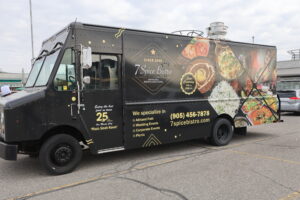
Our catering service extends these same standards to events across Brampton and beyond — because a dish that is good enough to serve in the restaurant is good enough to serve at your wedding, your corporate lunch, or your family gathering. If you are planning an event and wondering whether the food will hold up, the answer starts with asking the same questions this article has outlined: How is it made? What equipment is used? How much time goes into it? A catering partner who can answer those questions confidently is one worth trusting.
For anyone near Mississauga who has been searching for an indian restaurant near me that combines authentic Indian dishes with a genuine Hakka Chinese menu under one roof, the short answer is that the drive to Brampton is worth it. Our guests regularly tell us — and the 7 spice bistro reviews across platforms reflect — that what surprises them most is not any single dish but the consistency. Every visit delivers the same depth of flavor, the same warmth of service, and the same sense that the kitchen actually cares about what it is putting on the plate.
The 7 spice bistro menu is designed to be generous in its range without being shallow in its execution. We believe that offering both traditional and modern Indian cuisine — alongside a full Hakka Chinese menu — means our guests always find something that feels made for them. That is the kind of dining experience Brampton deserves, and it is the one we show up every day to deliver.
Ready to Taste the Difference for Yourself?
Whether you are joining us for dine-in, exploring our menu online, or planning a catered event in Brampton, 7 Spice Bistro is ready to show you what seven years of authentic Indian and Hakka cooking looks — and tastes — like. Come hungry. Leave knowing the difference.
✍️ Written by the Team at 7 Spice Bistro
The team at 7 Spice Bistro has spent seven years cooking authentic Indian and Hakka Chinese cuisine from the heart of Brampton. We write from the kitchen — about the dishes we make, the techniques we trust, and the community we are proud to feed every day.
Frequently Asked Questions
How can I tell if an Indian restaurant is serving authentic food?
The most reliable signs are the presence of a real tandoor oven, whole spices ground in-house, and dishes that take time — like a slow-cooked Dal Makhani or a properly fermented Masala Dosa. A kitchen that is willing to explain how a dish is made is usually a kitchen that has nothing to hide. You can also look for regional specificity on the menu: a restaurant that distinguishes between Kashmiri, Punjabi, and South Indian dishes understands that Indian food is not a monolith.
What is the best Indian dish to order if I am trying a restaurant for the first time?
Order Dal Makhani and Tandoori Chicken on your first visit. These two dishes together will tell you almost everything you need to know about a kitchen’s patience, ingredient quality, and technical ability. Dal Makhani reveals whether the kitchen takes time seriously; Tandoori Chicken tells you whether they have a real tandoor and use it properly. If both are excellent, the rest of the menu is very likely to be too.
Why does Indian food taste so different from restaurant to restaurant?
Indian food varies so significantly across restaurants because every dish is the product of dozens of individual decisions — the freshness of the spices, the quality of the ghee, the cooking time, the heat source, and the cook’s own intuition. Two kitchens can follow the same recipe for Biryani and produce completely different results depending on how seriously they approach each step. Authentic Indian cuisine rewards every point of care and exposes every shortcut with equal precision.
Can I order catering from 7 Spice Bistro for a large event in Brampton?
Yes — our catering service is available for events of all sizes across Brampton and the surrounding area, including Mississauga. We bring the same kitchen standards that define our dine-in experience to every catered event, from intimate family gatherings to large corporate functions. The best way to get started is to visit 7 Spice Bistro online and reach out to discuss your event details — our team will work with you to build a menu that fits both your occasion and your budget.