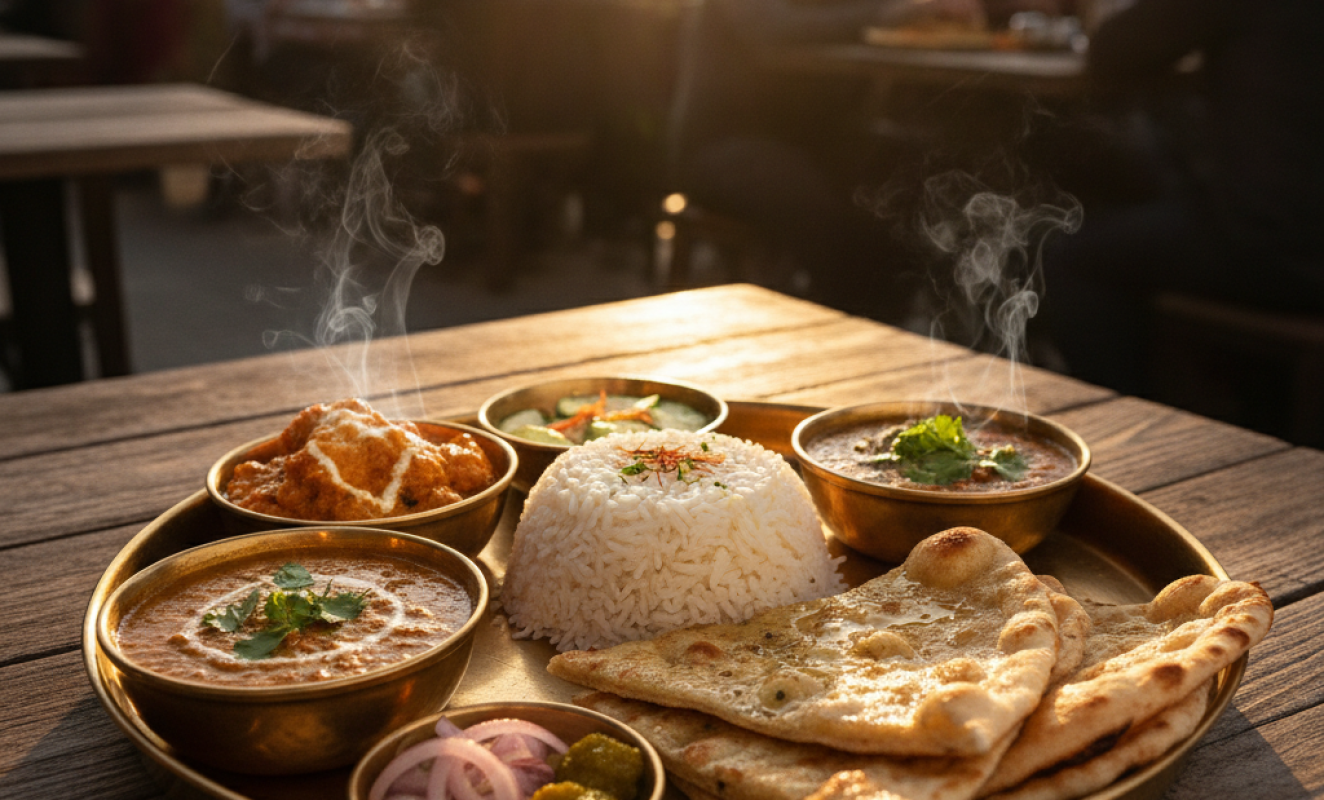
If you are searching for the best punjabi restaurant in brampton, you are participating in one of the most spirited food conversations this city has — one that has been going on for decades and shows no sign of quieting down in 2026. Brampton is not simply a city that has Indian food. It is a city that has been shaped by it, built around it, and in many neighborhoods, defined entirely by the aromas drifting from restaurant kitchens and home stoves alike. Punjabi cuisine sits at the center of that story, and understanding why requires more than reading a menu. It requires understanding a people, a tradition, and a way of eating that was never meant to be rushed.
At 7 Spice Bistro, we have spent seven years cooking in Brampton, and in that time we have watched this city’s appetite for authentic, unapologetic Punjabi cooking grow into something extraordinary. This is the story behind that cuisine — its dishes, its culture, and why it has earned a permanent place at the heart of everything Brampton eats.
QUICK ANSWER
Punjabi cuisine dominates Brampton because the city is home to one of the largest Punjabi diaspora communities in North America. The food — rich, communal, and deeply spiced — reflects a culture that treats every meal as a gathering. From slow-cooked dals and tandoor-fired breads to bold gravies and celebratory rice dishes, Punjabi cooking is as much about belonging as it is about flavour.
What Makes Punjabi Cuisine Distinctly Its Own?
Punjabi cuisine is defined by abundance, boldness, and an almost devotional relationship with the tandoor. It is a cooking tradition that emerged from the fertile agricultural heartland of undivided Punjab — a region that produced wheat, dairy, and legumes in surplus, and developed recipes designed to nourish hard-working, large-hearted communities. Those values translated directly onto the plate.
The foundation of the cuisine rests on a few transformative techniques. The tandoor — a cylindrical clay oven reaching temperatures that most conventional ovens cannot match — gives Punjabi breads and proteins their signature char and smokiness. Tandoori chicken, naan, and seekh kebabs are all products of this ancient method. Then there is the tadka, the tempering of whole spices in hot ghee or oil that forms the aromatic backbone of every great dal and curry. And underpinning it all is the patient, slow-building of flavour through onion, tomato, ginger, and garlic cooked down until they transform from raw ingredients into something altogether different.
What sets Punjabi food apart from other regional Indian cuisines is its unapologetic richness. This is not a cuisine that whispers — it speaks in full voice. Butter, cream, and ghee are not finishing touches; they are structural. Dal Makhani simmers for hours. Sarson da saag, the iconic mustard greens dish, is slow-cooked and then finished with a generous hand of white butter. The result is food that is deeply satisfying in a way that very few culinary traditions can replicate.
At 7 Spice Bistro, our kitchen honours these techniques with the same seriousness the tradition demands. When you taste our curries and tandoor dishes, you are tasting a method, not just a recipe.
Why Does Punjabi Food Dominate Brampton’s Food Culture?
Brampton’s relationship with Punjabi food is inseparable from its demographic story. The city has one of the highest concentrations of South Asian residents in Canada, with a significant proportion tracing their roots to Punjab. When communities migrate, their food migrates with them — and over generations, that food stops being “ethnic food” and starts being the local food.
That is exactly what has happened in Brampton. Drive down Queen Street, Kennedy Road, or Dixie Road and you will encounter Indian restaurants, sweet shops, bakeries, and grocery stores that would be entirely at home in Amritsar or Ludhiana. The cuisine has not adapted to fit Brampton — Brampton has adapted to embrace the cuisine. The city’s social calendar is built around food events, Diwali celebrations, and community gatherings where Punjabi dishes are the centrepiece.
This cultural depth means that the standard Brampton diner is genuinely knowledgeable. They know what a properly made saag should taste like. They can tell the difference between a butter chicken made with fresh tomatoes versus canned paste. They expect their pani puri to have the right balance of tamarind and spice water. This is a demanding, educated audience — and that pressure has made the quality of punjabi cuisine across the city remarkably high. For a restaurant to earn loyal customers in Brampton, the food has to be genuinely good.
“In Brampton, food is not entertainment — it is identity. Punjabi cuisine carries the memory of a homeland, the warmth of a family table, and the pride of a community that built something remarkable on Canadian soil.”
When people searching for the best punjabi restaurants near me land in Brampton, they often find themselves overwhelmed — not by a lack of options, but by an embarrassment of them. The city takes this cuisine seriously in a way that few places outside of Punjab itself can claim.
The Signature Dishes: What You Must Eat and Why They Matter
Every great Punjabi meal tells a story through its dishes. Each one has a context — a time of year, a life event, a family tradition — that gives it meaning beyond its ingredients. Understanding these dishes is understanding the culture itself.
Dal Makhani — The Patience Dish
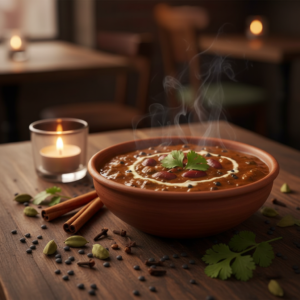
Dal Makhani is, by most accounts, the crown jewel of Punjabi cooking. Black lentils and kidney beans are soaked overnight, cooked low and slow — traditionally for twelve hours or more — then finished with cream and butter until the dal becomes a thick, velvety, almost impossibly rich sauce. It is the dish that tests a kitchen’s discipline, because shortcuts are immediately detectable. A Dal Makhani that has been rushed tastes grainy and thin. One that has been given the time it demands is transformative. This is one of the dishes our team at 7 Spice Bistro takes most seriously — and our regulars notice the difference.
Tandoori Chicken — The Dish That Crossed Borders
If there is a single Punjabi dish that has travelled the world and maintained its identity, it is tandoori chicken. Marinated in yogurt, lemon juice, and a carefully balanced masala of spices — including red chilli, coriander, cumin, and garam masala — the chicken is cooked directly on the walls of a tandoor at extreme heat. The exterior chars and blisters while the interior stays juicy, and the smoky flavour that results is something a conventional oven simply cannot reproduce. When Brampton residents search for tandoori chicken near me, they are looking for exactly that combination — the char, the smoke, and the spice.
Chole Bhature — The Sunday Morning Institution
Ask any Punjabi family in Brampton what Sunday mornings smell like and the answer will almost always involve chole bhature. The chole — a deeply spiced chickpea curry cooked with black tea bags for colour and whole spices for depth — is served alongside bhature, deep-fried leavened bread that puffs dramatically when it hits the oil. It is an indulgent, celebratory breakfast or lunch dish, and it is the kind of meal that pulls an entire family to the table. The tradition of eating chole bhature together, unhurriedly, on a slow weekend morning, is one of the most distinctly Punjabi cultural practices you will find replicated in homes across Brampton every single week. You can explore more of this tradition in our piece on Halwa Puri in Brampton: The Weekend Breakfast Tradition You Shouldn’t Miss.
Paneer Dishes — The Vegetarian Heart of the Cuisine
Paneer — fresh Indian cottage cheese — holds a position of extraordinary importance in Punjabi cooking. Saag paneer, shahi paneer, paneer tikka, kadai paneer: each preparation showcases the cheese differently, from the creamy and mild to the boldly spiced and charred. Paneer is the protein that ensures every Punjabi feast can be fully enjoyed by those who do not eat meat, without compromise or concession. It is not a substitute — it is a star in its own right. If you want to understand just how versatile this ingredient is, our detailed guide on Paneer 101: Every Dish, Every Style, and Why Indian Cheese Deserves a Spot on Your Table is the place to start.
Biryani and Rice Celebrations
While biryani has roots across many South Asian regional traditions, the Punjabi version — dum-cooked with whole spices, saffron, and layers of marinated meat or vegetables — has become a fixture at every significant celebration in Brampton. Weddings, engagements, anniversaries, and religious gatherings all carry the expectation of a proper biryani on the table. Its presence signals that an occasion is being taken seriously. Our catering service at 7 Spice Bistro is built in part around exactly this kind of celebratory cooking — food that marks a moment as important.
How the Communal Eating Tradition Shapes the Punjabi Dining Experience
Punjabi food was never designed for solo dining. The cuisine’s architecture — multiple shared dishes, stacked breads, communal serving bowls — makes the most sense when there are several hands reaching across the table at once. The tradition of eating together is not a cultural footnote; it is the entire point.
In Punjab, the concept of langar — the community kitchen attached to Sikh gurdwaras, where free meals are served to anyone regardless of background — is perhaps the most powerful expression of this value. It is food as radical hospitality. That spirit extends into the domestic and restaurant settings: you do not portion your food carefully before others are served. You pile the serving dish with everything you have, and you keep offering more. “Have you eaten enough?” is a sentence Punjabi hosts ask with genuine anxiety, not politeness.
This is why portions matter in Punjabi restaurants. It is why the bread basket is refilled without being asked. It is why the waiter checking whether you want more sauce is not upselling — it is a cultural reflex. At 7 Spice Bistro, we understand this instinctively, because it is woven into how we cook and how we host. Our dine-in experience is built around that tradition of generosity.
For families in Brampton looking for an indian restaurant near me that actually understands this social dimension of the meal — not just the food itself — it makes a meaningful difference. A great Punjabi dining experience is not just about what arrives on the plate. It is about how it arrives, how much of it there is, and whether the room feels like somewhere you are genuinely welcome to stay.
For a broader look at what authenticity really means when you walk into an Indian restaurant, our article on Authentic Indian Cuisine: 8 Hallmarks That Tell You a Restaurant Is the Real Deal breaks it down in detail.
Where Does 7 Spice Bistro Fit Into Brampton’s Punjabi Food Story?
Seven years in Brampton teaches you something that no culinary school can: the people who eat here know their food. They grew up eating it, they cook it at home, and when they walk into a restaurant, they carry a standard built from a lifetime of extraordinary meals. Earning the trust of that audience is the hardest and most rewarding thing a kitchen can do.
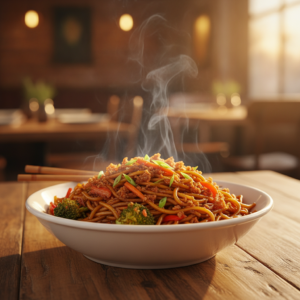
At 7 Spice Bistro, we have built our reputation on two things: cooking the food properly, and keeping it accessible. Our menu spans both traditional and modern Indian cuisine — the classics that Brampton grew up with, alongside dishes that reflect how the cuisine continues to evolve. We also bring Hakka Chinese food into the picture, a cuisine deeply embedded in the South Asian dining experience and one that Brampton families have embraced as completely their own. That combination of indian food near me searching customers and Hakka food enthusiasts is exactly the audience we cook for every day.
Our pricing is deliberately family-friendly, because we believe that eating well should not be a luxury. Budget-conscious families in Brampton and Mississauga should be able to enjoy a full, satisfying, authentic meal without anxiety about the bill. That belief is baked into everything we do — from how we structure the menu to how we approach our catering packages for events of every size.
If you want to explore the broader landscape of great dining options around the city, our guide to the Top Restaurants in Brampton Right Now: A Neighbourhood-by-Neighbourhood Breakdown is worth reading — it puts the city’s food scene in full context.
Brampton’s Punjabi food culture is one of the most genuine, vibrant, and living culinary traditions in Canada. It is not a trend. It is not a phase. It is the direct expression of a community that brought its most important cultural currency — its food — to a new country and refused to let it diminish. We are proud to be part of that story, one plate at a time.
Ready to Experience Authentic Punjabi Cuisine in Brampton?
Whether you are planning a family dinner, a special celebration, or simply craving a plate of dal makhani done the right way, our team is ready for you. Dine in, order out, or let us cater your next event — at prices that make sense for real families.
✍️ Written by the 7 Spice Bistro Team
We are the kitchen and front-of-house team behind 7 Spice Bistro, Brampton’s home for authentic Indian and Hakka cuisine since our doors first opened. Seven years of cooking for this community has taught us that great food is never just about ingredients — it is about the people you are feeding and the traditions you are keeping alive.
Frequently Asked Questions
What makes Punjabi cuisine different from other regional Indian cuisines?
Punjabi cuisine is distinguished by its generous use of dairy — particularly butter, ghee, and cream — its reliance on the tandoor oven for breads and proteins, and its bold, full-bodied spice profile. Unlike lighter regional cuisines from South or East India, Punjabi cooking is built on richness and slow technique, with dishes designed to be shared across a large table. It is also one of the most wheat-forward regional cuisines in India, with freshly made breads — naan, roti, paratha, and kulcha — playing a central role in every meal.
How can I find the best Punjabi food near me in Brampton?
The best approach is to look for restaurants that make their own breads fresh, cook their dals low and slow, and use a tandoor for their kebabs and chicken. Knowledgeable locals are the most reliable guide — ask someone who grew up eating Punjabi food at home what they order when they eat out. For a restaurant that has been part of Brampton’s Indian dining landscape for seven years, 7 Spice Bistro is a well-established place to start, with a menu that covers the full range of classic Punjabi and broader Indian dishes.
Why is communal dining so central to Punjabi food culture?
Communal dining is central to Punjabi culture because the cuisine itself is structured around sharing. Multiple dishes are placed at the centre of the table — not plated individually — and everyone helps themselves and each other. This reflects a deeper cultural value: hospitality and generosity are expressions of respect. The Sikh tradition of langar, the community meal served freely to all at gurdwaras worldwide, is the most visible expression of this value, but it runs through every Punjabi meal, from a weeknight dinner at home to a wedding feast.
Can I book 7 Spice Bistro for catering at a private event in Brampton?
Yes, absolutely. Our catering service is one of the most popular offerings we provide, covering everything from intimate family gatherings to large celebrations. We bring the same kitchen standards and authentic recipes to off-site events that we apply to every dine-in plate. If you are planning a birthday, anniversary, cultural celebration, or community event in the Brampton or Mississauga area, reach out to our team directly through our website to discuss your event, your guest count, and the dishes that will make it memorable.