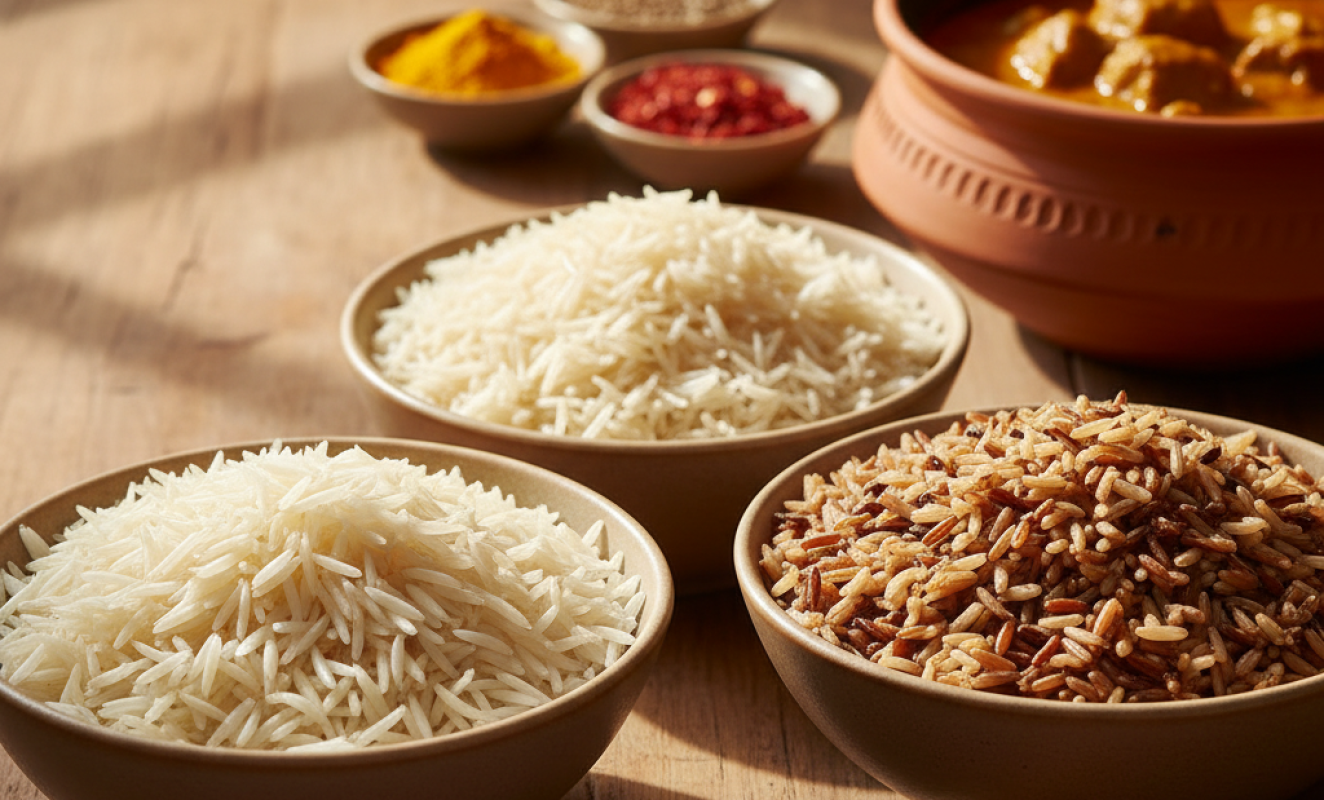
Why Indian Food and Rice Are Inseparable—And Why the Type of Rice Actually Matters
Indian food has carried a quiet secret for centuries, one that even devoted curry lovers tend to overlook: the rice underneath your dish is not a neutral backdrop. It is an active participant. It absorbs, it softens, it either amplifies or mutes every spice the cook has layered into the pot. And yet, in 2026, most diners still treat rice as an afterthought—a blank canvas that simply holds the gravy in place.
At 7 Spice Bistro, we think about rice a great deal. Our kitchens in Brampton and Mississauga serve hundreds of curry plates every week, and the conversations our team has had with guests over those plates have taught us something valuable: when you get the rice wrong, even a brilliant curry can feel flat. When you get it right, the whole table goes quiet in the best possible way.
This article is our honest, practical guide to the three rice varieties you’ll most commonly encounter alongside Indian and 7 Spice Bistro Mississauga vs. Brampton: How We Serve Two Communities with One Philosophy—basmati, jasmine, and brown rice—and why choosing the right one fundamentally changes your dining experience.
⚡ QUICK ANSWER
Basmati is the traditional and most complementary choice for most Indian curries—its long grains, low starch content, and floral aroma align naturally with bold spice profiles. Jasmine rice adds a subtle sweetness that suits milder or coconut-based dishes, while brown rice introduces a nutty density best reserved for lighter, broth-forward preparations. The right rice transforms absorption, texture, and the overall intensity of every bite.
What Makes Basmati Rice the Gold Standard for Curry Absorption?
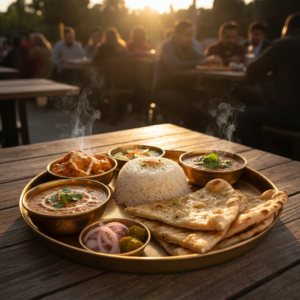
Basmati is the gold standard for Indian curry pairing because its extra-long grains absorb sauce slowly and evenly, holding flavour without turning mushy. That single physical trait changes everything about how a curry lands on your palate.
Basmati rice grown in the foothills of the Himalayas—particularly from the Punjab and Uttar Pradesh regions—carries a naturally occurring compound called 2-acetyl-1-pyrroline, the same aromatic molecule found in pandan leaves and fresh bread. According to a study published by the National Library of Medicine (2019), this compound is present at concentrations up to 12 times higher in aged basmati than in standard long-grain rice varieties. That aroma is not decorative—it interacts directly with the volatile spice compounds in a curry, creating a layered sensory experience that diners describe as “complete” or “rounded.”
From a structural standpoint, basmati grains elongate rather than swell when cooked. A properly steamed basmati grain can grow to nearly twice its dry length while barely increasing in width. This keeps each grain distinct, preventing the clumping that traps sauce on the surface rather than allowing it to soak through. The result is a forkful that delivers curry flavour throughout the grain, not just as a wet coating on the outside.
At our Brampton kitchen, we rinse basmati three times and allow it to soak for twenty minutes before cooking. That pre-soak step is non-negotiable for our team. It relaxes the starch granules, allows the grain to cook evenly from core to surface, and reduces surface stickiness significantly. It is a small ritual, but it is the kind of detail that separates good rice from exceptional rice.
The Ageing Factor Most People Miss
One nuance that rarely enters the public conversation is the role of ageing in basmati quality. Fresh-harvest basmati contains higher moisture content and tends to produce stickier, less fragrant results. Aged basmati—typically stored for one to two years—loses excess moisture, developing a firmer texture and a more pronounced aroma. Many of the finest Indian restaurants in Brampton and across the Greater Toronto Area specifically source aged basmati for this reason. We do the same, and guests who have eaten with us regularly can taste the consistency that comes from that sourcing decision.
“The rice is never just a side. In Indian cooking, it is the quiet architecture that holds the entire meal together—get the structure wrong, and even the most complex curry loses its sense of place.”
— The 7 Spice Bistro Kitchen Team, Brampton
How Does Jasmine Rice Change the Experience of Eating a Curry?
Jasmine rice changes the curry experience by introducing gentle sweetness and a creamier, slightly sticky texture that softens bold spice notes and flatters coconut-milk or tomato-cream-based sauces. It is not wrong—it is simply a different conversation.
Originating in Thailand, jasmine rice has become widely available across Mississauga and Brampton’s diverse grocery landscape, and many home cooks reach for it when preparing Indian-inspired dishes. Its grains are shorter and rounder than basmati, with a higher amylopectin content—the starch polymer responsible for stickiness and that characteristic soft, clumping texture when cooked.
That stickiness has consequences for curry pairing. When jasmine rice clumps, it creates denser mouthfuls that absorb sauce less evenly. With a rich, tomatoey butter chicken or a creamy korma, this can actually be pleasant—the rice acts almost like a sponge cake layer, soaking up sauce in concentrated pockets. With a thinner dal or a sharply spiced vindaloo, however, the stickiness can make the dish feel heavy and the spice levels seem amplified in an unbalanced way.
Where jasmine genuinely shines in the context of Indian food is alongside South Indian-influenced coconut curries and dishes with tamarind-based sauces. The mild floral sweetness of jasmine complements coconut milk beautifully, and the soft texture pairs well with the gentle, herb-forward profiles of dishes like fish molee or a Goan prawn curry. If you are curious how our team applies these principles at the table, our article on Seafood in Indian Cuisine: What Makes 7 Spice Bistro’s Fish & Shrimp Dishes Stand Out explores exactly those flavour pairings in more detail.
When to Reach for Jasmine Instead of Basmati
A practical rule of thumb: if the curry sauce is coconut-based, lightly spiced, or features seafood as the primary protein, jasmine rice is a legitimate and delicious choice. If the curry is a North Indian classic—think dal makhani, palak paneer, chicken tikka masala, or a deeply spiced rogan josh—stay with basmati. The aromatic alignment between North Indian spice blends and basmati’s fragrance is too good to substitute away from without a real reason.
Is Brown Rice a Realistic Option for Indian Curry Dishes?
Brown rice can work with Indian curries, but it requires the right dish and realistic expectations—its bran layer resists sauce absorption and introduces an earthy, chewy quality that competes with rather than complements most traditional spice profiles.
Brown rice retains its outer bran layer, which is why it carries more fibre, B vitamins, and minerals than white rice. According to the Harvard T.H. Chan School of Public Health, brown rice contains approximately three times the fibre of white rice and has a measurably lower glycaemic index—facts that matter to the growing number of health-conscious diners across Brampton and Mississauga who want to enjoy Indian food without compromising their nutritional goals.
The challenge is textural. That bran layer is hydrophobic—it resists liquid absorption. Brown rice takes nearly twice as long to cook as white basmati, and even when perfectly prepared, the grain remains chewy and dense in a way that works against the silky, enveloping experience that a great curry is designed to deliver. When you eat brown rice with a thick, heavily spiced curry, you often end up chewing the grain and the sauce separately rather than experiencing them as one unified bite.
Where brown rice earns its place is alongside lighter, broth-forward preparations—a thin rasam, a simple dal tadka, or a light vegetable curry with minimal cream or oil. In these cases, the grain’s earthiness adds rather than detracts, and the lower absorption rate matters less because the sauce is thinner and distributes more freely. For guests in Brampton who ask us about healthier options, we are always honest: brown basmati rice—which preserves some of the aromatic quality of basmati while retaining the bran—is a better compromise than standard brown long-grain if the health goal is fibre without sacrificing the experience entirely.
| Rice Variety | Texture When Cooked | Sauce Absorption | Best Paired With | Avoid Pairing With |
|---|---|---|---|---|
| Aged Basmati | Long, fluffy, separate grains | Excellent — even throughout grain | Butter chicken, rogan josh, dal makhani, biryani | Dishes where stickiness helps (e.g., sticky sauces) |
| Jasmine | Soft, slightly sticky, creamy | Good — surface-level sponging | Coconut curries, fish molee, Goan prawn, mild korma | Thin daals, fiery vindaloo, complex North Indian masalas |
| Brown Rice | Chewy, nutty, dense | Resistant — limited absorption | Rasam, dal tadka, light vegetable curries | Creamy or heavily spiced curries, biryani |
| Brown Basmati | Chewy but fragrant, semi-separate | Moderate — better than standard brown | Medium-bodied curries, lentil-based dishes | Delicate, fragrance-forward dishes where white basmati dominates |
Why the Best Indian Restaurant Brampton Locals Love Pays This Much Attention to a Grain
The best Indian restaurant Brampton diners return to is rarely the flashiest one—it is the one that proves, through a thousand small decisions, that every element on the plate was considered. Rice is one of those decisions, and most guests never see it being made.
We have been asked many times what separates a good curry house from a truly memorable one. Our honest answer is always the same: it is the accumulation of invisible choices. The size of the pot used to cook the curry. The point at which the whole spices are added. The resting time before the dish is plated. And yes—the type, age, and preparation method of the rice.
What makes authentic Indian restaurant cooking distinct is not just the spice blend—it is the understanding that every component on the plate has a functional relationship with every other component. Rice is not decoration. It is calibration. It sets the pace at which you experience flavour, controls the intensity of heat on your palate, and determines whether a sauce lingers or disappears too quickly.
Families who visit us from across Brampton and Mississauga—particularly those who grew up eating home-cooked Indian meals—often tell us that our rice reminds them of something. That “something” is the rice their mothers or grandmothers made: rinsed carefully, soaked with patience, cooked without shortcuts. It is a compliment we receive with genuine gratitude, because it means the effort is reaching the table.
If you want to explore how these same principles of precision and tradition extend to dishes like our butter chicken, we walk through the full story in The Butter Chicken Debate: Traditional Recipe vs. Modern Brampton Interpretations—a piece that gets at why authenticity and evolution are not opposites in Indian cooking.
What Hakka Cuisine Teaches Us About Rice and Texture
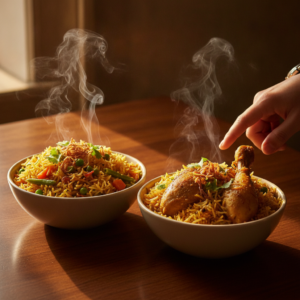
Our menu at 7 Spice Bistro celebrates not only traditional Indian curries but also the rich hakka food tradition that has become deeply embedded in Indian culinary culture. Hakka cuisine—Indian Chinese in its DNA, bold and wok-fired in its execution—uses rice very differently from a curry service. Hakka fried rice depends on day-old, cold rice with separated grains: the exact opposite of freshly steamed fluffy basmati. The grains need to be dry enough to take on wok char without clumping, and every grain needs to coat individually with sauce.
This contrast between curry rice and hakka fried rice is itself a masterclass in how the same ingredient—rice—serves completely different structural roles depending on cooking method and cuisine context. Understanding that contrast makes you a more informed and more satisfied diner, whether you are eating Indian food at home in Mississauga or sitting down with us in Brampton for a full hakka and curry spread.
How to Apply These Principles at Home—and When to Let Us Do It For You
Applying these principles at home starts with one habit: always rinse your basmati rice until the water runs clear, soak for 20 minutes, and cook on a low simmer with a tight lid. That single change will noticeably improve the texture and flavour absorption of your home curry nights.
Beyond the soak-and-simmer rule, here are four practical decisions that will immediately improve your rice-curry pairing at home:
Use the right ratio. For basmati, a 1:1.5 ratio of rice to water (after soaking) produces fluffy, separate grains. Increase to 1:1.75 for a slightly softer result, which suits thicker, paste-heavy curries that benefit from a grain with a bit more give.
Rest the rice before serving. Remove from heat and let the pot sit, lid on, for ten minutes before fluffing. This redistribution of steam produces grains that are consistent in texture from top to bottom of the pot.
Infuse the cooking water. A pinch of saffron, two green cardamom pods, or a single bay leaf added to the cooking water transforms plain basmati into something that belongs at a dinner table rather than beside it. This small step is standard practice at our Brampton kitchen and takes less than thirty seconds.
Match sauce thickness to grain variety. Thick, slow-cooked curries need a grain that can absorb without disintegrating—aged basmati every time. Thin, brothy preparations can accommodate a stickier grain or even a softer short-grain variety without losing structural integrity on the plate.
When you want these decisions made for you—when you want to sit down and simply experience the result of a kitchen that thinks about rice this carefully—you know where to find us. Whether you are searching for great indian food near me, looking for the best Indian restaurant Brampton has to offer, or simply craving the combination of hakka classics and North Indian comfort food on a weeknight, our team is here with the kettle on and the basmati soaking.
Ready to Experience the Difference?
Come taste what happens when every grain is treated as seriously as every spice. Our Brampton and Mississauga kitchens are ready to show you the full picture—from basmati to hakka and everything in between.
✍️ Written by the 7 Spice Bistro Kitchen & Content Team, Brampton. Our team combines decades of professional Indian and hakka culinary experience with a genuine love of sharing what goes on behind the kitchen doors. We write these guides because we believe an informed diner is a happier one—and because great food deserves great context.
Frequently Asked Questions
How do I know which rice to order or use with a specific Indian curry?
Match the weight and texture of the rice to the body of the sauce. As a general rule: thick, cream- or tomato-based North Indian curries pair best with aged basmati; coconut-based or seafood curries work well with jasmine; and light, broth-forward daals or vegetable curries can accommodate brown or brown basmati for a more health-conscious option. When in doubt, aged basmati is the safe and delicious default for virtually any traditional Indian dish.
What is the difference between regular basmati and aged basmati rice?
Aged basmati has been stored for one to two years post-harvest, allowing excess moisture to evaporate from the grain. This produces a drier, firmer grain that cooks to a fluffier, more separate texture and carries a significantly stronger floral aroma than fresh-harvest basmati. Most premium Indian restaurants in Brampton and Mississauga—including our kitchen at 7 Spice Bistro—specifically source aged basmati because it performs more consistently and delivers a more complex sensory experience alongside spiced dishes.
Why does rice prepared at a restaurant taste different from rice made at home?
Several factors contribute to this gap. Professional kitchens use aged, high-quality basmati sourced specifically for culinary use. They rinse and soak the rice before cooking, use precise water ratios, often infuse the cooking liquid with whole spices, and allow the rice to rest covered before serving. The cumulative effect of these steps—none of which are complicated—is rice that absorbs sauce more evenly, carries its own subtle aroma, and holds its texture longer on the plate. The good news is that every one of these techniques is replicable at home with a little practice.
Can I request brown rice or a rice substitute when ordering at 7 Spice Bistro?
We welcome all dietary preferences and conversations at our Brampton and Mississauga locations. While our kitchen is designed around aged basmati as the standard pairing for our curry dishes, our team is always happy to discuss what options are available and which dishes work best with alternative bases. We believe that great Indian food should be accessible and enjoyable for every guest, regardless of dietary goals—so please ask us. We will give you an honest answer and the best recommendation for your order.