Why Indian Food Is Incomplete Without Understanding Its Breads
Indian food tells its richest stories not through sauces alone, but through the breads that carry them — and in 2026, more diners across Brampton and Mississauga are finally slowing down to understand exactly what they’re eating. There’s a quiet revolution happening at the table. Guests who once pointed at the basket of bread and said “yes, please” are now asking: what’s the difference between naan and kulcha? Why does a lachha paratha shatter into layers while a plain roti folds softly around dal? These are not trivial questions. They are the questions of someone on their way to becoming a genuinely educated Indian food lover.
At 7 Spice Bistro, we believe that understanding your bread changes your entire meal. It changes which curry you choose, how you eat it, and how satisfied you feel when you push back from the table. This guide is our attempt to walk you through that education — one bite at a time, from the simplest whole-wheat roti to the most architecturally impressive stuffed paratha.
QUICK ANSWER
Indian flatbreads fall into two broad families: unleavened breads (roti, chapati, paratha) cooked on a dry griddle or tawa, and leavened breads (naan, kulcha) traditionally baked in a high-heat tandoor oven. Each variety has a different texture, fat content, and structural strength, which determines which curries and dishes it pairs with best. Starting with roti and progressing toward stuffed parathas and tandoor-baked naan is the most natural path to building your flatbread knowledge.
What Is the Real Difference Between Roti, Naan, and Paratha?
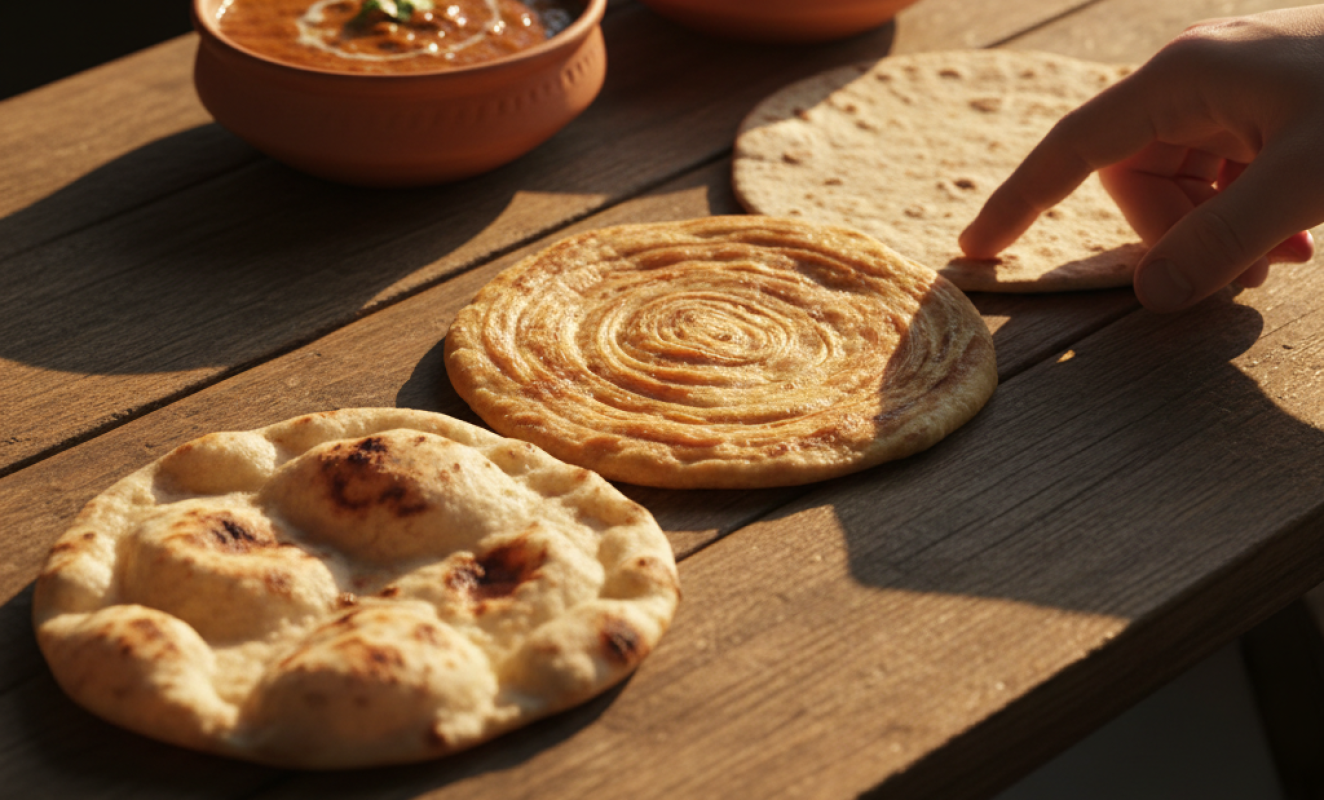
Roti, naan, and paratha are not interchangeable names for “bread on the side.” Each one is a distinct product with its own flour, technique, leavening status, and cultural context. Roti is the everyday bread of the Indian subcontinent — thin, whole-wheat, cooked dry on a tawa (flat griddle) and puffed briefly over an open flame. It is light, slightly smoky, and built for daily eating alongside dal or a simple sabzi. Paratha is roti’s richer, layered cousin, made from the same atta flour but folded with ghee or oil between the layers before cooking, which creates flaky, separable strata. Naan is the festive bread — leavened with yeast or yogurt, slapped against the inner wall of a clay tandoor oven, and blistered by temperatures that can exceed 480°C (900°F).
According to a 2023 survey by the Statistics Canada Food Service Industry Report, South Asian cuisine has become one of the fastest-growing restaurant categories in the Greater Toronto Area, with demand for authentic preparation methods cited as the top driver of repeat visits. That demand is directly reflected in how diners in Brampton and Mississauga now approach bread — they want to understand what they’re eating, not just enjoy it.
The simplest way to remember the distinction: roti is everyday, paratha is indulgent, naan is celebratory. Each has earned its place, and none of them is less important than the others.
The Role of Flour: Atta vs. Maida
Most of the difference between flatbread families starts at the flour level. Atta is stone-ground whole-wheat flour with the bran intact — it produces a slightly nutty, earthy bread with good structural integrity but a soft chew. Maida is refined white flour, closer to all-purpose flour, and it’s what gives naan and kulcha their pillowy, slightly chewy interior. When you bite into a naan and feel that satisfying pull before the bread tears, you’re feeling the higher gluten development of maida at work. When a roti folds cleanly without cracking, that’s atta doing its job. Understanding this one distinction unlocks nearly every flatbread decision on the 7 Spice Bistro Mississauga vs. Brampton: How We Serve Two Communities with One Philosophy menu comparison.
How Does Fermentation Change the Character of Naan?
Fermentation is what separates naan from every other Indian flatbread, and understanding it will permanently change how you order. Traditional naan dough is leavened with either active dry yeast or, in many home and restaurant kitchens, with yogurt alone. The yogurt method is slower but produces a more complex, slightly tangy flavour profile that yeast-only doughs cannot replicate. The dough rests for anywhere from two to eight hours, during which time the natural bacteria in the yogurt begin breaking down starches and producing lactic acid — the same process responsible for sourdough’s depth of flavour.
At 7 Spice Bistro, our kitchen team uses a yogurt-and-yeast combination that gives our naan a balanced lift without the sharp tang that can overpower a delicate curry. The dough is then hand-shaped and stretched — never rolled with a pin, which would compress the gas bubbles created by fermentation — before being applied to the interior wall of our tandoor. The contact time with the clay wall at extreme heat is typically 60 to 90 seconds. That brief, violent heat exposure is what creates the characteristic charred bubbles on naan’s surface: not a flaw, but a hallmark of authentic high-temperature baking.
“A properly fermented naan dough is like a well-rested athlete — it has stored energy that the tandoor releases in seconds. Those blisters and char marks are proof that the fermentation did its job.”
This is also why garlic naan behaves slightly differently from plain naan. The minced garlic applied to the surface before baking introduces moisture and natural sugars that caramelize faster under the tandoor’s heat, producing slightly darker patches and a more aromatic crust. Butter naan receives its fat coating after it leaves the tandoor, not before — adding fat before would prevent the direct clay contact that gives naan its texture. These are not small details; they are the reasons that a naan baked correctly in a real tandoor tastes fundamentally different from one cooked on a gas range.
Kulcha: Naan’s Stuffed, Slightly Denser Sibling
Kulcha occupies the space between naan and stuffed paratha. It uses a similar maida-based, leavened dough to naan, but it is typically filled — with spiced mashed potato, paneer, or onion — before being sealed and baked. Because the filling adds moisture and weight, kulcha has a slightly denser crumb than plain naan. It is the bread most commonly associated with Amritsari cuisine, and it pairs beautifully with chole (spiced chickpeas) in a combination so iconic that “chole kulcha” functions as a single culinary unit in Punjabi food culture across Brampton and beyond.
Why the Griddle Technique Matters More Than Most People Realize
Griddle-cooked breads — roti, chapati, tawa paratha — depend entirely on surface temperature, timing, and applied pressure. These are tactile skills that experienced cooks develop over years, and they cannot be fully replicated by timers or thermometers alone. The tawa must be fully preheated before the first bread goes on; a cold or even warm tawa will steam the dough rather than sear it, producing a pale, slightly gummy bread without the toasted spots that signal proper Maillard browning.
According to the BBC Good Food Indian Bread Glossary, the critical difference between a chapati and a phulka (puffed roti) lies in that final moment over an open flame: the direct heat creates steam inside the bread that inflates it into a single unified pocket, which then collapses into soft, layered folds when removed. That puff is not a party trick. It is evidence that the dough was rolled evenly, the tawa was hot enough to set the exterior quickly, and the moisture inside had nowhere to go but up.
For paratha, the technique shifts. A lachha paratha — the layered, spiral variety — is created by rolling the dough flat, coating it generously with ghee, folding it accordion-style, rolling it into a coil, pressing it flat again, and then cooking it on the tawa with additional ghee applied during cooking. The goal is to keep the layers distinct rather than fusing them together, which requires both the right amount of fat and a tawa temperature that is hot enough to cook each layer quickly without compressing them under the weight of the bread itself.
Stuffed Parathas: Where Technique Meets Generosity
Aloo paratha — potato-stuffed flatbread — is the bread that most Brampton families grew up eating on Sunday mornings, and for good reason. The filling of mashed potato, green chili, coriander, and carom seeds (ajwain) is sealed inside the dough before rolling, which means the cook must apply exactly the right pressure to spread the filling evenly without tearing the dough’s exterior. Too thin and the filling breaks through; too thick and the ratio of bread to filling tips in the wrong direction. Served with cold yogurt and a smear of butter, aloo paratha is perhaps the single best argument for why the griddle deserves as much respect as the tandoor.
Our team at 7 Spice Bistro takes particular pride in the stuffed varieties on our menu. If you’re exploring the full 7 spice bistro menu for the first time, we always suggest pairing an aloo paratha with one of our yogurt-based raitas — the cool, acidic contrast against the buttery, spiced bread is one of those pairings that feels instinctive the first time you try it.
How Each Bread Changes the Meal: A Practical Pairing Guide
Bread choice actively shapes how a curry tastes — not because the curry changes, but because the bread alters the ratio of sauce to carbohydrate in each bite, the temperature at the point of contact, and the fat content of the mouthful. This is not incidental. It is structural. Choosing the wrong bread for a dish is like choosing the wrong wine — technically fine, but quietly diminished.
| Bread | Leavened? | Cooking Method | Best Paired With | Fat Level |
|---|---|---|---|---|
| Roti / Chapati | No | Tawa + open flame | Dal, sabzi, light gravies | Very low |
| Plain Paratha | No | Tawa with ghee | Yogurt, pickle, egg bhurji | Medium |
| Lachha Paratha | No | Tawa with layered ghee | Rich gravies, lamb curries | Medium-high |
| Aloo Paratha | No | Tawa with butter/ghee | Raita, lassi, achaar | High |
| Plain Naan | Yes | Tandoor | Butter chicken, paneer, kebabs | Low-medium |
| Garlic Naan | Yes | Tandoor | Mild gravies, biryanis, dips | Medium |
| Kulcha | Yes | Tandoor or tawa | Chole, chutneys | Medium |
| Puri | No | Deep-fried | Aloo sabzi, halwa, chana | Very high |
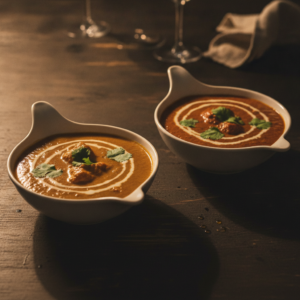
This pairing logic is one reason we encourage guests at our Brampton location to explore the full range of our bread selection rather than defaulting to garlic naan every time. If you’re ordering our The Butter Chicken Debate: Traditional Recipe vs. Modern Brampton Interpretations, for instance, a plain naan allows the tomato-cream sauce to remain the centrepiece of the bite — garlic naan can compete with the subtlety of the dish. For something like our lamb rogan josh, where the spice profile is bold and the sauce is intense, a lachha paratha’s layers absorb the gravy while the ghee in the bread rounds out the heat.
Puri and Bhatura: The Fried Outliers
No flatbread education is complete without acknowledging the deep-fried members of the family. Puri is a small, round disc of whole-wheat dough that puffs dramatically when dropped into hot oil, inflating into a golden sphere before being drained and served immediately — it cannot wait. Bhatura is its larger, maida-based cousin, leavened with yogurt and baking soda, and associated almost exclusively with chole bhatura, a Punjabi brunch dish beloved from Chandigarh to Mississauga. Both breads are special-occasion foods not because of tradition alone, but because their texture and fat content genuinely earn that status. They are extraordinary, and they know it.
Where to Continue Your Flatbread Education in Brampton and Mississauga
The best way to learn about Indian flatbreads is to eat them systematically — starting with the simplest preparations and working toward the more complex. If you’re an Indian restaurant near me searcher who has landed here looking for a place to put this knowledge to practical use, we’d argue that a dedicated bread tasting at 7 Spice Bistro is the most enjoyable classroom available in the region.
Our Brampton dining room serves a full range from whole-wheat roti through to stuffed parathas, garlic naan, and kulcha. Our Mississauga guests can access the same depth of selection. Both locations are staffed by team members who genuinely enjoy talking about food — if you ask your server why we chose a specific preparation method for a particular bread, expect a real answer, not a menu recitation. That kind of knowledge-sharing is part of what has earned 7 Spice Bistro its reputation among Indian food enthusiasts across the GTA.
We also offer catering for events throughout Brampton and Mississauga — and bread selection is one of the most frequently discussed topics with catering clients, because the right flatbread can elevate a buffet or family-style service significantly. If you’re planning an event, our Catering Your Brampton Event: Why Indian Food Impresses Corporate Teams and Family Reunions guide walks through exactly how we handle large-format bread service without sacrificing quality.
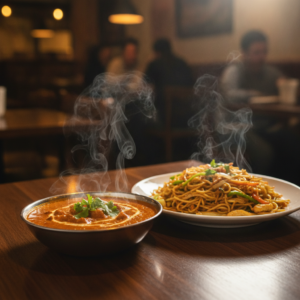
For guests exploring beyond the classics, our menu also features dishes influenced by Indian-Chinese Hakka cuisine. If you haven’t yet encountered hakka food, it represents a fascinating fusion tradition where Indian spice sensibility meets Chinese cooking techniques — noodles, fried rice, and saucy stir-fries that carry the fingerprints of both culinary traditions. We’re proud to offer it alongside our traditional flatbread program, and it’s a combination that consistently surprises first-time visitors.
If you’re also curious how our fish and shrimp dishes pair with different breads, our team has written about it in depth: see Seafood in Indian Cuisine: What Makes 7 Spice Bistro’s Fish & Shrimp Dishes Stand Out for pairing ideas that go well beyond the expected.
“The bread basket at an Indian restaurant is not an afterthought. It is a map of the subcontinent’s agricultural history, its regional identities, and its cooks’ relationships with fire, fat, and fermentation. Read it carefully.”
The flatbread families of India are vast, and this guide has covered only the most essential ones. But the progression from roti to paratha to naan — from the humblest tawa bread to the tandoor’s dramatic heat — is enough to permanently deepen your appreciation of every Indian meal you eat from this point forward. Whether you’re a lifelong lover of the cuisine or someone searching for the best indian restaurant brampton has to offer, that education starts at the table, with a piece of bread in your hand.
Ready to Taste the Difference?
Come explore our full flatbread selection — from hand-rolled roti to tandoor-baked naan — at 7 Spice Bistro in Brampton. Our team is here to guide you through every bite, every layer, and every pairing. Whether you’re dining in or ordering for your family tonight, we’d love to be part of your flatbread education.
✍️ Written by the 7 Spice Bistro Team — Our kitchen and hospitality team in Brampton is made up of people who grew up eating these breads, learned to cook them from family, and now prepare them daily for guests across the GTA. We write about Indian cuisine because we live it, and because we believe that a well-fed guest is one who understands what’s on their plate.
Related Articles
- Naan Bread Varieties: From Traditional Tandoor to Modern Interpretations at Your Local Bistro
- Momos, Samosas & More: The Appetizer Starter Pack for Families New to Indian Food
- The Samosa-Momo Starter Strategy: How to Order Appetizers Like You Know What You're Doing
- Paneer vs. Tofu: The Vegetarian Protein Face-Off in Modern Indian Cooking