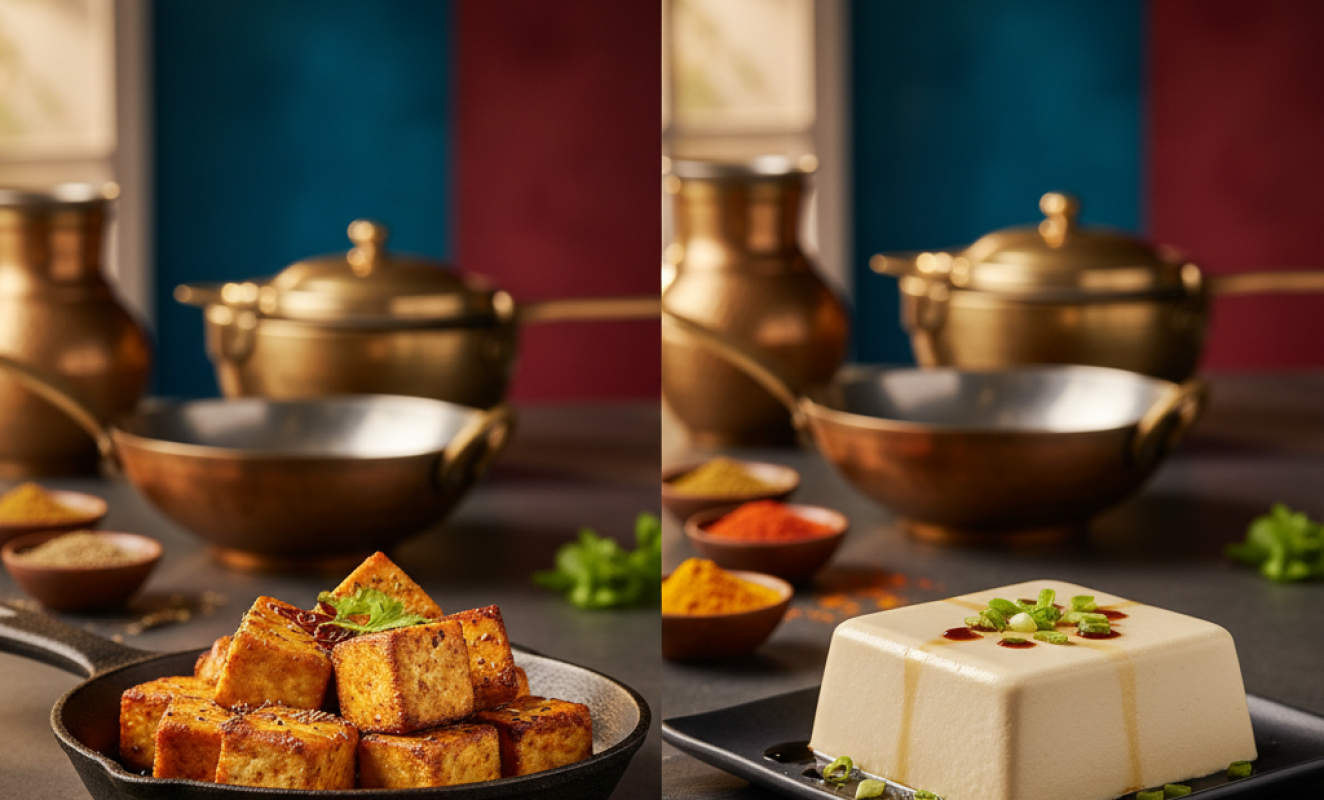
The Great Vegetarian Protein Debate Has Arrived in Brampton
Indian food has always understood something that Western cuisines are only now catching up to: you do not need meat to build a deeply satisfying, protein-rich meal. Walk into any authentic Indian restaurant and you will find paneer — that firm, fresh cheese that has anchored subcontinent cooking for centuries — sitting comfortably beside dishes that have nourished generations of vegetarian families. But in 2026, something interesting is happening in kitchens across Brampton and Mississauga. Tofu, once considered an exclusively East Asian ingredient, is quietly making its way onto Indian menus, particularly in Hakka-influenced dishes, and guests are genuinely curious about how it stacks up.
At 7 Spice Bistro, we have been fielding this question more and more: “Should I order the paneer or is there a tofu option?” It is a fair question, and the answer is more layered than a simple swap. This article walks you through the real differences — nutritionally, texturally, and culturally — so you can make the most informed, delicious choice the next time you are seated at our table or searching for the best indian food near me.
QUICK ANSWER
Paneer is the traditional choice in authentic Indian cooking — mild, firm, and rich in calcium and protein. Tofu is the modern vegan-friendly alternative that absorbs bold Indian and Hakka spices exceptionally well. Both have a place on a great vegetarian Indian menu, and at 7 Spice Bistro in Brampton, we prepare each with the respect it deserves.
What Exactly Is Paneer — and Why Has It Defined Vegetarian Indian Cuisine for So Long?
Paneer is fresh, non-aged cheese made by curdling hot full-fat milk with an acid — usually lemon juice or vinegar — then pressing the curds into a firm block. No melting, no aging, no rennet. The result is one of the most versatile proteins in any cuisine’s toolkit.
What makes paneer so essential to authentic Indian cooking is its behaviour under heat. Unlike most cheeses, it holds its shape when fried, grilled, or simmered in a rich tomato-cream gravy. That structural integrity is what makes dishes like Palak Paneer, Shahi Paneer, and Paneer Tikka Masala so satisfying — the cubes retain a slightly squeaky bite even after absorbing all that sauce. According to the National Institutes of Health (NIH), paneer provides approximately 18–20 grams of protein per 100 grams, making it one of the densest non-meat protein sources available in traditional South Asian diets.
Culturally, paneer is woven into the identity of North Indian home cooking. Families in Punjab, Uttar Pradesh, and Bengal have passed down paneer recipes through generations. When guests from Brampton and Mississauga sit down and order Paneer Butter Masala, they are not just eating dinner — they are connecting with something deeply familiar and emotionally rooted.
Why Our Team at 7 Spice Bistro Still Champions Fresh Paneer
Our kitchen team prepares paneer fresh, treating it as a living ingredient rather than a pantry commodity. The difference is immediately noticeable — fresh paneer has a subtle creaminess and a clean milk flavour that store-bought blocks simply cannot replicate. When it hits a hot tandoor-style grill or lands in a slow-simmered curry, that freshness becomes the foundation of the dish’s character. If you have ever wondered why paneer at some restaurants tastes rubbery or bland, the answer is almost always refrigerated packaged paneer that has been sitting too long.
“Fresh paneer is not just a protein — it is a canvas. It takes on the personality of whatever spice it meets, which is why it belongs at the heart of Indian vegetarian cooking.” — 7 Spice Bistro Kitchen Team
How Does Tofu Fit Into Modern Indian and Hakka Cooking?
Tofu earns its place in modern Indian menus primarily through the Hakka culinary tradition — and it genuinely belongs there. Tofu is made from coagulated soy milk pressed into solid white blocks, and it has been a cornerstone of Chinese cooking for over 2,000 years. When Chinese immigrants settled in parts of India, particularly Kolkata’s Hakka community, their cooking merged with local spice sensibilities to create Indo-Chinese cuisine: a bold, wok-fired, sauce-heavy style that has since become enormously popular across Canada.
In Hakka-style dishes — think Chilli Tofu, Tofu in Garlic Sauce, or Tofu Manchurian — firm tofu is ideal. It absorbs the soy-chilli-ginger-garlic sauces deeply, crisps up beautifully in a hot wok, and carries the flavour profile of the dish without adding any competing taste of its own. That near-neutral base is tofu’s greatest asset in a heavily spiced sauce environment.
According to Healthline, firm tofu contains roughly 8–10 grams of protein per 100 grams along with all essential amino acids, making it a complete plant protein. It is also completely dairy-free, which matters enormously for our vegan guests and those with lactose sensitivities who still want to experience great hakka food and Indian flavours without compromise.
The Growing Demand for Plant-Based Options in Brampton and Mississauga
The Greater Toronto Area, including Brampton and Mississauga, has one of the most diverse and health-conscious dining populations in North America. Vegan and plant-based dining requests have increased noticeably in our dining rooms over the past three years. Offering tofu-forward dishes is not a trend-chasing move — it is a genuine response to the needs of our community. Families come to us where one member is fully vegan, another is vegetarian, and a third eats meat, and we want every single one of them to leave satisfied.
Paneer vs. Tofu: A Side-by-Side Comparison for the Informed Diner
Both proteins have real merit — but they are not interchangeable. The right choice depends entirely on the dish, the dietary goal, and personal taste. Here is a straightforward breakdown to help you decide.
| Attribute | Paneer | Firm Tofu |
|---|---|---|
| Primary Ingredient | Full-fat cow or buffalo milk | Soybeans (plant-based) |
| Protein (per 100g) | 18–20g | 8–10g |
| Dairy-Free? | No | Yes |
| Vegan? | No | Yes |
| Texture in Curry | Firm, holds shape, slightly creamy | Softer, absorbs sauce deeply |
| Best Cooking Method | Grilling, tandoor, rich gravies | Wok-frying, Hakka-style sauces |
| Cultural Origin | Traditional South Asian | East Asian / Indo-Chinese (Hakka) |
| Own Flavour? | Mild, milky, slightly tangy | Nearly neutral, full flavour absorption |
When you browse the 7 Spice Bistro menu, you will find both proteins featured in dishes specifically designed to showcase their individual strengths — not just as afterthoughts or substitutions, but as intentional centrepieces. That philosophy is what separates a thoughtful indian restaurant near me from a place that simply swaps proteins and calls it a day.
Why Does the Preparation Method Change Everything for Both Proteins?
Preparation technique is the single greatest determinant of whether paneer or tofu succeeds in a dish. Both proteins are largely bland on their own — their brilliance comes entirely from how they are treated before and during cooking.
Marinating and Grilling Paneer the Right Way
Fresh paneer benefits enormously from a well-composed marinade. At 7 Spice Bistro, our Paneer Tikka marinade layers yogurt, turmeric, kashmiri red chilli, garam masala, ginger-garlic paste, and a squeeze of fresh lime. The yogurt tenderises the outer surface while the spices penetrate the pores. After at least an hour of resting — ideally overnight — the paneer hits a high-heat grill or a cast-iron surface to develop char and a slightly smoky crust that transforms the eating experience entirely.
Paneer that has not been marinated or seared properly will taste like a soft, bland cube. That step between raw ingredient and finished dish is where skill lives, and it is a step our team in Brampton and Mississauga takes seriously every service.
Pressing, Drying, and Wok-Firing Tofu for Maximum Flavour
Tofu holds a significant amount of water — and that water is the enemy of good texture. Before any tofu enters our wok, it is pressed to remove excess moisture, then dried at medium heat in a pan or fryer to create a firm, slightly golden exterior. That crust is critical. It gives the tofu structural integrity when the sauce hits, prevents it from falling apart, and creates tiny pockets on the surface that catch and hold every bit of garlic, chilli, and soy. Properly prepared Chilli Tofu should have a satisfying bite, not dissolve into mush.
These preparation steps are why reading 7 spice bistro reviews will consistently surface comments about texture and depth of flavour — because we are not cutting corners at either stage of the process.
For a deeper look at how we approach protein-forward dishes across our full menu, explore our piece on The Butter Chicken Debate: Traditional Recipe vs. Modern Brampton Interpretations — the same culinary philosophy applies whether we are working with meat, paneer, or tofu.
Is One Option Healthier Than the Other for Regular Dining?
Neither paneer nor tofu is universally “healthier” — the better choice depends on your personal nutritional goals, dietary restrictions, and the rest of your meal. Each brings a different profile to the table, and both absolutely fit into a balanced, nutritious diet when prepared thoughtfully.
Paneer is calorie-denser due to its fat content from whole milk, and it is an outstanding source of calcium — a meaningful benefit for vegetarians who do not consume much dairy elsewhere. It also provides a higher per-gram protein hit than tofu, which matters if you are eating Indian food as your primary protein source at a meal.
Tofu is lower in calories and saturated fat, making it a smart choice for guests watching cardiovascular health markers. It is also one of the few plant proteins that is genuinely complete — meaning it contains all nine essential amino acids in adequate proportions. For families in Brampton and Mississauga navigating vegan or lactose-intolerant diets, tofu offers protein depth without any of the dairy-related concerns.
Our honest recommendation: if you are eating a rich curry with a creamy sauce base, paneer is your natural partner — the fat in the cheese balances the spice beautifully. If you are ordering a wok-fired Hakka dish with bold, light sauces, tofu will absorb and carry those flavours better. Pair your choice with the dish design rather than defaulting to one protein every time, and your meals will always be more interesting.
We also encourage guests who love the ocean-fresh side of our menu to explore how protein diversity works beyond plant sources — see our piece on Seafood in Indian Cuisine: What Makes 7 Spice Bistro’s Fish & Shrimp Dishes Stand Out for a look at how we bring the same ingredient-first philosophy to seafood.
Where Does This Leave the Modern Indian Menu in 2026?
The best modern Indian menus do not force a choice between tradition and innovation — they celebrate both on the same page. Paneer is not going anywhere. It is irreplaceable in the classic dishes that define North Indian vegetarian cooking, and no amount of culinary fashion will change that. But tofu, especially in the context of Indo-Chinese Hakka cooking, has earned genuine standing as a permanent fixture rather than a novelty.
At 7 Spice Bistro, our menu reflects this balance honestly. We are proud to serve Brampton and Mississauga communities that include multigenerational Indian families who grew up eating paneer, as well as newer residents and second-generation diners who want the flavours of home expressed through a more contemporary or plant-forward lens. Both groups deserve a great meal, and both groups consistently get one.
The seven spice bistro philosophy has always been that great indian food is not a museum exhibit — it is a living, evolving conversation between tradition and the needs of the people eating it today. Paneer and tofu, side by side on our menu, represent exactly that conversation.
Ready to Taste the Difference for Yourself?
Whether you are a lifelong paneer devotee, a tofu convert, or genuinely curious about both, our team at 7 Spice Bistro is ready to walk you through every option on our menu. Come visit us in Brampton, explore our Mississauga location, or order online today — authentic, thoughtfully prepared Indian and Hakka cuisine is closer than you think.
✍️ Written by the 7 Spice Bistro Team — Our team of passionate cooks, flavour thinkers, and hospitality professionals has been serving Brampton and Mississauga for years with one shared belief: every guest deserves food that is honest, delicious, and made with care. We write about food the same way we cook it — with respect for tradition and curiosity about what comes next.
Frequently Asked Questions
How is paneer different from regular cheese in Indian cooking?
Paneer is a fresh, unaged cheese made by curdling hot milk with an acid and pressing the curds — it contains no rennet and does not melt under heat, which makes it uniquely suited to grilling, frying, and long simmering in curries. Unlike aged cheeses such as cheddar or mozzarella, paneer has a neutral, clean flavour that makes it a blank canvas for Indian spice blends. Its non-melting quality is what gives dishes like Paneer Tikka and Palak Paneer their distinctive bite and texture that no other cheese can replicate.
What makes tofu suitable for Hakka-style Indian dishes specifically?
Tofu’s near-neutral flavour and porous structure make it exceptional at absorbing the bold, sauce-heavy profiles of Indo-Chinese Hakka cooking — think garlic, ginger, soy, chilli, and vinegar. When firm tofu is pressed to remove moisture and then wok-fried at high heat, it develops a golden crust that holds up in sauces without falling apart. The result is a dish where every cube carries the full flavour of the sauce, which is exactly what Hakka cuisine demands from its proteins.
Why do some Indian restaurants serve rubbery or bland paneer?
Rubbery, bland paneer is almost always the result of using refrigerated packaged paneer that has been stored too long, or skipping the marinating and searing steps that are essential to great flavour and texture. Paneer that sits in a cold cooler loses moisture and becomes dense and chewy — it needs either fresh preparation or a proper warm-water soak to restore its texture before cooking. At 7 Spice Bistro, we prepare paneer fresh and always marinate it before it hits any heat source, which is why our guests consistently notice the difference in quality.
Can I request tofu as a substitute for paneer in any dish at 7 Spice Bistro?
While tofu and paneer share some cooking versatility, they are not always a one-to-one substitute because the dishes are designed around the specific properties of each protein — a rich, dairy-based Makhani sauce is built for paneer, while a Manchurian-style preparation is crafted for tofu. That said, our team is always happy to discuss options and accommodations with guests who have dietary needs. The best approach is to speak directly with our staff, who can guide you toward the dishes where a protein adaptation will genuinely shine rather than compromise the dish. We also serve a dedicated 7 Spice Bistro Mississauga vs. Brampton: How We Serve Two Communities with One Philosophy experience where both menus reflect the needs of their specific communities.
Related Articles
- The Naan-to-Paratha Progression: Building Your Bread Education One Bite at a Time
- Naan Bread Varieties: From Traditional Tandoor to Modern Interpretations at Your Local Bistro
- Momos, Samosas & More: The Appetizer Starter Pack for Families New to Indian Food
- The Samosa-Momo Starter Strategy: How to Order Appetizers Like You Know What You're Doing