If you’ve ever typed “tandoori chicken near me” into your phone at 6 p.m. on a Friday, you already know the hunger is specific — it’s not just any grilled chicken you’re after. It’s that particular depth of char, the smoky perfume that hits you before the plate even lands on the table, and the way the spiced marinade seems to become part of the meat itself rather than just sitting on top of it. In 2026, with Indian cuisine growing faster in North American cities than almost any other culinary category, more diners in Brampton are asking the right follow-up question: not just where to find it, but what separates a genuinely tandoor-cooked bird from an oven-baked imitation dressed up with food colouring.
At 7 Spice Bistro, we’ve spent seven years answering that question with heat, craft, and a tandoor that earns its keep every single service. This guide is our honest attempt to teach you what the cooking process actually involves, why it matters to your plate, and what you should look for — and look out for — when you’re searching for authentic Indian food near you.
⚡ QUICK ANSWER
Tandoori chicken gets its distinctive flavour from a clay oven called a tandoor that reaches temperatures between 480°C and 900°F — far hotter than a conventional oven. The intense, radiant heat sears the yogurt-and-spice marinade directly into the meat while the clay walls impart a subtle earthen smokiness that no baking tray can replicate. For Brampton diners, 7 Spice Bistro offers authentic tandoori cooking crafted by chefs with diverse regional Indian backgrounds and over seven years of experience in the community.
What Exactly Is a Tandoor, and Why Does It Change Everything About the Chicken?
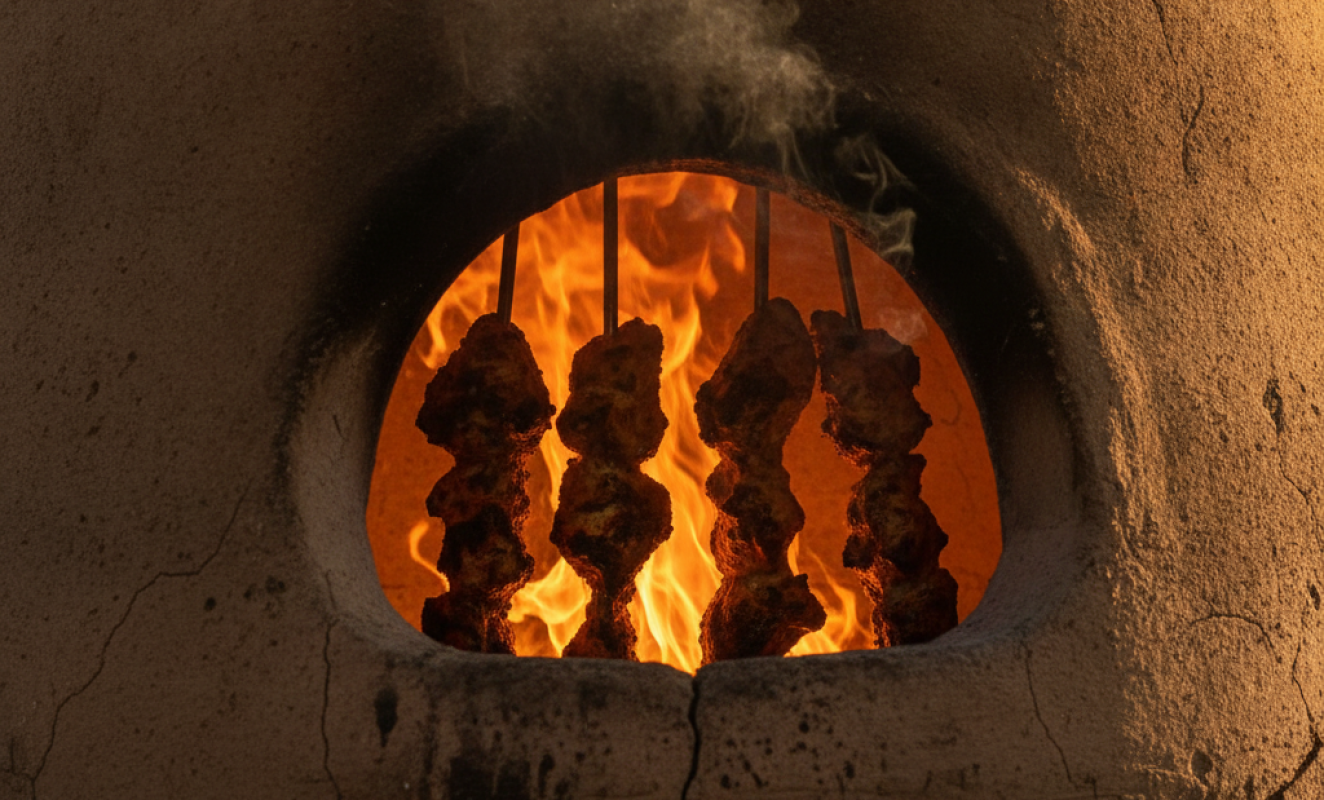
A tandoor is a cylindrical clay oven, typically fired with charcoal or wood, that generates temperatures professional bakers and chefs in Western kitchens simply cannot match with conventional equipment. The cooking environment inside a tandoor is unique: radiant heat from the clay walls, convective heat from the burning fuel at the base, and residual conductive heat all work simultaneously on whatever is lowered inside on long metal skewers.
According to the Journal of Food Chemistry (2019), the Maillard reaction — the chemical process responsible for the deeply savoury, slightly caramelised crust on well-cooked proteins — occurs most aggressively at temperatures above 140°C (284°F). A properly fired tandoor operating at 480–500°C drives this reaction to its full potential in a matter of minutes rather than the slow, moisture-stripping hour a conventional oven requires. That’s the science behind the crust you can’t replicate at home.
The clay itself plays a supporting role that often goes unnoticed. Porous fired clay absorbs and radiates heat in a way that creates an almost oven-within-an-oven effect — the walls glow and give the food a gentle but constant radiation from all sides. When fat and marinade drip from the chicken onto the coals below, the resulting smoke travels upward and briefly coats the meat, adding a layer of flavour that no marinade recipe, however carefully spiced, can deliver on its own. This is why the smokiness of great tandoori chicken smells different from barbecued chicken — it’s clay-filtered, not open-flame.
“The tandoor is not just a cooking tool — it is an environment. The clay, the smoke, the radiant walls, and the vertical orientation of the meat all collaborate to produce a result no modern appliance has fully replicated in seventy years of trying.”
How Does the Marinade Work With the Tandoor — and What’s Actually In It?
Authentic tandoori marinade does two jobs: it tenderises the meat before cooking, and it forms the flavoured crust that makes the finished dish so recognisable. These two jobs require different ingredients working at different stages, which is why a proper marinade is applied in two rounds — a first marinade and a second, spiced marinade — and the chicken must rest overnight for the best results.
The First Marinade: Acid and Salt
The first stage is typically a combination of lemon juice, salt, and sometimes raw papaya paste. The acid begins breaking down the surface proteins of the chicken, opening channels in the meat fibres that allow the second, spiced marinade to penetrate deeper. Skipping this step is one of the most common shortcuts taken by restaurants producing imitation tandoori dishes — the result is flavour that sits on the surface and slides off the moment you cut the meat.
The Second Marinade: Yogurt, Spices, and Regional Character
The second marinade is where a restaurant’s culinary identity reveals itself. A standard base includes full-fat yogurt, ginger-garlic paste, Kashmiri red chilli (which provides colour and mild heat without overwhelming the palate), cumin, coriander, garam masala, and a fat — traditionally mustard oil or ghee — that carries fat-soluble flavour compounds deep into the meat and promotes caramelisation in the oven. What separates a memorable tandoori chicken from a forgettable one is the balance of this spice blend and the quality of every individual component.
At 7 Spice Bistro, our team of chefs brings diverse regional Indian backgrounds to the kitchen, meaning our spice approach draws from more than one tradition. The result is a tandoori chicken that has depth rather than one-note heat — you taste the layering of the marinade the way you’re supposed to, with the smokiness arriving last rather than first.
For those who want to understand how the grain you serve alongside affects the full experience, our guide on The Rice Situation: Basmati, Jasmine & Brown—Which Base Matters Most for Your Curry walks through exactly why the pairing matters as much as the main dish.
Why Do So Many “Tandoori” Dishes Miss the Mark — and How Can You Tell the Difference?
Most disappointments labelled as tandoori chicken are not cooked in a tandoor at all. They are oven-baked, sometimes under a broiler, with red food colouring added to achieve the visual suggestion of authentic preparation. Knowing what to look for protects you from spending money on a dish that doesn’t deliver.
According to a 2022 consumer survey published by Statista (2022), 68% of North American diners who identified themselves as regular consumers of Indian cuisine reported that authenticity of cooking method — not just spice level — was their primary driver of restaurant loyalty. That figure is striking: diners have developed real literacy around technique, even when they can’t always name what they’re tasting.
Here’s what authentic tandoori chicken looks and feels like versus the common imitation:
| Attribute | Authentic Tandoor-Cooked | Oven-Baked Imitation |
|---|---|---|
| Colour | Deep burnt orange-red with natural char marks; uneven in a beautiful way | Uniformly bright red; often artificial-looking with no charring |
| Texture | Firm, slightly charred exterior; juicy interior that pulls cleanly from the bone | Soft exterior, sometimes steamed or wet, flesh can be dry or rubbery |
| Aroma | Distinct smoky character layered with spice; arrives before the plate does | Spiced but flat; little or no smoke note |
| Marinade Penetration | Flavour throughout the meat, not just the surface | Spice concentrated at the surface; bland closer to the bone |
| Cooking Time | 8–12 minutes in a 480°C+ environment | 30–45 minutes at 200–220°C; longer = more moisture loss |
The table above is your practical checklist the next time you’re evaluating where to eat. Char marks that look organic and uneven are a green flag. Unnaturally vivid, uniform red colouring with no textural contrast is the clearest sign you’re looking at an oven-baked product.
Where Can You Find Genuine Tandoori Chicken in Brampton?
Brampton’s South Asian dining scene has grown substantially over the last decade, and the city now offers a genuine range of Indian food options — from fast-casual counters to sit-down restaurants with full kitchens. But not every establishment that lists tandoori chicken on its menu is operating an actual tandoor. The volume and cost of maintaining a properly fired clay oven is significant, and some kitchens simply don’t have the space or infrastructure.
When you’re searching for Indian food near me or specifically an Indian restaurant near me that does justice to the tandoor tradition, the questions worth asking are straightforward: Does the menu describe the marinade ingredients? Are the dishes cooked to order or pre-cooked and reheated? Is the kitchen open enough for you to ask about the equipment? Restaurants proud of their process are usually happy to answer.
At 7 Spice Bistro, we’ve been serving Brampton since our founding, and our tandoori preparation has remained one of the dishes our regular guests return for specifically. Our kitchen team brings specialised knowledge of traditional and regional Indian techniques, and that background shapes the consistency you’ll notice visit after visit. We’re also proud to be considered among the best Indian restaurant Brampton options for families and food enthusiasts who want genuine craft rather than a generic dining experience.
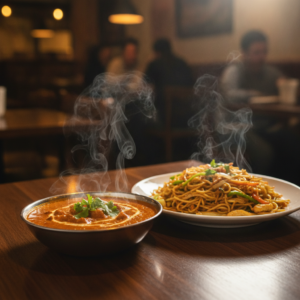
Beyond the tandoor, our menu covers Indian cuisine, Hakka, and Indo-Chinese dishes — a breadth that reflects the genuine diversity of our chefs’ training and the community we serve in Brampton, ON. For those curious about how different dining formats affect your experience, we’ve also written about Food Truck vs. Restaurant: When Your Order Size Actually Matters (And When It Doesn’t) — a useful read if you’re planning a group meal or event.
A Note on Non-Vegetarian Options
We know that when people look for non veg restaurants near me, they want to be sure the kitchen takes its meat dishes as seriously as its vegetarian ones. At 7 Spice Bistro, our non-vegetarian menu receives the same craft attention as our extensive vegetarian selection — quality sourcing, proper marination time, and cooking methods that respect the ingredient. Tandoori chicken is not a second-tier offering at our restaurant; it is a centrepiece dish prepared with the same care that goes into every plate that leaves our kitchen.
For a deeper dive into the technical side of tandoor temperature management and why it affects your food so dramatically, we recommend reading our companion piece: The Tandoori Chicken Question: Why Temperature Control Changes Everything.
What Should You Order Alongside Tandoori Chicken to Get the Full Experience?
Tandoori chicken is best understood as one component of a larger table rather than a standalone dish. The way it is served — traditionally with sliced raw onions, wedges of lemon, and a mint-coriander chutney — is not decoration. Each element has a functional relationship with the chicken itself.
The raw onion provides a crisp, pungent contrast to the smoky depth of the chicken. The lemon, squeezed over the meat just before eating, adds acidity that lifts the fat from the marinade and brightens the entire flavour profile. The mint chutney — cool, herbal, and slightly tangy — acts as a temperature counterpoint that emphasises the warmth of the spice without amplifying the heat. Together, these three accompaniments complete the dish in a way that is lost when restaurants serve tandoori chicken with a generic salad or a tub of raita as a substitute.
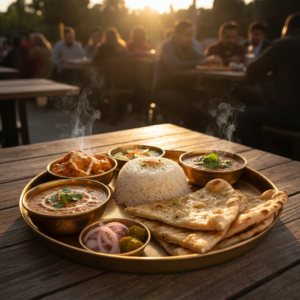
For families visiting 7 Spice Bistro in Brampton, the tandoori platter is one of our most recommended starting points for guests who are newer to the depth of Indian cuisine. It introduces layered spicing and clay-oven cooking in a form that is immediately approachable — not heavily sauced, not unfamiliar in texture — while still delivering the full complexity that makes Indian food remarkable. Pair it with a dal or a vegetable curry, add a bread from the tandoor itself, and you have a complete, balanced meal that tells a culinary story from the first bite.
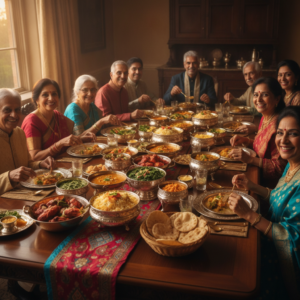
If you’re planning a larger family dinner or a private event, our catering team can help you build a menu around tandoori and grilled items, with our dine-in private dining space available for groups who want a quieter, more curated evening. We regularly host events in Brampton where the tandoori section of the menu becomes the centrepiece — and we find that it almost always converts guests who arrived expecting to order something safer.
Also worth reading for context on how we think about our Brampton community: Why Brampton Customers Trust Us for 7spice Bistro.
Ready to Taste the Difference a Real Tandoor Makes?
Stop guessing and start eating. Our team at 7 Spice Bistro in Brampton is ready to welcome you to a warm, peaceful dining room where the tandoor does the talking. Whether you’re joining us for a quiet family dinner, exploring our Hakka and Indo-Chinese menu, or planning a catered event, we’d love to be your go-to Indian restaurant in Brampton.
✍️ Written by the 7 Spice Bistro Kitchen & Content Team
Our kitchen team has been cooking and serving the Brampton community for over seven years, drawing on diverse regional Indian culinary backgrounds to bring traditional techniques to every dish we serve. This article reflects the knowledge and experience we’ve accumulated through thousands of services, real guest conversations, and a genuine commitment to helping diners understand what they’re eating — and why it matters.
Frequently Asked Questions
How do I know if a restaurant is actually using a tandoor oven?
Ask directly — any kitchen using a genuine tandoor will be proud to confirm it. Beyond that, authentic tandoor cooking produces visually uneven char marks, a distinct smoky aroma that arrives with the dish, and a crust that has real textural variation across the surface. Uniformly coloured, soft-crusted chicken with no smoke note is a reliable indicator of oven-baked preparation regardless of what the menu says.
What makes 7 Spice Bistro different from other Indian restaurants in Brampton?
Seven years of community presence in Brampton, a kitchen team with diverse regional Indian specialisations, and a commitment to budget-friendly pricing without compromising ingredient quality set us apart. We also offer a quieter, more peaceful dining environment than most high-volume restaurants, which is something our regular guests — particularly families and diners who appreciate conversation over noise — specifically mention. Our menu spans Indian cuisine, Hakka, and Indo-Chinese dishes, giving you genuine variety from a kitchen that knows each category well.
Why does tandoori chicken look orange-red — is that food colouring?
In authentic preparations, the colour comes almost entirely from Kashmiri red chilli powder and the caramelisation of the yogurt marinade at high heat. Kashmiri chilli is specifically valued for its vibrant colour and relatively mild heat level, making it the right tool for the job. Some restaurants do add food colouring to intensify the visual effect, particularly when the chicken is oven-baked rather than tandoor-cooked and therefore lacks the natural colour development that comes from genuine high-heat caramelisation.
Can I order tandoori dishes for a catered event or private dining experience at 7 Spice Bistro?
Absolutely. Our catering services and private dining capabilities in Brampton are well-suited to events where tandoori and grilled dishes take centre stage. We work with families, corporate groups, and event planners to design menus that balance our tandoori specialties with vegetarian options and dishes from our Hakka and Indo-Chinese sections. Reach out through our website to discuss your event requirements and we’ll build a menu that works for your group size and occasion.