Choosing the right buffet restaurant in Brampton or Mississauga sounds simple — walk in, pick up a plate, eat until you’re happy. But anyone who has been disappointed by lukewarm curry, tired-looking salads, or a dessert tray that hasn’t been refreshed since noon knows that not all buffets are created equal. In 2026, with dining options expanding rapidly across the region, families and food enthusiasts deserve a straightforward guide to knowing exactly what separates a genuinely great spread from one that merely looks the part. At 7 Spice Bistro, we’ve spent seven years cooking authentic Indian and Hakka cuisine in Brampton, and we’ve learned — from our guests, our kitchen, and our own standards — what diners should be looking for the moment they walk through the door.
QUICK ANSWER
A great buffet restaurant earns its reputation through four non-negotiable pillars: rapid dish rotation (no tray should sit untouched for more than 20–25 minutes), consistent food temperature, a variety-to-quality ratio that never sacrifices depth for quantity, and a visible commitment to kitchen transparency. Use these four criteria every time you search for indian buffet near me and you will almost never be let down.
Why Does Dish Rotation Speed Matter More Than Dish Count?
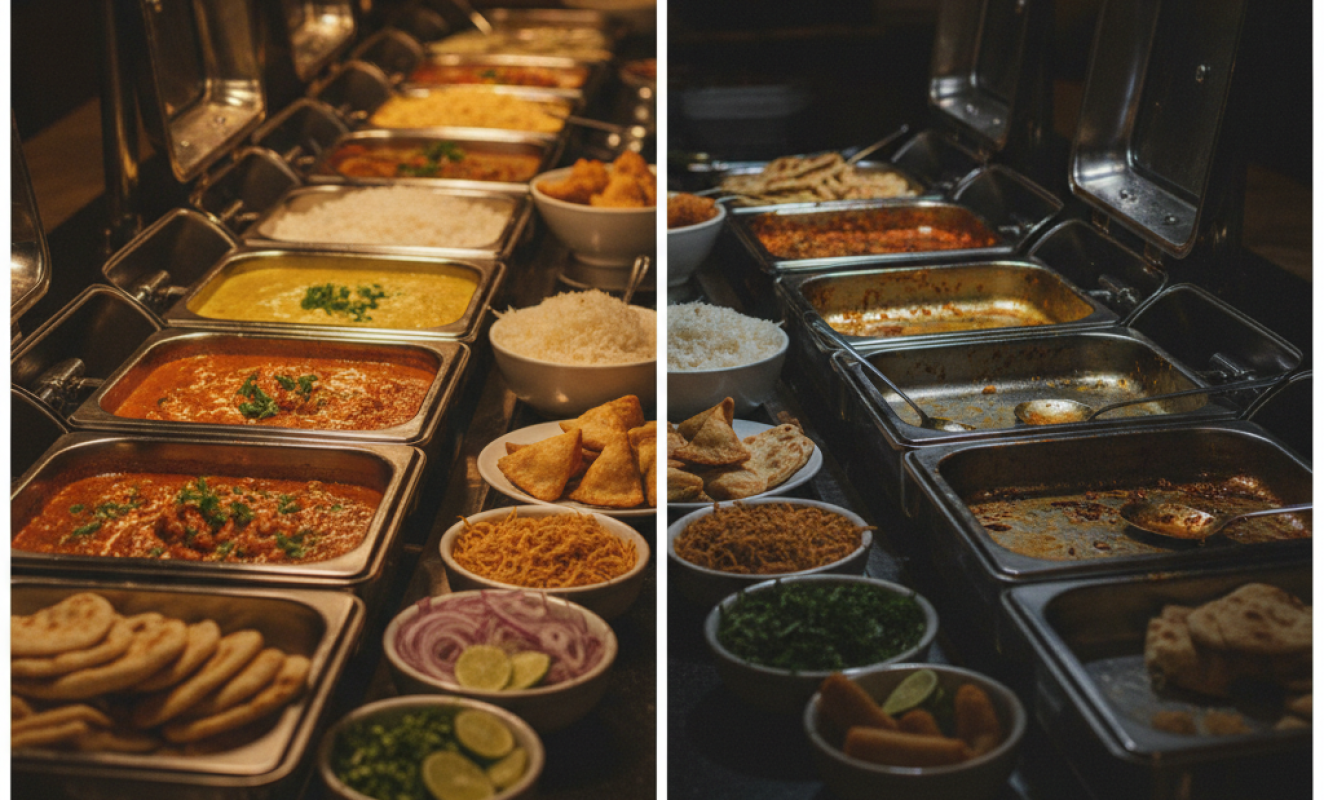
Dish rotation speed is the single most reliable indicator of a buffet restaurant’s kitchen discipline. A tray that sits under a heat lamp for 45 minutes doesn’t just lose temperature — it loses texture, aroma, and the structural integrity that made the dish worth eating in the first place. Fast rotation tells you that the kitchen is actively cooking, not just warming pre-prepared batches assembled hours earlier.
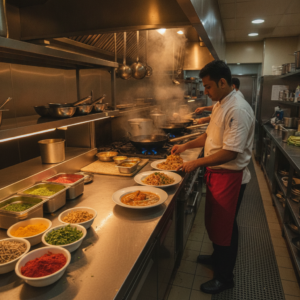
When you arrive at any buffet, spend 60 seconds watching the service line before you pick up a plate. Are staff replacing trays with freshly cooked portions, or are they topping up an existing tray that’s been sitting out? A top-tier operation replaces the entire tray; a mediocre one adds a ladle of new food to the old residue at the bottom. That small detail tells you almost everything about how seriously the kitchen takes freshness.
At our restaurant in Brampton, the principle is straightforward: if it isn’t fresh enough for us to be proud of serving it, it doesn’t stay on the line. That discipline applies whether we’re running a catering event for 200 guests or serving a quiet weekday lunch. Freshness isn’t a selling point — it’s a baseline obligation.
“The best indicator of a buffet’s kitchen discipline isn’t the number of dishes on display — it’s how quickly those dishes disappear and come back fresh.”
What to Watch For at the Service Line
Look for condensation on the underside of lids — that’s steam from genuinely hot food. Notice whether the sauce in a curry tray has a fresh sheen or a dried, caramelised crust around the edges. Check whether the rice has been fluffed recently or whether it has compressed into a dense block. These are the micro-signals that experienced diners learn to read quickly, and they’re reliable every single time.
How Do You Test Food Temperature Consistency Across a Buffet Line?
Food temperature consistency across a buffet line is a direct measure of equipment investment and staff attentiveness. Hot dishes should be genuinely hot — not warm, not tepid — and cold items should be cold throughout, not just on the surface.
There’s a practical test any diner can use: serve yourself from the middle of a hot tray rather than the edges, then compare the temperature of a dal or gravy from the centre versus a spoonful from near the rim. A well-maintained buffet station maintains consistent heat from edge to edge because the chafing fuel or induction element is calibrated properly and checked regularly. Uneven temperature is a sign of aging equipment or infrequent checks by floor staff.
For Indian cuisine specifically — whether you’re evaluating an indian buffet brampton option or a broader South Asian spread — temperature matters doubly. The aromatic compounds in spices like cumin, coriander, and cardamom are volatile; they release their fragrance and complexity when food is genuinely hot. When curry sits at 55°C instead of 75°C, it doesn’t just feel lukewarm — it tastes flat and one-dimensional, even if it was cooked brilliantly two hours earlier.
The Cold Station Test
Don’t overlook the cold side of the buffet. Chutneys, raitas, salads, and desserts that require refrigeration should feel properly chilled — not room temperature with ice underneath. If a raita feels warm at the edges while cold in the centre, the cold station is not being managed with the same discipline as the hot line. Great buffet restaurants treat every station with equal rigour, because every dish is part of the same guest experience.
What Is the Right Variety-to-Quality Ratio — and How Do You Spot When It’s Off?
The variety-to-quality ratio is the balance between how many different dishes are offered and how well each one is actually executed. More dishes is not always better — in fact, a buffet with 30 mediocre options is a far worse experience than one with 14 outstanding ones.
The trap many restaurants fall into — especially those competing aggressively for the all you can eat brampton crowd — is padding the buffet line with filler dishes: plain boiled vegetables, under-seasoned rice variations, or generic accompaniments that exist to fill visual space rather than to add genuine culinary value. These dishes are easy to spot because they require almost no skill to produce and almost no effort to maintain.
A well-curated Indian buffet, by contrast, will show you intentionality in every tray. Each dish will have a clear flavour identity: a dal makhani that is rich and slow-cooked, a palak paneer that has real depth from charred spinach rather than a mild green purée, a chana masala with the acidity and body that comes from proper technique. When every dish on the line has a reason to exist, the variety-to-quality ratio is healthy.
How Regional Diversity Adds Real Value
One hallmark of a genuinely thoughtful buffet is the presence of regional diversity within the cuisine. Indian food is not monolithic — it spans climates, coastlines, and centuries of distinct culinary tradition. A buffet that includes dishes from different regional traditions (North Indian, South Indian, Indo-Chinese Hakka) demonstrates that the kitchen understands depth, not just crowd-pleasing familiarity. At 7 Spice Bistro, our 7 Spice Bistro menu reflects exactly this philosophy — traditional Indian cuisine alongside authentic Hakka Chinese dishes, because real variety means culinary range, not just a longer list of similar items.
If you’re exploring what makes Indian dining in this region exceptional, our guide to Best Restaurants in Brampton, Ontario: A Neighbourhood-by-Neighbourhood Dining Guide for 2026 offers broader context on what sets the best venues apart from the rest.
Why Is Kitchen Transparency a Sign of a Restaurant Worth Trusting?
Kitchen transparency — whether physical or communicated — signals that a restaurant has nothing to hide and everything to be proud of. A buffet restaurant confident in its cooking invites scrutiny rather than avoiding it.
Physical transparency can mean an open kitchen where diners can see food being prepared, or it can simply mean that staff are knowledgeable and forthcoming when asked direct questions: What’s in this dish? Is this made fresh today? How long has this been on the line? A restaurant with a trained, attentive team will answer these questions immediately and confidently. Hesitation or vague answers are red flags.
Transparency also extends to ingredient honesty. In Brampton’s diverse dining community, families often have specific dietary requirements — vegetarian households, guests with allergies, or diners following particular eating practices. The best buffet restaurants maintain clearly labelled dishes and staff who can speak accurately about ingredients without having to disappear into the kitchen for five minutes to find out. For families who prioritise vegetarian dining specifically, our resource on Best Vegetarian Restaurants in Brampton: What to Look For When Plant-Based Is Non-Negotiable covers exactly what to look for and what to ask.
“A kitchen that welcomes questions is a kitchen that knows its food. Transparency isn’t just an ethical choice — it’s a quality signal.”
Reading Online Reviews the Right Way
Before you visit any buffet — particularly if you’re searching for an indian buffet near me or scanning results for restaurants in Brampton or Mississauga — spend five minutes reading reviews critically. Don’t count stars; read the text. The most useful reviews describe specifics: the smell when they walked in, the temperature of the food, the attentiveness of staff. Generic five-star reviews that say “great food, great service” tell you very little. Detailed three-star reviews that explain exactly what fell short are often the most honest and useful feedback you can find. When it comes to 7 spice bistro reviews, our guests consistently highlight freshness, portion generosity, and staff knowledge — the same pillars we’ve built our reputation on over seven years in Brampton.
How Does Value Fit Into the Buffet Equation — Especially for Families?
Value in a buffet context isn’t simply about paying the lowest price per plate — it’s about what that price actually delivers in terms of food quality, freshness, variety, and the overall experience. For budget-conscious families in Brampton and Mississauga, this distinction matters enormously.
A buffet priced at $16 per person that delivers consistently fresh, well-seasoned, high-quality food across 14 dishes is exceptional value. A buffet priced at $12 per person where four of the ten trays are lukewarm and half the dishes taste the same is actually poor value — regardless of the per-plate mathematics. The true cost of a mediocre meal is not just the money; it’s the time, the expectation, and the missed opportunity to eat something genuinely good.
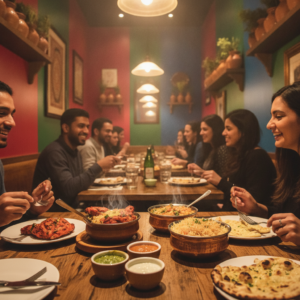
Families dining together — especially those with children who are encountering Indian cuisine for the first time — benefit most from buffets that offer broad, clearly differentiated flavours. A child who tries one mild paneer dish, one mildly spiced dal, and one flavourful rice preparation is more likely to develop an enthusiasm for Indian food than one who encounters an undifferentiated wall of similar-tasting options. Breadth and authenticity together create the best introductory experience.
When families in Brampton search for restaurants — whether they type “restaurants near me,” “food near me,” or specifically “indian restaurant brampton” — they deserve to find options that genuinely deliver on quality rather than just proximity. Location is a convenience; quality is the reason you go back.
The Catering Extension: When Buffet Quality Matters Even More
For guests considering a restaurant’s catering service — whether for a wedding, a corporate event, or a family celebration — the quality of a restaurant’s buffet offering is a direct preview of what they’ll deliver at scale. A kitchen that executes a high-quality buffet consistently during regular service is a kitchen that understands logistics, temperature management, and volume cooking. These are precisely the skills required for successful catering. If the buffet impresses you, the catering almost certainly will too. If the buffet cuts corners, the catering will amplify those shortcomings across your entire guest list.
At 7 Spice Bistro, our catering service brings the same standards we apply every day in our Brampton dining room — freshly prepared dishes, proper temperature management, and a menu that reflects both traditional Indian cooking and the rich tradition of Hakka Chinese cuisine. Whether you’re feeding 20 guests or 200, the commitment to quality doesn’t scale down.
Ready to Experience the Difference?
Whether you’re dining in, planning an event, or looking for authentic Indian and Hakka cuisine in Brampton that consistently earns its reputation — we’d love to welcome you. Come taste the standard we hold ourselves to every single day.
✍️ Written by the 7 Spice Bistro Team — With seven years of authentic Indian and Hakka cooking experience in Brampton, our team writes from real kitchen knowledge and genuine passion for helping diners find food worth eating. We believe great cuisine should be accessible, honest, and consistently excellent — every plate, every service, every time.
Frequently Asked Questions
How do I know if a buffet restaurant in Brampton is actually worth visiting?
Look for four things before you sit down: how quickly dishes are being rotated (fresh trays, not topped-up ones), whether the food is genuinely hot throughout the tray, whether each dish has its own clear and distinct flavour identity, and whether the staff can answer ingredient questions confidently without hesitation. A buffet that passes all four tests is almost certainly worth your time and money.
What makes an Indian buffet near me different from a standard all-you-can-eat restaurant?
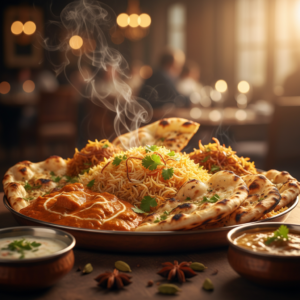
A quality Indian buffet offers not just quantity but genuine culinary range — dishes built from distinct spice profiles, regional cooking techniques, and careful preparation that most standard all-you-can-eat restaurants don’t attempt. The presence of authentic items like amritsari kulcha, properly slow-cooked lentils, or a genuine Hakka-style preparation signals that the kitchen is cooking with intention, not just feeding volume. That distinction is the difference between a forgettable meal and one that brings you back.
Why does temperature matter so much in Indian buffet food specifically?
Indian cuisine relies heavily on aromatic spices whose flavour compounds are activated and sustained by heat. When a curry, dal, or rice dish drops below the optimal serving temperature, the spice aromatics diminish rapidly and the dish loses the layered complexity that good Indian cooking is known for. Food that tastes flat or one-dimensional at a buffet is very often a temperature problem rather than a recipe problem — the dish was cooked well but served poorly.
Can I use a restaurant’s buffet quality to judge its catering service before I book?
Yes — and this is one of the most practical strategies available to anyone planning an event. A restaurant’s buffet is a live demonstration of its ability to manage large-volume cooking, maintain food temperature over extended periods, and keep quality consistent across many dishes simultaneously. These are identical to the core demands of catering. If a kitchen handles its daily buffet with discipline and freshness, it is well-equipped to bring that same standard to your event. If the buffet shows gaps in temperature control or rotation, those gaps will likely surface in a catering context as well.