If you’ve spent any time searching for a great indian restaurant brampton that goes beyond the expected, you already know how rare it is to find a kitchen that truly does two cuisine traditions justice — not just one. In 2026, the conversation around Hakka food has grown louder than ever, and for good reason. Hakka Chinese cuisine — that bold, fire-kissed, Indo-Chinese hybrid that migrated through the Hakka diaspora into Indian kitchens and then across the world — is having a genuine moment. But getting it right? That’s a different challenge entirely. At 7 Spice Bistro, we’ve spent seven years navigating exactly that challenge, and in this piece, we want to share what we’ve learned — honestly, directly, and from the kitchen outward.
QUICK ANSWER
Getting Hakka food right means respecting its dual heritage — Indian spice intuition married to Chinese wok technique. The first-timer mistake is treating it like either pure Chinese takeout or standard Indian curry. It’s neither. At 7 Spice Bistro in Brampton, we build every Hakka dish from that exact intersection: high-heat cooking, house-blended sauces, and spice levels that honour both traditions without diluting either.
What Exactly Is Hakka Food — and Why Does It Taste Different From Regular Chinese?
Hakka food is not regular Chinese food with Indian spices thrown in as an afterthought. That’s the most common misunderstanding we hear, and it leads to a lot of disappointment on both sides — from diners who expect something milder, and from those who expect something hotter. The answer sits in between, and that’s precisely where the magic lives.
The Hakka people are an ethnic group originally from southern China who migrated across Southeast Asia, India, and eventually the world. When Hakka communities settled in Kolkata in the early twentieth century, their cooking began absorbing the aromatics, chilies, and bold seasoning philosophies of Indian kitchens. What emerged was a cuisine that uses soy sauce, vinegar, and wok-charred proteins alongside green chilies, ginger-garlic pastes, and Indian chili powders. The result is a flavour profile that is simultaneously familiar and unexpected — something our guests at 7 Spice Bistro describe, again and again, as “the dish I didn’t know I was missing.”
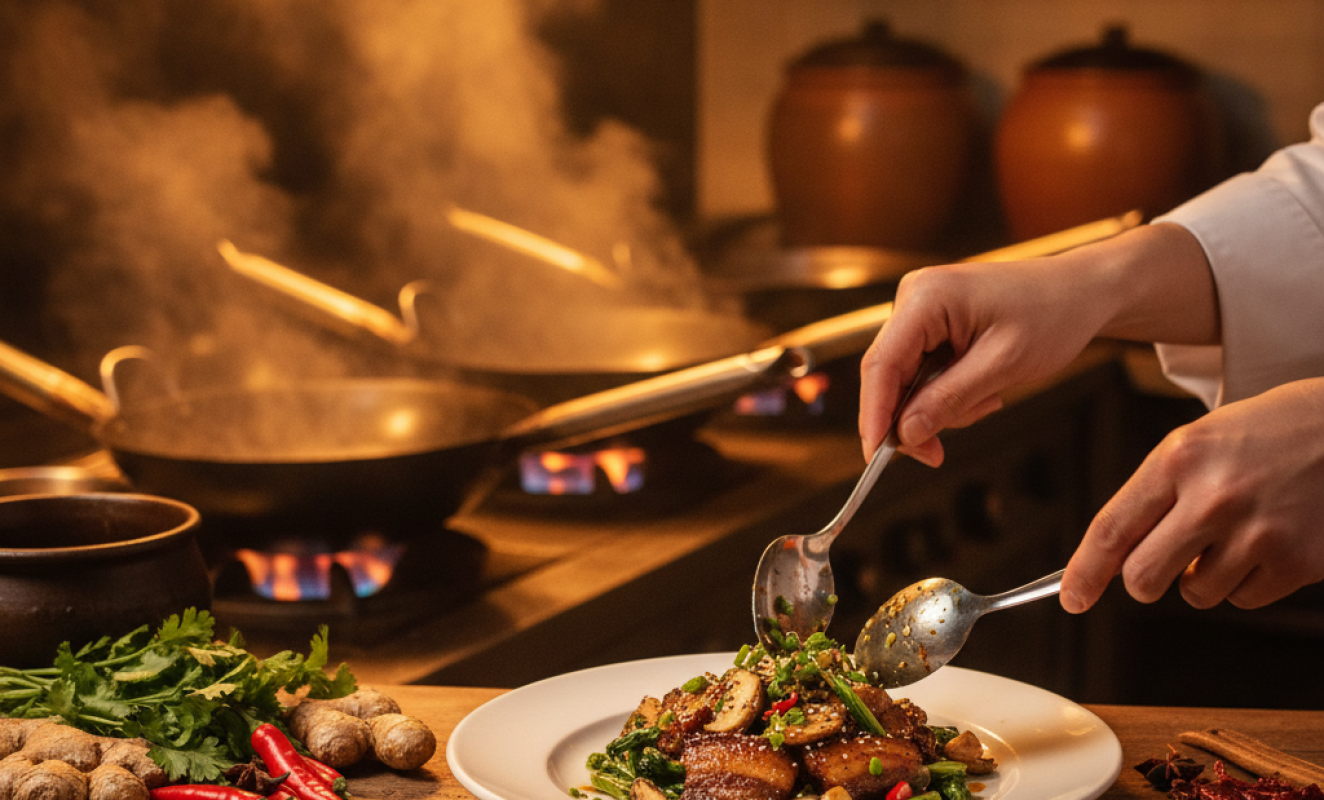
Chili chicken, Hakka noodles, Manchurian cauliflower, crispy chili paneer, and schezwan fried rice are the touchstone dishes of this cuisine. Each one depends on a very specific cooking discipline: extremely high wok heat, precise sauce ratios, and a confidence with seasoning that comes only from repetition. Cook Hakka dishes over low or medium heat, and you lose the smoky, slightly charred edge that defines the cuisine. That char — sometimes called “wok hei” in Chinese culinary language — is non-negotiable.
“Hakka food is not a fusion experiment. It is a fully matured cuisine with its own rules, its own standards, and its own identity. At 7 Spice Bistro, we treat it with exactly that respect.”
Why Most People Get Hakka Food Wrong the First Time They Cook It at Home
The single biggest mistake home cooks make with Hakka food is using the wrong heat level. Wok cooking at home — especially in North American kitchens with standard gas or electric burners — rarely reaches the temperatures a restaurant wok station produces. The dishes come out steamed rather than seared, and the entire character of the cuisine collapses.
The second mistake is sauce imbalance. A proper Hakka sauce is a conversation between soy, vinegar, chili, and something sweet — usually a touch of tomato or sugar — with garlic and ginger as the backbone. Tip any one of those elements too far, and the dish reads as flat, sharp, or just confusing. We’ve refined our sauce ratios over seven years of daily service, and even small adjustments on a given day can make a noticeable difference in the final plate.
Third: protein preparation matters enormously. In Hakka cuisine, proteins — whether it’s paneer, chicken, or vegetables — are typically battered and flash-fried before being tossed in sauce. That crispy outer layer isn’t just texture. It acts as a vehicle that holds the sauce without going soggy, and it creates contrasting bites that keep the dish interesting. Skip the batter step, or rush the frying, and the dish becomes one-dimensional.
These are the reasons why searching for hakka food near me and then attempting to replicate it at home rarely produces the same result. The technique is learned over time, in volume, under real kitchen conditions. It’s also why we take genuine pride in our Hakka menu at 7 Spice Bistro — every component is built from scratch, in-house, with attention that a shortcut sauce or a pre-mixed packet simply cannot replicate.
How 7 Spice Bistro Approaches Hakka Differently Than Other Restaurants
Our approach is built on one foundational belief: authenticity and accessibility are not opposites. You can serve genuinely great Hakka cuisine at prices that work for families, without cutting the corners that destroy quality. That belief has guided every decision we’ve made since we opened in Brampton.
We do not use commercial sauce blends or pre-packaged Manchurian bases. Our schezwan sauce is prepared in-house using whole dried chilies that are soaked, ground, and cooked down with garlic, ginger, and vinegar. Our Hakka noodles are tossed fresh to order — not held in a warmer — because the difference between a freshly wok-tossed noodle and one that’s been sitting for twenty minutes is not subtle. It’s the difference between a dish that lands and one that merely exists on the plate.
We also credit the dual nature of our menu as a genuine advantage. As both an Indian restaurant and a Hakka kitchen, our team works across flavour profiles daily. The spice intuition we’ve developed through years of cooking Indian cuisine — understanding how heat builds, how aromatics bloom, how to balance richness — translates directly and meaningfully into better Hakka food. These are not separate skill sets. They inform each other constantly.
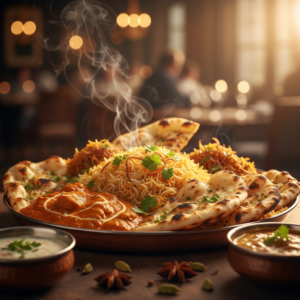
Many guests searching for the best indian restaurant in brampton discover our Hakka menu almost by accident, and then return for it specifically. That crossover is something we’re genuinely proud of. If you’ve been hunting for good indian takeout near me and haven’t yet ventured into our Hakka section, we’d encourage you to start with the chili paneer dry and the schezwan fried rice — together, they represent the full character of the cuisine in a single meal.
For a broader sense of what we offer beyond Hakka, our guide to Downtown Brampton Restaurants: A Diner’s Guide to the Neighbourhood’s Best Eats gives useful context on where 7 Spice Bistro sits in the broader dining landscape of the area.
Is Hakka Food a Good Choice for Vegetarians?
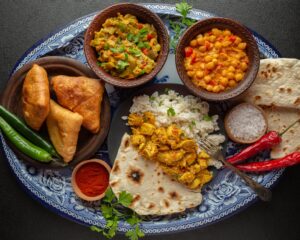
Absolutely — and this is one of the most underappreciated aspects of Hakka cuisine. The vegetarian range within Hakka cooking is genuinely extensive, not a token addition. Cauliflower Manchurian, chili paneer, mixed vegetable Hakka noodles, crispy corn, stuffed mushrooms in schezwan sauce, and vegetable fried rice are all full-flavour dishes that require no compromise from the diner.
At 7 Spice Bistro, we’ve invested specifically in our vegetarian Hakka offerings because our Brampton community has consistently asked for them. Many of our guests come from families where one member eats meat and another doesn’t, and we believe a shared table should work equally well for everyone. A well-made Manchurian cauliflower — battered, fried until golden, tossed in a deep, tangy, slightly sweet Manchurian sauce — is not a lesser dish. It’s a complete one.
Paneer, in particular, holds up beautifully to Hakka cooking techniques. Its firm texture survives the flash fry and the sauce toss without breaking down, and it absorbs the surrounding flavours without losing its own character. Chili paneer — both dry and gravy versions — is one of our most ordered dishes across the entire menu, from guests who have been visiting us for years and newcomers who found us while searching online.
For guests who are already familiar with our Indian vegetarian menu and want to explore how we handle rice dishes more broadly, our piece on Veg Biryani vs. Chicken Biryani: Which Version of India’s Most Loved Dish Is Right for You? offers a helpful perspective on how we think about vegetarian cooking across the full menu.
Where to Find Genuine Hakka Food in Brampton and Mississauga
Finding genuinely well-executed Hakka cuisine in the Greater Toronto Area takes more effort than it should. The cuisine is popular enough that many restaurants list Hakka dishes on their menus, but execution varies enormously. The markers of a kitchen that actually knows what it’s doing are consistent: a real wok station, house-made sauces, proteins that arrive crispy rather than soft, and a kitchen team that has cooked these dishes long enough to know when something is off.
For those searching in and around Mississauga, 7 Spice Bistro is accessible and well-regarded — our guests from that area have been a consistent and valued part of our community since we opened. When people look for the best indian restaurants mississauga side of the border, they often discover that the drive to Brampton for a full Hakka and Indian experience is entirely worthwhile, and many tell us it’s become a regular trip.
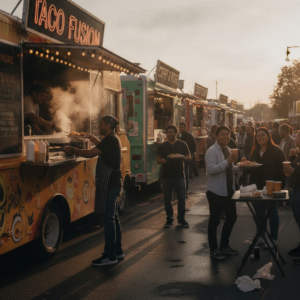
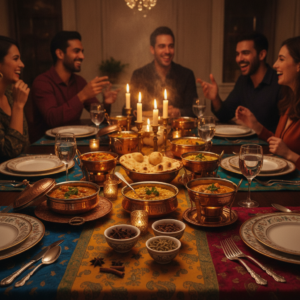
We’re located in Brampton and serve both dine-in and takeout, so whether you’re settling in for a full meal or grabbing an order of Hakka noodles and chili chicken on your way home, we’re set up to make it work. Our catering service also extends Hakka dishes to events and gatherings — an option that tends to surprise guests who didn’t realise Hakka food could work so well at scale. It does, particularly for mixed groups where guests have different preferences across Indian and Chinese flavour profiles.
Our honest advice for anyone exploring Hakka cuisine for the first time: don’t judge the cuisine based on one disappointing experience at a kitchen that wasn’t fully committed to it. Visit 7 Spice Bistro and try it done properly. Order the chili paneer dry, the Hakka noodles, and something from the schezwan range. Let the cuisine introduce itself correctly, and you’ll understand immediately why so many people in Brampton and Mississauga have made it a regular part of their dining rotation.
Ready to Try Hakka Food Done Right?
Visit us for dine-in, order takeout, or book our catering service for your next event. Seven years of authentic cooking in Brampton — ready for your table.
✍️ Written by the Team at 7 Spice Bistro
We are the kitchen and front-of-house team behind 7 Spice Bistro, Brampton’s home for authentic Indian and Hakka Chinese cuisine. With seven years of daily cooking and an unwavering commitment to quality at accessible prices, we write from the stove outward — not from a content brief.
Frequently Asked Questions
How is Hakka food different from regular Indian Chinese food?
Hakka food is a specific culinary tradition that originated with the Hakka Chinese diaspora in India — most prominently in Kolkata — and has its own established dishes, techniques, and flavour logic. What’s often labelled “Indian Chinese” or “Desi Chinese” in Canada draws from this tradition but is sometimes interpreted loosely. True Hakka cooking is defined by high-heat wok technique, house-made sauces with precise balance, and a flavour profile that genuinely bridges both culinary worlds rather than simply adding chili to standard Chinese dishes.
What are the best Hakka dishes to order for a first-time visitor?
For a first visit, we recommend starting with chili paneer dry, Hakka noodles, and either Manchurian cauliflower or chili chicken. These three dishes cover the essential flavour range of the cuisine — the dry chili-forward style, the wok-tossed noodle base, and the saucy Manchurian profile — and together give a complete picture of what Hakka food is about. From that foundation, it becomes much easier to explore the broader menu on subsequent visits.
Why does Hakka food taste better at a restaurant than when I make it at home?
The primary reason is wok heat. Restaurant wok stations reach temperatures that are genuinely difficult to replicate on a home burner, and that extreme heat is what creates the slightly charred, smoky quality — known as wok hei — that defines the cuisine. Beyond heat, restaurant kitchens also use house-made sauces refined over time, proper batter-and-fry techniques for proteins, and experienced hands that know instinctively when a dish has reached the right point. All of these factors compound into a result that home cooking, with the best intentions, struggles to match.
Can I order Hakka food as part of a catering arrangement at 7 Spice Bistro?
Yes — our catering service at 7 Spice Bistro covers both our Indian cuisine and our full Hakka menu, and Hakka dishes travel and present exceptionally well at events. Chili paneer, Hakka noodles, Manchurian dishes, and schezwan fried rice are popular catering choices because they appeal broadly to mixed groups and hold their quality well when served buffet-style or family-style. We serve Brampton, Mississauga, and surrounding areas for catering bookings — contact us directly to discuss your event requirements.