Too Many Choices, Not Enough Clarity
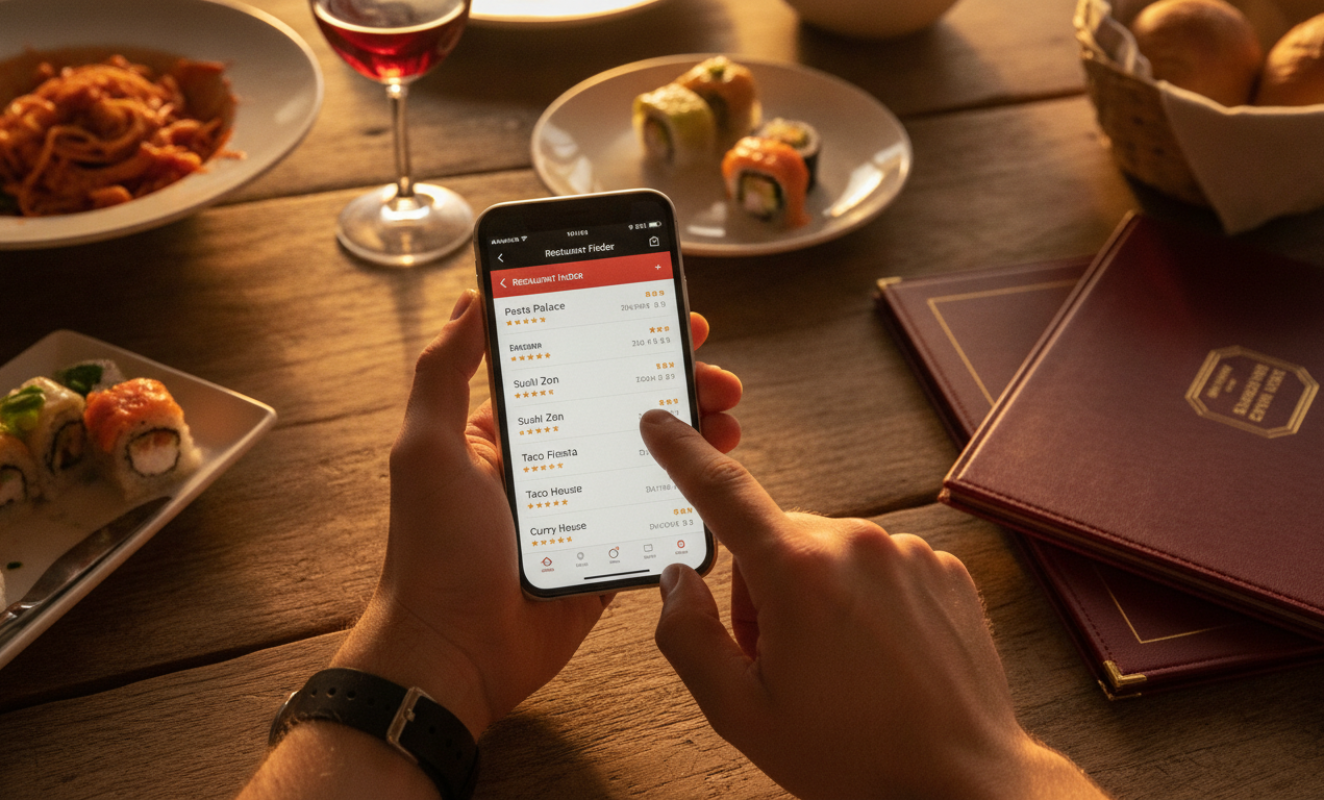
You open your phone, type “restaurants near me,” and suddenly you’re staring at a wall of options, ratings, photos, and conflicting reviews. Twenty minutes later, you’re still scrolling. Sound familiar? Picking a great place to eat should feel exciting, not exhausting. And yet for a lot of families and food lovers across Brampton and Mississauga, the sheer volume of choices turns a simple decision into a small project.
This guide cuts through the noise. We’re sharing the practical questions you should ask before you commit to a table — the same considerations that have made diners loyal to great neighbourhood spots for years. Whether you’re planning a casual weeknight dinner or a special occasion, these steps will help you book with confidence rather than regret.
Quick Answer
To pick a great restaurant, check for menu depth and authenticity, read recent reviews rather than overall star ratings, confirm the kitchen genuinely suits your dietary needs, verify that the price point matches your group’s budget, and choose a place that offers the right service style (dine-in, takeout, or catering) for your occasion. A restaurant that does all five well is worth booking immediately.
What Does Menu Depth Actually Tell You About a Kitchen?
Menu depth is one of the clearest signals of a kitchen’s competence and honesty. A restaurant that offers thirty dishes it can genuinely execute is far more trustworthy than one with a hundred items that arrive inconsistently.
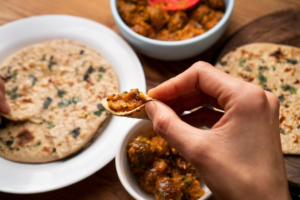
When you’re browsing options, look for a menu that shows range without overreaching. For an Indian restaurant, that means you should see both classic regional dishes (think dal makhani, butter chicken, or Punjabi-style curries) alongside a few specialties that reveal the kitchen’s particular strengths. If a menu includes dishes you can’t find everywhere — like a well-prepared Amritsari kulcha, for instance — that’s a sign the team has genuine roots in the cuisine rather than a generic approach designed to appeal to everyone.
At 7 Spice Bistro, our menu spans traditional Indian cuisine and Hakka Chinese food — two distinct culinary traditions prepared with care in a single kitchen. That combination isn’t a gimmick; it reflects the genuine food culture of Brampton, where Indo-Chinese cooking has deep community roots. A menu that reflects local tastes honestly is always a better sign than one copied from a template.
Also pay attention to vegetarian coverage. A kitchen that treats vegetarian dishes as afterthoughts — a token paneer option tucked at the bottom — is telling you something about its priorities. A kitchen with a genuinely developed vegetarian section is one that respects the full spectrum of its diners. For families especially, that breadth matters enormously when everyone at the table has different preferences.
How Should You Read Restaurant Reviews Without Being Misled?
The overall star rating is the least useful number on a review page. What you want is the pattern inside the reviews, not the average score sitting at the top.
Here’s a more reliable approach. Filter for reviews from the last three to six months. A restaurant can change ownership, management, or head kitchen staff, and reviews from two years ago may describe a completely different experience. Recent reviews give you a live picture of what the kitchen is actually producing right now.
Next, look for specificity. A review that says “the chole bhature was crispy on the outside and perfectly spiced, the service was attentive without being intrusive” tells you far more than “great food, will return.” Specific reviews come from people who genuinely dined there and paid attention. Vague five-star reviews are almost impossible to verify.
Negative reviews deserve a careful read too. One complaint about a long wait on a busy Friday night is not the same as five complaints about cold food or incorrect orders. The former is a capacity issue on a popular evening; the latter is a systemic kitchen problem. The distinction matters when you’re deciding whether to give a place a chance.
Finally, check how the restaurant responds to criticism. A team that replies to negative feedback professionally and constructively is a team that takes its reputation seriously. That attitude almost always carries through to how they treat guests in person.
Why Does Price Transparency Matter More Than Price Itself?
Budget-conscious diners are not looking for the cheapest option — they’re looking for the best value at a price they can predict. Those are very different things, and restaurants that understand the distinction earn long-term loyalty.
A restaurant menu posted clearly online — with accurate pricing and portion descriptions — signals that the kitchen has nothing to hide. When you arrive and the bill matches what you expected, trust builds. When a bill comes with surprise additions, that trust breaks fast, regardless of how good the food was.
For families dining out in Brampton, value usually means a few specific things: generous portions, a menu broad enough that every person at the table finds something they want, and a price-per-head that doesn’t require a second thought before ordering a second dish. Quality food at honest prices is not a luxury — it’s the baseline expectation that every good restaurant should meet.
Our team at 7 Spice Bistro has built our menu with that principle in mind. Seven years of cooking authentic Indian food in this community has taught us what families actually need: real flavour, real portions, and real value. Budget-friendly pricing and uncompromising quality are not in conflict — the kitchen just has to know what it’s doing.
“Quality food at honest prices is not a luxury — it’s the baseline expectation that every good restaurant should meet.”
How Do You Match the Right Service Style to Your Occasion?
The service format a restaurant offers shapes your entire experience. Matching the format to your occasion is one of the most practical things you can do before you book.
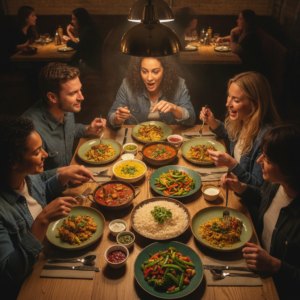
For a relaxed family dinner or a date night, you want comfortable dine-in places to eat near me — a room with enough space between tables, attentive service, and an atmosphere that invites you to slow down. Rushed seating and a noisy floor can undermine even excellent food. When you search for places to dine in near me, look for photos of the dining room as well as the food. A well-maintained, welcoming space usually reflects the same standards the kitchen holds.
For events, the picture changes. A restaurant with real catering capability — not just a “we can do it” answer on the phone, but genuine experience managing large orders, varied dietary needs, and delivery logistics — is a different category of operation. If you’re planning an event and need food that arrives on time, tastes consistent across dozens of portions, and accommodates a mixed guest list, check whether the restaurant has a dedicated catering service rather than treating it as an occasional side task.
Our Catering in Mississauga: What Families and Event Planners Need to Know Before They Book guide walks through exactly what to ask a catering team before you sign anything. And if your event is a corporate gathering, Indian Catering for Corporate Events: How to Impress a Diverse Office with One Menu covers how a thoughtfully built menu can satisfy a room full of different preferences without a single person feeling like an afterthought.
The key point: a restaurant that offers multiple service formats — dine-in, takeout, and catering — has usually invested in the operational infrastructure to do all of them properly. That consistency across formats is a strong signal of a professional, well-run kitchen.
| Service Format | Best For | What to Check | Available at 7 Spice Bistro |
|---|---|---|---|
| Dine-In | Family dinners, casual outings, special occasions | Ambience, seating comfort, service attentiveness | Yes |
| Takeout / Delivery | Weeknight meals, convenience dining at home | Packaging quality, accuracy, speed | Yes |
| Catering | Events, corporate lunches, family gatherings | Experience with large orders, menu flexibility, logistics | Yes |
What Separates a Good Indian Restaurant from a Great One?
The gap between good and great often comes down to consistency, ownership, and genuine connection to the cuisine. These are harder to fake than a nice logo or a polished social media presence.
Consistency means the dish you loved on your first visit tastes the same on your fifth. That requires a kitchen with trained, experienced cooks who follow standardised recipes without sacrificing the hand-crafted quality that makes Indian food special. It’s one of the harder things to maintain at scale, and restaurants that do it well have usually invested heavily in their team.
Ownership matters because a team that is personally invested in the food it serves makes different decisions than one chasing quick margins. When the people running the kitchen genuinely care about whether the dal tastes right or whether the kulcha has the right char and crunch, that care shows up in every plate. It’s one of the reasons diners searching for the best Indian restaurant in Brampton tend to find that smaller, owner-operated spots outperform larger chains year after year.
Connection to the cuisine means the kitchen understands regional nuance. Indian food is not monolithic — a Punjabi chole is different from a Gujarati one, and a well-made Amritsari kulcha near me search should return a result that actually knows what Amritsari cooking feels like. When a restaurant can walk that line, it has real authority on the plate.
If you’re curious about how Indo-Chinese cuisine fits into this picture, our guide on Best Noodles in Brampton: Why Indo-Chinese Beats Every Other Version on the Menu explains how Hakka Chinese cooking developed its own distinct identity in South Asian communities — and why it deserves to be taken seriously as a culinary tradition in its own right.
And if takeout is your preference on certain evenings, our Indian Food Takeout: A Practical, No-Nonsense Guide covers how to order well so the food arrives the way it was meant to taste.
Put the Framework to Work
Every time you search for food near me and feel that familiar sense of overload, come back to these five questions: Does the menu show genuine depth? Do recent reviews paint a consistent picture? Is the pricing clear and fair? Does the service format match what I actually need tonight? And does this kitchen have a real, earned connection to the food it’s serving?
When you find a place that answers all five clearly, stop scrolling. A reliable neighbourhood restaurant that earns your trust is worth more than a rotating list of untested options. The best dining experiences come from places you return to, not places you discover once and never revisit.
For anyone searching for an indian restaurant near me in Brampton or the surrounding areas, we’d encourage you to apply this framework and see how your options hold up. We’re confident about where 7 Spice Bistro stands against each of those criteria — and we’d love the chance to show you in person.
Ready to Stop Scrolling?
Come experience authentic Indian and Hakka cuisine at 7 Spice Bistro in Brampton. Dine in, order takeout, or talk to us about catering your next event. Our team is ready to make it easy.
Written by the 7 Spice Bistro Team
With over seven years of authentic Indian cooking experience serving families and food lovers across Brampton, our team brings firsthand knowledge of what makes a great dining experience — from the kitchen to the table. We write about food, dining, and hospitality because we live it every day.
Frequently Asked Questions
How do I know if an Indian restaurant near me is actually authentic?
Look for regional specificity on the menu — dishes tied to a particular cooking tradition, like Punjabi, South Indian, or Indo-Chinese, rather than a generic pan-Indian list. Read recent reviews for mentions of specific dishes by name, and check whether the kitchen’s staff have genuine roots in the cuisine. Authentic restaurants rarely need to advertise their authenticity loudly; it shows up in the detail of the food.
What should I look for in a restaurant when dining with a mixed group?
Menu breadth is the single most important factor for mixed groups. You want a restaurant with a developed vegetarian section alongside non-vegetarian options, a range of spice levels, and dishes that suit both adventurous eaters and those who prefer familiar comfort food. A kitchen that covers both Indian cuisine and Hakka Chinese food, for example, gives a table of ten people real variety without anyone feeling underserved.
Why do some restaurants with high ratings still disappoint in person?
Overall star ratings aggregate every review — including outdated ones from years ago when the kitchen or ownership may have been different. A restaurant can coast on old reviews while delivering a much weaker current experience. This is why recent, specific reviews carry more weight than the headline score. Always read the most recent feedback before you commit to a reservation.
Can I use the same decision framework for catering as I do for dine-in?
The core questions remain the same — menu quality, reviews, pricing transparency, and genuine expertise — but catering adds a layer of logistical criteria. For events, you should also confirm the team’s experience with large-volume orders, their process for accommodating varied dietary needs, and how they handle delivery and setup. A restaurant that excels at dine-in does not automatically have the systems to manage a fifty-person catered event without issues, so verify that experience specifically before you book.