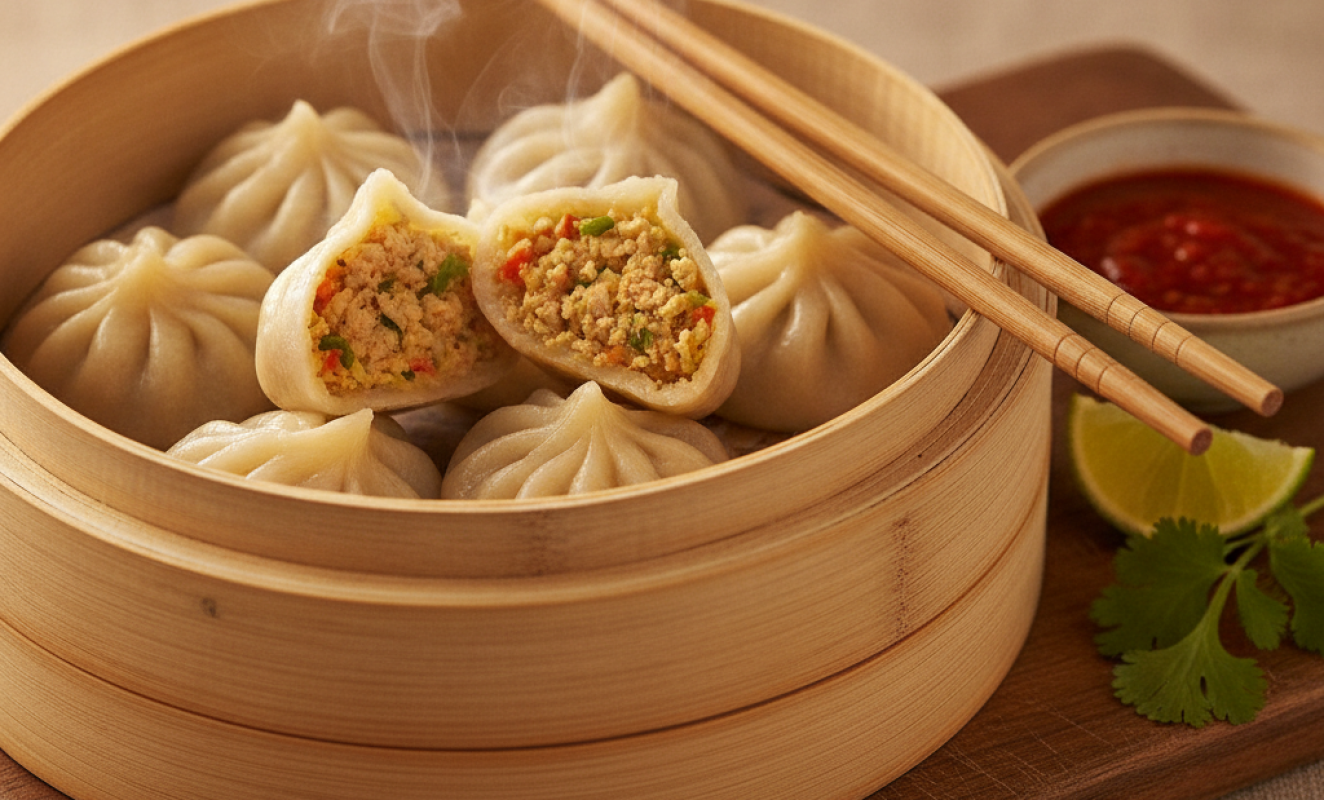
If you’ve ever typed “momos near me” into your phone at 7 p.m. on a Friday and ended up at a random restaurant brampton that served you something soggy, under-seasoned, and frankly disappointing — you already know that not all momos are created equal. In 2026, the demand for genuinely well-made Indo-Chinese dumplings across the GTA has never been higher, and yet the gap between a momo done right and a momo done barely remains surprisingly wide. At 7 Spice Bistro, we’ve spent seven years serving Brampton families and food enthusiasts, and momos have been one of the most-asked-about dishes on our Hakka Chinese menu. So we decided to put together this guide — an honest, practical, and deeply flavour-forward look at how to get momos right the very first time, whether you’re making them at home or choosing where to order them.
QUICK ANSWER
Getting momos right the first time comes down to three fundamentals: a thin but sturdy dough that holds its shape during steaming, a well-seasoned filling that balances aromatics with texture, and a dipping sauce that brings heat, tang, and depth without overpowering the dumpling itself. Skip any one of these, and you’ll notice immediately.
What Exactly Are Momos, and Why Do They Matter in Indo-Chinese Cuisine?
Momos are steamed or fried dumplings that trace their roots to Tibetan and Nepali cooking, later absorbed and reimagined through the lens of Indo-Chinese cuisine — the unique culinary tradition that emerged from Chinese immigrant communities in Kolkata and eventually spread across the Indian subcontinent. They matter because they sit at a rare intersection: street food energy with real technique required.
Unlike the dim sum dumplings you might find at a Cantonese restaurant, momos carry a distinctly South Asian flavour profile. The fillings are spiced — not necessarily fiery, but layered with ginger, garlic, and aromatics that make each bite feel alive. The wrappers tend to be slightly thicker than their Cantonese cousins, giving them a satisfying chew. And the accompanying chutney — typically a tomato-chilli blend — is what transforms a good momo into a great one.
At 7 Spice Bistro, our Hakka Chinese menu sits alongside our Indian cuisine offerings precisely because both traditions share a commitment to bold, layered flavour. Indo-Chinese cooking isn’t a compromise between two cuisines — it is its own cuisine, and momos are one of its finest ambassadors.
“A momo isn’t just a dumpling. It’s a conversation between two culinary traditions — and when that conversation is handled well, the result is something you remember long after the plate is cleared.”
For families across Brampton and Mississauga who are exploring Indo-Chinese food for the first time, momos are often the entry point — approachable, shareable, and deeply satisfying.
How to Make Momo Dough That Actually Works
The dough is where most first-time momo makers go wrong. The right momo wrapper is thin enough to allow steam to penetrate and cook the filling evenly, but sturdy enough to hold together when lifted with chopsticks without tearing. Getting this balance right is entirely achievable — once you understand the science behind it.
The Flour Ratio
Use all-purpose flour, not bread flour. Bread flour’s higher gluten content makes the dough too elastic — you’ll fight it every time you try to roll it thin. All-purpose flour gives you a dough that’s workable, smooth, and pliable. The ratio is simple: for every one cup of flour, use just under half a cup of warm water. Add the water gradually and knead for a full eight minutes. The finished dough should feel like soft clay — not sticky, not stiff.
The Resting Period
Rest your dough for at least 30 minutes under a damp cloth. This is non-negotiable. The resting period allows the gluten to relax, which means your dough will roll out smoothly and evenly without springing back. Many first-time makers skip this step and end up with uneven wrappers that are thick in the centre and thin at the edges. A well-rested dough rolls beautifully every time.
Rolling and Sizing
Roll each wrapper to roughly 3 to 3.5 inches in diameter. You want the edges slightly thinner than the centre — this ensures the pleated folds don’t become too bready after steaming. A wooden rolling pin gives you more tactile control than a marble one for this particular job. Work in small batches, keeping the rolled wrappers covered so they don’t dry out before filling.
What Should Go Inside a Momo? Filling Secrets That Make the Difference
The filling is where your personal style comes through — and where most of the flavour lives. A great momo filling is moist but not wet, well-seasoned but not overpowering, and textured enough to provide contrast against the soft wrapper.
Vegetarian Fillings That Actually Satisfy
Our team at 7 Spice Bistro has always believed that a well-made vegetarian momo is every bit as satisfying as any other version — and the key is texture. A combination of finely shredded cabbage, grated carrot, chopped spring onion, and paneer (crumbled or finely diced) creates a filling with body and flavour. Season with fresh ginger, minced garlic, soy sauce, white pepper, and a small amount of sesame oil. The sesame oil is the detail that elevates the filling from good to genuinely memorable.
One important technique: after shredding your cabbage, salt it lightly and let it sit for 10 minutes, then squeeze out the excess water thoroughly. Wet cabbage leads to a soggy filling that can compromise the wrapper during steaming. Dry your vegetables properly and your momos will hold their shape beautifully.
Chicken Momos Done Right
For chicken momos, use minced chicken thigh rather than breast — the higher fat content keeps the filling moist during steaming and prevents the dry, crumbly texture that ruins so many restaurant versions. Combine with finely diced onion, ginger-garlic paste, fresh coriander, green chilli (adjust to your heat preference), soy sauce, and a touch of fish sauce if you want depth. Don’t overfill the wrappers — a teaspoon to a teaspoon and a half of filling per momo is ideal.
Why the Dipping Sauce Is Non-Negotiable
The dipping sauce completes the momo experience — without it, even a perfectly made dumpling feels incomplete. The classic accompaniment for Indo-Chinese momos is a spiced tomato-chilli chutney, and making it from scratch takes less than 15 minutes.
Char two large tomatoes and four to six dried red chillies directly over an open flame or under a broiler until the skins blister. Blend with two cloves of garlic, a small knob of ginger, a splash of vinegar, salt, and a pinch of sugar. The charred tomatoes give the chutney a smoky undertone that bottled sauces simply cannot replicate. The sugar balances the acidity. The result is a sauce with heat, tang, and complexity — exactly what a great momo deserves.
Some households in Brampton prefer a hybrid approach — combining this tomato-chilli base with a spoonful of schezwan sauce for an extra layer of Indo-Chinese flavour. We love this variation. It’s the kind of intuitive fusion that defines great Hakka cooking.
How to Steam, Pan-Fry, or Bake Momos for Different Results
Steaming is the traditional method and the one that best showcases the quality of your dough and filling. Pan-frying gives you crispy bottoms and a contrasting texture. Baking is less traditional but works well when you’re feeding a crowd. Each method produces a distinct result, and knowing which to choose depends on your occasion and preference.
Steaming: Line your steamer basket with parchment or lightly oiled cabbage leaves to prevent sticking. Steam momos on medium-high heat for 10 to 12 minutes. They’re ready when the wrappers turn slightly translucent and feel set to the touch.
Pan-frying (potsticker style): Heat a non-stick pan with a thin layer of oil. Add the momos flat-side down and cook for two minutes until the bottoms are golden. Add a splash of water, cover immediately, and steam for another six to eight minutes. Remove the lid and let any remaining water evaporate. The result is a momo with a crispy base and a steamed top — genuinely the best of both worlds.
Baking: Brush assembled momos lightly with oil and bake at 375°F for 18 to 20 minutes, turning once halfway. The texture is drier than steamed, but works well for large gatherings where managing multiple steamer batches isn’t practical.
Of course, if making momos from scratch feels like more than you’re ready to take on this weekend, the easiest solution is simply to find a restaurant that makes them properly. If you’re searching for momos near me in the Brampton and Mississauga area, our Hakka Chinese menu at 7 Spice Bistro is a great place to start.
Where Momos Fit on the Broader Brampton Food Scene
Brampton’s food scene has evolved dramatically over the past decade. The city’s South Asian community has built a culinary landscape that rivals any neighbourhood in the GTA, and Indo-Chinese cuisine is one of its most exciting threads. Alongside beloved staples like dosa brampton restaurants and Butter Chicken in Brampton: What Separates an Outstanding Version From an Average One, Hakka dishes like momos, chilli chicken, and schezwan noodles have become comfort food staples for families across the region.
What makes this scene particularly rich is the diversity of format — from sit-down restaurants to catering services to the occasional indian food truck near me experience at local festivals and markets. Food in Brampton isn’t just something you eat; it’s a way communities come together, celebrate, and share stories.
When people ask us at 7 Spice Bistro what makes our corner of the best restaurants brampton conversation worth being part of, the answer is always the same: seven years of consistency, genuine flavour, and a menu that honours both Indian and Hakka traditions without shortchanging either. For more on how Brampton’s dining landscape is shaped neighbourhood by neighbourhood, our friends at Best Restaurants in Brampton, Ontario: A Neighbourhood-by-Neighbourhood Dining Guide for 2026 have done an excellent job of mapping it out.
Whether you’re a Brampton local who’s been eating Indo-Chinese food for years, or someone new to the area exploring what this city does brilliantly, momos are a dish that deserves your attention — and your time. Make them well, and they’ll become a fixture in your household. We promise.
If you’re also exploring plant-forward options alongside your Hakka favourites, take a look at our guide to the Best Vegetarian Restaurants in Brampton: What to Look For When Plant-Based Is Non-Negotiable — because at 7 Spice Bistro, our vegetarian menu is extensive and genuinely satisfying.
The next time you’re searching for an indian restaurant near me that goes beyond the expected, or wondering which indian restaurant brampton will actually deliver on flavour and value, remember that 7 Spice Bistro has been answering that question for the Brampton community for seven years running.
Ready to Experience Momos and Hakka Cuisine Done Right?
Skip the guesswork and visit 7 Spice Bistro in Brampton for authentic Indian and Hakka Chinese food that’s been earning loyal regulars for seven years. Dine in, order for delivery, or book our catering service for your next event.
✍️ Written by the Team at 7 Spice Bistro
We’re the people behind Brampton’s beloved Indian and Hakka Chinese kitchen — seven years of cooking, catering, and feeding families who love real flavour. This guide comes directly from our kitchen experience and our deep respect for the traditions that make Indo-Chinese cuisine so extraordinary.
Frequently Asked Questions
How long do momos take to steam from scratch?
Freshly assembled momos take 10 to 12 minutes to steam fully over medium-high heat. The wrappers will shift from opaque white to a slightly translucent finish, and the filling should feel set when you press the momo gently. If you’re steaming from frozen, add an extra four to five minutes and ensure your steamer is fully up to temperature before adding the dumplings.
What makes 7 Spice Bistro different from other Indo-Chinese restaurants in Brampton?
At 7 Spice Bistro, we bring seven years of authentic cooking experience to both our Indian and Hakka Chinese menus. We’re committed to budget-friendly pricing without compromising on quality, a genuinely comprehensive vegetarian menu, and multiple service options including dine-in, delivery, and full catering. We’re not just another restaurant — we’re a Brampton neighbourhood fixture with a loyal community around us.
Why do my momos always stick to the steamer basket?
Sticking almost always comes down to the basket surface not being properly prepared before steaming. Line your steamer with perforated parchment paper, lightly oiled cabbage leaves, or a lightly greased muslin cloth. Never place momos directly on bare metal or bamboo — the dough will bond to it the moment moisture hits. Leave at least a centimetre of space between each momo so they don’t fuse together during cooking.
Can I prepare momos ahead of time for a party or event?
Yes — momos freeze exceptionally well and are one of the best foods to prepare in advance for a gathering. Assemble them fully, place on a parchment-lined tray without touching, freeze until solid (about two hours), then transfer to a sealed bag. Steam directly from frozen when needed. Alternatively, if you’re catering a larger event in Brampton, our professional catering service at 7 Spice Bistro handles everything from preparation to presentation — so you can enjoy the party alongside your guests.