If you’ve ever typed “momos near me” into your phone at 6:30 on a Friday evening, you already understand the specific kind of craving we’re talking about — urgent, deeply specific, and not easily satisfied by just anything on the menu. Momos have gone from a niche Himalayan street food to one of the most searched dumpling styles across the Greater Toronto Area, and in 2026, the demand in Brampton and Mississauga has never been more intense. Families, students, and seasoned food enthusiasts are all chasing the same thing: a steamed or fried parcel of spiced filling that delivers warmth, texture, and a hit of chili-garlic heat all at once. At 7 Spice Bistro, we’ve watched this craving evolve up close — and we’ve built a menu that takes it seriously.
⚡ Quick Answer
Momos are steamed or fried dumplings rooted in Tibetan and Nepali street food culture, adopted enthusiastically into the Indo-Chinese culinary tradition and now a staple at Hakka restaurants across Brampton and Mississauga. The best versions combine a thin, pliable dough with a boldly spiced filling — paneer, mixed vegetables, or seasoned chicken — and are served alongside a fiery red chutney. At 7 Spice Bistro in Brampton, momos appear on our Hakka Chinese menu as a crowd favourite for dine-in guests and catering orders alike.
Where Do Momos Come From — and How Did They Land in Brampton?
Momos are, at their origin, a Tibetan and Nepali street food — thin-skinned dumplings filled with spiced meat or vegetables, folded with a distinctive pleated crimp, and steamed over boiling water in stacked bamboo or metal trays. They travelled south into the Indian subcontinent through Sikkim, Darjeeling, and eventually the street corners of Delhi and Kolkata, where vendors added their own regional heat and spice to the filling. From there, the momo found a natural home within the broader Indo-Chinese culinary movement — a cuisine that itself tells a remarkable story of cultural migration and culinary creativity.
The Indo-Chinese food tradition was born from the Hakka Chinese community that settled in Kolkata in the 18th and 19th centuries. These settlers adapted Chinese cooking techniques — stir-frying, steaming, using woks at high heat — to Indian ingredients and palates. The result was something entirely new: bold, fiery, and deeply satisfying. Hakka Chinese food became India’s most beloved fast-food category, and momos, though originally Tibetan, slipped naturally into that world because they shared the same street-food sensibility and spice-forward spirit.
When the South Asian diaspora began building communities in the GTA through the 1980s and 1990s, they brought these cravings with them. Brampton, which now carries one of the largest South Asian populations in Canada, became fertile ground for exactly the kind of Indo-Chinese restaurant that understood momos not as a novelty, but as a necessity. Today, searching for an indo chinese restaurant near me in Brampton returns a list of spots that all recognize the dumpling’s central place on the menu. The cultural journey from the mountain passes of Nepal to a bustling table in Brampton is surprisingly short when you follow the food.
What Makes a Momo Worth Hunting Down? The Anatomy of an Excellent Dumpling
A genuinely excellent momo has three non-negotiable components: the wrapper, the filling, and the chutney. Get any one of them wrong and the whole experience collapses.
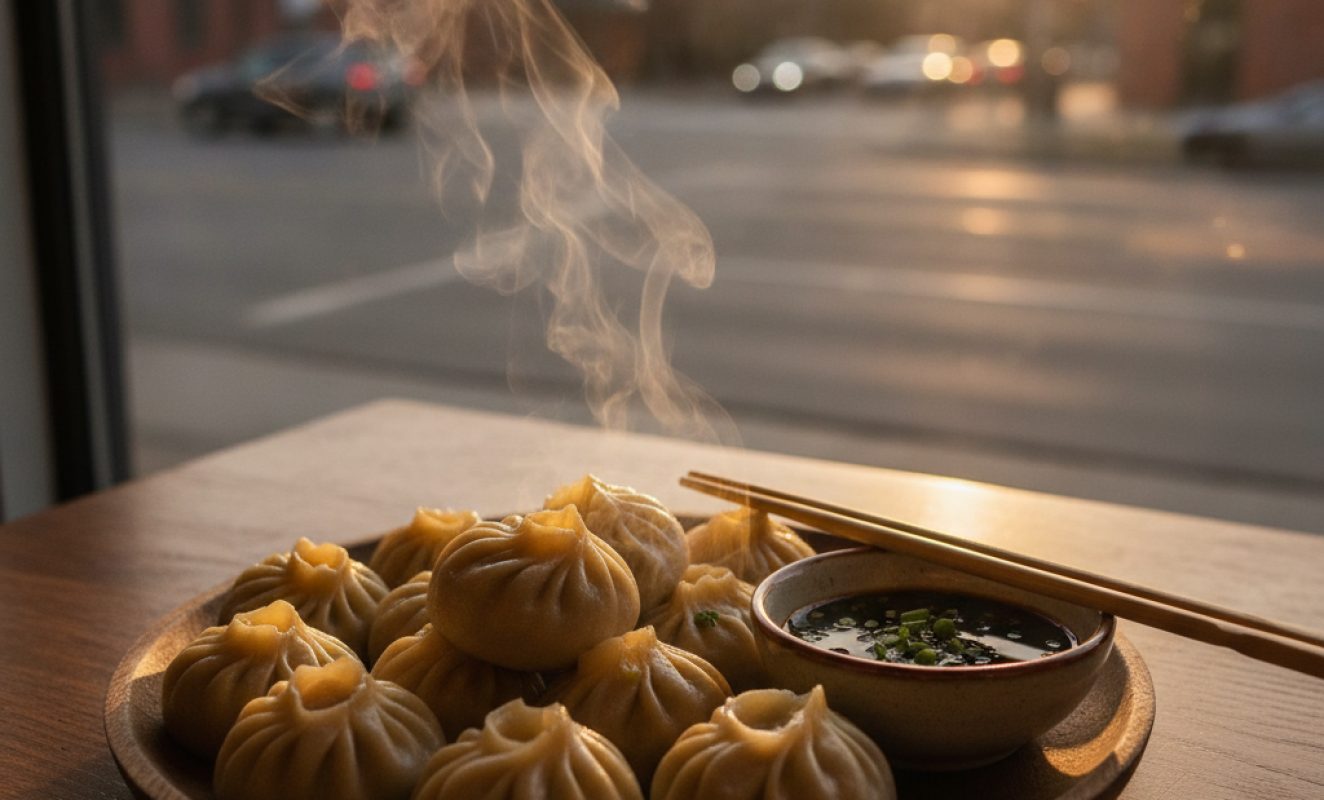
The wrapper should be thin but not fragile — pliable enough to fold cleanly into the signature pleat without tearing, yet sturdy enough to hold its shape through steaming without becoming gummy or waterlogged. This is harder to achieve than it sounds. The dough needs to be worked to the right hydration and rested properly before rolling. Too thick and you’re eating bread; too thin and the dumpling bursts before it reaches the table. Our kitchen at 7 Spice Bistro treats the wrapper as seriously as the filling, because we know that a paper-thin, slightly translucent casing is one of the first things an experienced momo eater notices.
The filling is where the Indo-Chinese influence really declares itself. In a traditional Tibetan momo, the filling might be relatively simple — minced meat with ginger, onion, and perhaps a whisper of garlic. In the Indo-Chinese version, the filling gets a full personality: garam masala, green chili, fresh coriander, and sometimes a hit of soy sauce that bridges the two culinary worlds in a single bite. Paneer momos, in particular, have developed a devoted following among vegetarian diners across Brampton and Mississauga because good-quality paneer holds moisture beautifully during steaming and picks up spice without losing its texture.
Then there is the chutney — arguably the most underrated element of the momo experience. A red chili-tomato chutney with garlic and ginger is the classic accompaniment, and when it’s made from scratch rather than poured from a jar, the difference is immediate. The chutney should have body, a slow-building heat, and enough acidity to cut through the richness of the filling. At 7 Spice Bistro, our sauces are prepared in-house, and our regulars often tell us they find themselves thinking about the chutney as much as the momos themselves.
Steamed vs. Fried: Which Style Is Right for You?
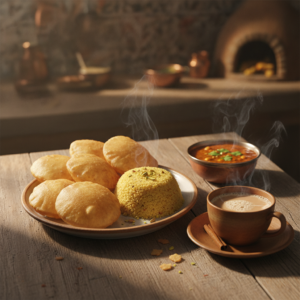
Momos come in two main preparations, and the choice between them says something about what kind of dumpling moment you’re in the mood for. Steamed momos are the purer form — they showcase the wrapper and filling without distraction, with a soft, pillowy texture and a delicate exterior that lets the chutney do the heavy lifting. Fried momos, sometimes called Kothey or pan-fried momos, offer a crispy bottom and a chewier top, with caramelized edges that add a layer of textural contrast. Then there is the deep-fried version, which is the Indo-Chinese tradition’s most indulgent contribution to the form: golden, crackling shells that give way to a steaming interior. All three styles are popular in Brampton’s dining scene, and many guests order a combination to compare.
“The momo is one of those rare dishes where the cooking method is almost as important as the recipe itself — steamed, fried, or pan-seared, each version tells a different story with the same ingredients.”
Why Is Hakka Chinese Food the Natural Home for Momos in the GTA?
Hakka Chinese cuisine is the cultural container that made the momo’s journey into mainstream South Asian dining possible. The Hakka tradition already embraced bold flavours, quick-cooking techniques, and dishes designed for communal eating — values that align perfectly with how momos are meant to be enjoyed: shared, in rounds, with sauce on the side and conversation at full volume.
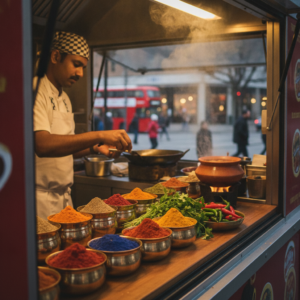
When diners in Brampton search for hakka food near me or hakka chinese near me, they’re often looking for exactly this kind of communal, flavour-first experience. Hakka menus typically feature dishes like Manchurian (vegetable or chicken), Chili Paneer, Hakka Noodles, and Gobi 65 — and momos sit comfortably alongside all of these, sharing the same spice philosophy and the same table. The cuisine rewards sharing; a table that orders across the menu gets a fuller picture of what Indo-Chinese cooking can do, and momos function as one of the most satisfying opening acts in that performance.
At 7 Spice Bistro, we’ve been serving Hakka Chinese food alongside our Indian cuisine for years, and we’ve observed firsthand how the two traditions complement each other on a shared table. A family might begin with steamed paneer momos and vegetable Manchurian, move into a butter chicken and dal makhani for the main course, and finish with a mango kulfi — and every dish feels cohesive because the underlying philosophy of bold, aromatic, comfort-first cooking runs through all of it. This is what makes a restaurant that does both traditions well genuinely different from a place that merely lists them on the same menu.
If you’re exploring the broader dining landscape across the region, our guide to the Best Restaurants in Brampton, Ontario: A Neighbourhood-by-Neighbourhood Dining Guide for 2026 is a useful companion for understanding how different cuisines are represented across the city’s neighbourhoods.
How 7 Spice Bistro Approaches Momos — and What Sets Our Version Apart
At 7 Spice Bistro, momos are not an afterthought added to the menu because everyone else was serving them. They are a deliberate, carefully developed offering that reflects seven years of authentic cooking experience in Brampton — and a kitchen team that takes the craft of the dumpling seriously.
We prepare our wrappers fresh, we season our fillings with the same attention we bring to our tandoori marinades, and we make our chutneys in-house. When a family sits down at one of our tables in Brampton and orders a plate of steamed paneer momos, what arrives is the product of genuine culinary intention — not a frozen shortcut reheated to order. This is a distinction that shows up immediately in the texture of the wrapper and the depth of flavour in the filling, and it’s one of the reasons our guests describe their experience in 7 Spice Bistro reviews the way they do.
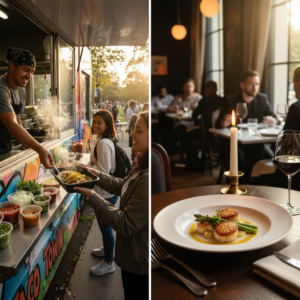
Our menu at 7 Spice Bistro is designed for the kind of group that wants to explore broadly without stretching the budget — a genuine concern for families in Brampton and Mississauga who are looking for quality dining without premium pricing. The 7 Spice Bistro menu reflects our belief that authentic, well-made food and accessible pricing are not mutually exclusive. Momos, in particular, represent excellent value: they are labour-intensive to make well, but we price them so that ordering a second plate is never a difficult decision.
We also include momos as part of our catering service, which has become increasingly popular for birthday parties, office gatherings, and family events across Brampton and the surrounding region. A catering spread that includes a momo station — with both steamed and fried options and fresh chutney — has become one of our most requested formats, because it gives guests something interactive and immediately satisfying while the main courses are served. If your group includes guests who prefer vegetarian options, our paneer and vegetable momos ensure no one is left navigating the menu with limited choices.
For guests who love bold, plant-forward eating, our broader vegetarian menu is equally considered. You can explore our philosophy in more depth through our post on the Best Vegetarian Restaurants in Brampton: What to Look For When Plant-Based Is Non-Negotiable — it captures exactly the standard we hold ourselves to.
Where to Find Momos in Brampton: What to Look for Beyond the Search Result
Searching for an indian restaurant near me or an indian restaurant brampton will surface a long list of options — and not all of them approach their Hakka or Indo-Chinese offerings with the same care. When you’re specifically hunting for momos worth the trip, there are a few signals worth looking for before you walk through the door.
First, look for a restaurant that lists momos as a genuine section of the menu, not a single bullet point tucked under appetizers. A kitchen that takes momos seriously will typically offer more than one filling and more than one preparation style. Second, read through the reviews — not for the star rating, but for the specific language people use. When guests describe the wrapper as “thin” or “fresh” or call out the chutney by name, that’s a strong signal that the kitchen is doing something right. Third, ask whether the momos are made in-house. This is a simple question and the answer tells you everything.
At 7 Spice Bistro, we welcome that scrutiny. We’ve spent seven years building a reputation in Brampton on the basis of cooking that doesn’t cut corners, and our momos are made to the same standard as everything else that leaves our kitchen. Whether you’re dining in with your family on a weekend, ordering as part of an event catering package, or simply following a craving that started with a late-night search for food near me, we want what you find at our table to match or exceed what you were imagining.
Brampton has grown into a genuinely exciting food city, and the momo is one small but telling example of how the South Asian diaspora has created a culinary landscape here that is layered, surprising, and entirely its own. We’re proud to be part of that landscape — and proud to serve a dumpling that we think stands up to comparison with the best versions you’ll find anywhere in the GTA.
Ready to Try Momos Worth the Trip?
Come dine in with your family, explore the full Hakka Chinese menu, or talk to our team about catering momos for your next event. At 7 Spice Bistro in Brampton, every plate is made with seven years of authentic cooking experience behind it — and priced so you can order seconds without a second thought.
✍️ Written by the Team at 7 Spice Bistro
The 7 Spice Bistro team has been cooking authentic Indian and Hakka Chinese cuisine in Brampton for over seven years, serving families, food enthusiasts, and event guests across the GTA. We write about the food we make, the traditions behind it, and the community we’re proud to feed.
Frequently Asked Questions
What are momos and how are they different from other dumplings?
Momos are steamed or fried dumplings originating from Tibetan and Nepali street food culture, distinguished by their thin hand-rolled wrappers, boldly spiced fillings, and characteristic pleated fold. Unlike Chinese dim sum dumplings, which tend toward subtler seasoning, or South Asian samosas, which use a fried pastry shell, momos occupy a unique middle ground — light and steamed in their traditional form, but adapted in the Indo-Chinese tradition to carry the stronger spice profiles of Indian cooking. The accompanying red chili-garlic chutney is also a defining element that sets momos apart from other dumpling styles.
How can I tell if a restaurant is making momos fresh versus using frozen ones?
The clearest signs are in the wrapper and the filling texture. A fresh momo wrapper is slightly translucent, pliable, and has a subtle chew without being gummy or rubbery — frozen wrappers often become waterlogged during steaming, creating a slippery or thick exterior. The filling in a fresh momo will have moisture and fragrance, whereas a reheated frozen momo tends to taste flat or uniformly dense. Asking your server directly whether momos are made in-house is always a fair question, and a confident, detailed answer is itself a good sign.
Why has Indo-Chinese food become so popular in Brampton and Mississauga?
Indo-Chinese food resonates deeply with the South Asian diaspora in Brampton and Mississauga because it represents a cuisine they grew up eating — familiar in its spice logic, satisfying in its use of communal sharing dishes, and deeply nostalgic for anyone who experienced it as street food in India. Beyond the diaspora community, the cuisine has attracted a broad audience of food enthusiasts drawn to its bold, unapologetically flavourful cooking style. Dishes like Hakka Noodles, Chili Paneer, Gobi Manchurian, and momos translate well to a Canadian dining context because they are accessible, affordable, and designed for groups — values that resonate widely in a diverse, community-oriented city.
Can I include momos in a catering order from 7 Spice Bistro?
Yes — momos are one of the most popular items we prepare as part of our catering service at 7 Spice Bistro, and they work exceptionally well for events ranging from family celebrations to corporate gatherings. We offer both steamed and fried momo options with our house-made chutneys, and they can be incorporated into a larger catering spread alongside our Indian cuisine and other Hakka Chinese dishes. If you’re planning an event in Brampton or the surrounding area and want to include momos as part of your menu, reach out to our team to discuss quantities, timing, and the full range of options available.