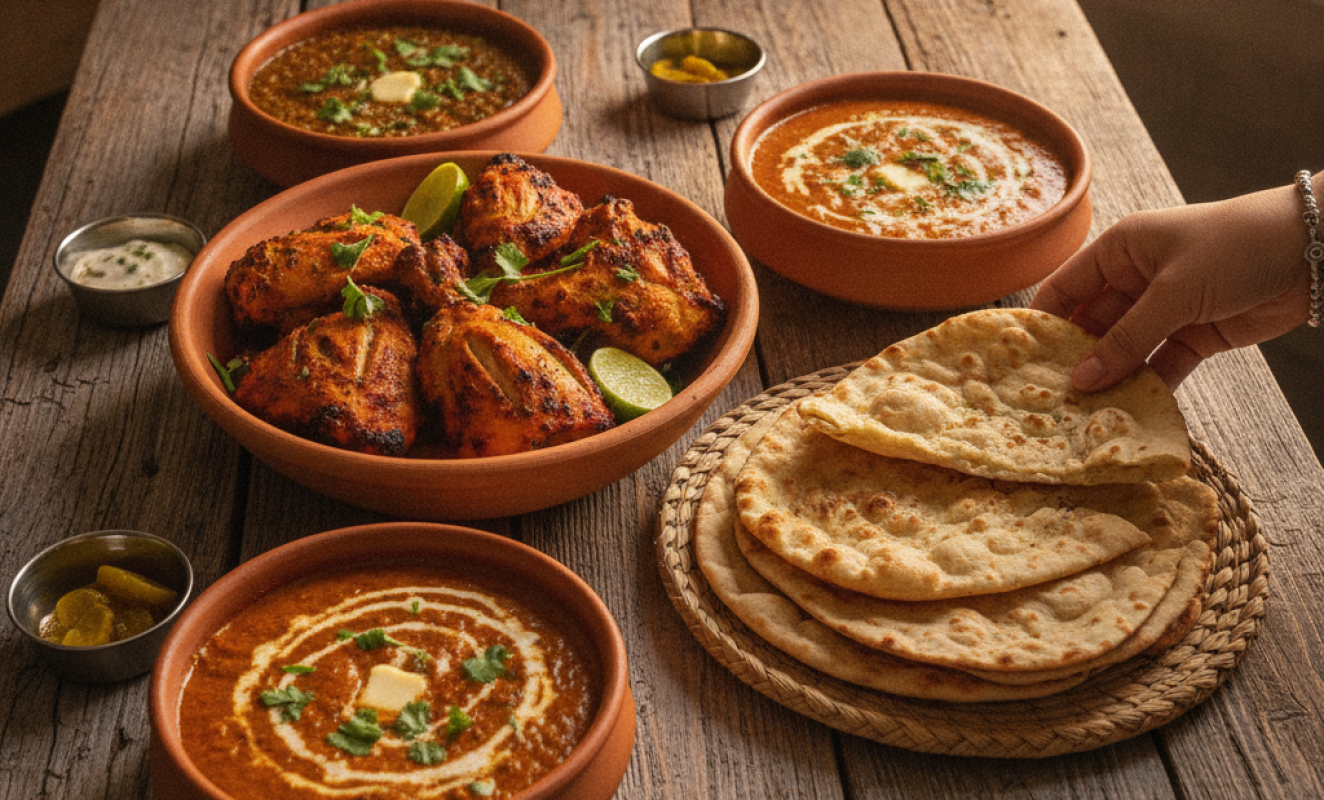
If you have ever typed “punjabi food near me” into your phone and scrolled past a dozen mediocre results, you already know how rare it is to find cooking that genuinely honours the weight and warmth of Punjab’s culinary tradition. In 2026, the appetite for regional Indian food in the Greater Toronto Area has never been stronger — and for good reason. Punjabi cuisine is not merely a category on a menu. It is a centuries-old conversation between farmers, fire, and family, written in smoke, ghee, and slow-cooked lentils.
At 7 Spice Bistro, we have spent seven years cooking and serving Indian cuisine in Brampton, and Punjabi food sits at the very heart of what we do. This guide is for food lovers who want to understand the story behind the dishes — not just order from a laminated picture menu, but actually know what they are eating and why it matters.
⚡ QUICK ANSWER
What is Punjabi food? Punjabi food is the bold, hearty, dairy-rich cuisine of the Punjab region of northern India — known for dishes like butter chicken, dal makhani, sarson da saag, and tandoor-cooked breads. It is rooted in agricultural tradition, shaped by the five rivers of the Punjab plains, and defined by its generous use of ghee, cream, and whole spices. In Brampton, it is the most widely recognised style of Indian cooking and remains a centrepiece of community dining.
What Makes Punjabi Cuisine Different from Other Regional Indian Food?
Punjabi cuisine stands apart from other regional Indian cooking traditions because of its reliance on high-heat tandoor cooking, its bold use of whole spices, and its deep integration of dairy — particularly ghee, butter, and fresh cream — into almost every classic dish. Where southern Indian food leans into tamarind and coconut, and eastern Indian cooking emphasises mustard oil and fermented flavours, Punjabi food is defined by richness, smoke, and a full-bodied warmth that you feel long after the meal is done.
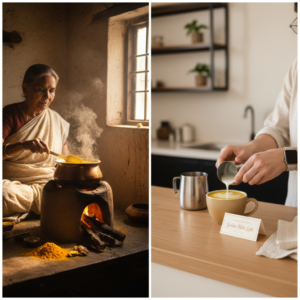
The agricultural roots of Punjab — historically called the “breadbasket of India” — explain almost everything about its food culture. Wheat, lentils, mustard greens, and dairy were the everyday staples of farming communities. The cuisine that emerged from those ingredients is practical, generous, and intensely satisfying. It was designed to fuel hard physical work, and it still delivers that same sense of sustenance today.
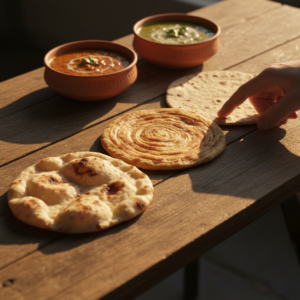
The tandoor — a cylindrical clay oven fired to extreme temperatures — is perhaps the single most important tool in Punjabi cooking. It gives naan its blistered, chewy character, transforms marinated chicken into tandoori tikka with a depth of flavour no conventional oven can replicate, and seals the outside of seekh kebabs while keeping the inside tender. At our kitchen in Brampton, the tandoor is not a novelty. It is the centrepiece.
The Spice Logic of Punjab
Punjabi cooking does not rely on heat alone to create complexity. The layering of whole spices — cumin seeds tempered in ghee, cinnamon and cardamom bloomed in hot oil, coriander ground fresh rather than bought pre-powdered — creates an aromatic depth that is distinct from the chilli-forward profiles of other regional cuisines. The signature warmth of a well-made Punjabi curry comes from this orchestration of spice, not from any single ingredient working in isolation.
This is precisely why the name 7 Spice Bistro means something. Seven spices is not an arbitrary number. It is a nod to the philosophy that great Indian cooking is built on mastery of a core spice vocabulary — and that every dish is a different conversation between those same fundamental ingredients.
The Classic Punjabi Dishes Every Food Lover Should Know
The most iconic Punjabi dishes have earned their global reputation not through marketing, but through generations of consistent, careful cooking. Here is a grounded look at the dishes that define the tradition.
Butter Chicken (Murgh Makhani)
Butter chicken is widely credited as having been created in Delhi in the 1950s, but its soul is thoroughly Punjabi — built on tandoor-cooked chicken folded into a tomato-based sauce enriched with butter and cream. The key to a great butter chicken is restraint: the sauce should be silky and gently spiced, never aggressively hot, allowing the smokiness of the chicken and the sweetness of slow-cooked tomatoes to carry the dish. A poorly made butter chicken tastes like ketchup. A well-made one tastes like something handed down through a family for decades.
Dal Makhani
Dal makhani — whole black lentils and kidney beans slow-cooked overnight with butter and cream — is the quiet masterpiece of Punjabi vegetarian cooking. The magic of this dish is entirely a product of time. The lentils need twelve to fourteen hours of low, slow heat before they surrender their starchy core and absorb the fat and aromatics around them. Shortcuts produce a thin, grainy result. The real thing is glossy, intensely savoury, and deeply comforting. It is one of the dishes we are most proud to serve, and it represents what Indian cuisine brampton families have come to expect from our kitchen.
Sarson da Saag with Makki di Roti
If there is a dish that Punjabis regard with the kind of reverence most cultures reserve for a grandmother’s recipe, it is sarson da saag — slow-cooked mustard greens tempered with ginger, garlic, and a generous knob of white butter, served with thick cornmeal flatbread (makki di roti). It is a winter dish, born from the mustard fields of rural Punjab, and it carries with it an earthiness and bite that is entirely its own. No other dish in the Indian culinary canon tastes quite like it.
Amritsari Kulcha
Named after the holy city of Amritsar, kulcha is a leavened flatbread stuffed with spiced potato or paneer and cooked directly against the walls of a tandoor until the outside is blistered and slightly charred and the inside is pillowy and fragrant. Served with a bowl of chole (spiced chickpea curry) and a pat of butter melting on top, it is one of the most satisfying street food experiences in all of Indian cooking. It is also deceptively difficult to make well — the dough requires precise fermentation and the tandoor requires a confident hand.
Paneer Dishes: Shahi, Tikka, and Bhurji
Fresh paneer — Indian cottage cheese made by curdling hot milk with an acid — is the protein backbone of Punjabi vegetarian cooking, and it appears in more forms than most diners realise. Shahi paneer is rich and mildly sweet, cooked in a cream and cashew sauce fit for a royal table. Paneer tikka takes cubes of fresh cheese through a marinade of yoghurt and spices before the tandoor transforms their outside into something golden and lightly charred. Paneer bhurji — scrambled, spiced, cooked fast in a hot pan — is the weekday version: humble, quick, and completely addictive. Each preparation tells a different side of the same story.
Chole Bhature
Chole bhature is the Punjabi brunch dish par excellence — a fierce, deeply spiced chickpea curry served alongside bhature, which are large deep-fried leavened breads that puff up into golden balloons and arrive at the table still steaming. The chickpeas in a proper chole are cooked until they hold their shape but yield completely under pressure, and the masala around them — built from black cardamom, dried pomegranate seeds, and slow-caramelised onions — is dark, complex, and nothing like the pale imitations that pass for chole at lesser restaurants. It is a dish worth seeking out when you are looking for authentic punjabi food brampton.
“Great Punjabi cooking is not about heat — it is about depth. The goal is always a dish that tastes like it has been tended to for hours, because it has.”
Why Does Punjabi Food Dominate the Indian Restaurant Scene in Brampton?
Punjabi food dominates the Indian restaurant scene in Brampton for two interconnected reasons: the demographics of the city’s South Asian community, and the universal accessibility of the flavour profile. Brampton has one of the largest Punjabi diaspora populations of any city outside the Indian subcontinent. When families from Punjab settled here, they brought their food traditions with them — and the restaurants that opened to serve those communities became the entry point for everyone else.
But Punjabi food has also proven remarkably capable of transcending its original audience. The richness of its sauces, the drama of its tandoor cooking, and the sheer approachability of dishes like butter chicken and naan have made it the most widely recognised style of Indian cooking across Canada. When someone new to Indian food near me searches online for a place to start, they almost always begin with a Punjabi dish — even if they do not know that is what they are ordering.
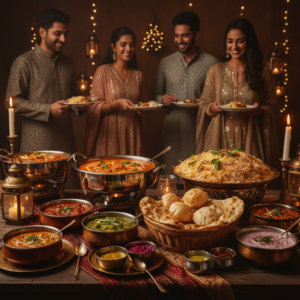
At 7 Spice Bistro, we have watched this dynamic play out for seven years. We serve regulars who grew up eating dal makhani at their grandmother’s table, and we serve first-time visitors who have never tried Indian food before. The dishes that bring both groups back are always the same: the ones cooked with the most care, the most patience, and the most respect for the original recipe.
Punjabi Food and the Broader Indian Culinary Landscape
One of the most exciting things about running an Indian restaurant in Brampton is the opportunity to introduce diners to regional diversity beyond Punjab. Our menu includes dishes that draw from across the subcontinent — and we also offer Hakka Chinese food, the Indo-Chinese fusion tradition that developed among Chinese immigrants to the Indian subcontinent and became its own beloved genre. Exploring our full Menu gives you a real sense of how wide the Indian culinary world actually is — and how much there is to discover beyond the familiar standards.
How to Order Punjabi Food Like Someone Who Actually Knows What They Are Doing
Ordering Punjabi food well is about building a balanced table rather than ordering one enormous dish. The traditional Punjabi meal is structured around contrast: a rich, long-cooked main curry paired with a lighter dal, a tandoor-cooked bread to scoop with, a cooling raita to balance the warmth of the spices, and perhaps a pickled side to cut through the richness of the ghee.
Here is a practical guide to building your order from the ground up:
| Course Role | Classic Punjabi Option | What It Contributes to the Table |
|---|---|---|
| Starter | Amritsari Fish Tikka or Paneer Tikka | Smokiness, texture contrast, and an appetite-sharpening spice hit |
| Main Curry | Butter Chicken or Shahi Paneer | Richness, depth, and the centrepiece of the meal |
| Supporting Dal | Dal Makhani or Dal Tadka | Earthy counterbalance and a lighter protein source |
| Bread | Garlic Naan, Tandoori Roti, or Kulcha | The vehicle — every curry needs one |
| Balance | Boondi Raita or Cucumber Raita | Cooling, dairy richness that tames spice heat |
| Rice (Optional) | Jeera Rice or Plain Basmati | A neutral base that extends the meal and absorbs the sauce |
This structure is not rigid — Punjabi dining is fundamentally generous and informal. But having this framework in mind helps you order a table that feels complete rather than just a collection of random dishes that compete with each other.
Where to Experience Authentic Punjabi Food in Brampton
Authentic Punjabi food in Brampton is best experienced at a restaurant that has been cooking these dishes consistently over years — not one that opened last month with a trendy aesthetic and a menu assembled from a spreadsheet. The indicators of authenticity are consistent across kitchens: a dal makhani that takes days to prepare, a butter chicken that does not taste like it came from a packet, and a tandoor that is actually being used rather than sitting decoratively in a corner.
For families and food enthusiasts across Brampton and Mississauga, the search for quality food brampton comes down to finding a kitchen that takes the source material seriously. Seven years of cooking has taught our team at 7 Spice Bistro that the restaurants worth trusting are the ones that never cut corners on their foundational dishes — because those are the recipes that regulars will call out immediately if something is off.
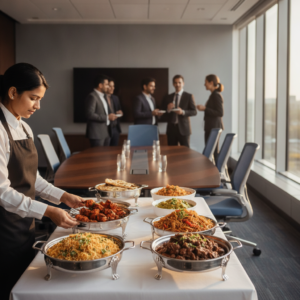
Beyond dine-in, we also offer a full catering service for events of all sizes — from intimate family gatherings to large community celebrations where Punjabi food and good company are the entire point of the evening. If you are planning an event and want a spread that genuinely reflects the tradition rather than a watered-down banquet version of it, our catering team brings the same standard to your venue that we uphold in our own dining room.
Brampton is a city that takes its Indian food seriously. The community here has high expectations, and it has shaped the standard that every kitchen in the area has to meet. We think that is a good thing. It keeps us honest, and it keeps the food excellent.
Ready to Experience Real Punjabi Food in Brampton?
Whether you are dining in, ordering for the family, or planning a catered event, our team at 7 Spice Bistro is ready to bring seven years of authentic Indian cooking to your table. Explore our full menu and book your visit today.
✍️ Written by the 7 Spice Bistro Team
We are the cooks, hosts, and food obsessives behind 7 Spice Bistro in Brampton — seven years into a project that started with a simple belief: that great Indian food should be accessible, honest, and worth coming back for. Every article we write comes from the same place as every dish we cook — genuine experience, not guesswork.
Frequently Asked Questions
What are the most popular Punjabi dishes to try for the first time?
For first-time diners, the most approachable and representative Punjabi dishes are butter chicken, dal makhani, paneer tikka, and chole bhature. These four dishes cover the full range of what Punjabi cooking does best — rich slow-cooked sauces, tandoor-charred proteins, and hearty lentils — without requiring any background knowledge to enjoy. Pair any of them with garlic naan and a raita and you have a complete, satisfying introduction to the cuisine.
How is Punjabi food different from general “Indian food”?
“Indian food” is an umbrella term covering dozens of distinct regional cooking traditions — from the coconut-and-tamarind curries of Kerala to the mustard-oil fish preparations of Bengal. Punjabi food refers specifically to the cuisine of the northern Punjab region, characterised by tandoor cooking, dairy richness (ghee, butter, cream), wheat-based breads, and bold whole-spice masalas. It is the style most commonly represented in Indian restaurants internationally, which is why many people use the terms interchangeably — but they are not the same thing.
Why does restaurant dal makhani taste different from homemade versions?
Restaurant dal makhani — when made properly — tastes different because of the volume of fat, the overnight cooking time, and the use of a commercial tandoor or wood-fire oven to impart a smoky depth that a home stove cannot replicate. The quantity of butter and cream used in a restaurant kitchen is also significantly higher than most home cooks are comfortable with, which produces the characteristic glossy, almost velvety texture of a great dal makhani. Home versions are delicious, but they are a different experience.
Can I order Punjabi food from 7 Spice Bistro for a large family event or catering?
Yes — catering is one of our core services at 7 Spice Bistro, and we have extensive experience delivering authentic Punjabi and Indian food for events of all sizes across Brampton and Mississauga. Whether you are hosting a family celebration, a corporate lunch, or a community gathering, we work with you to build a menu that reflects the occasion. Contact our team directly through our website to discuss your event requirements and get a customised catering quote.