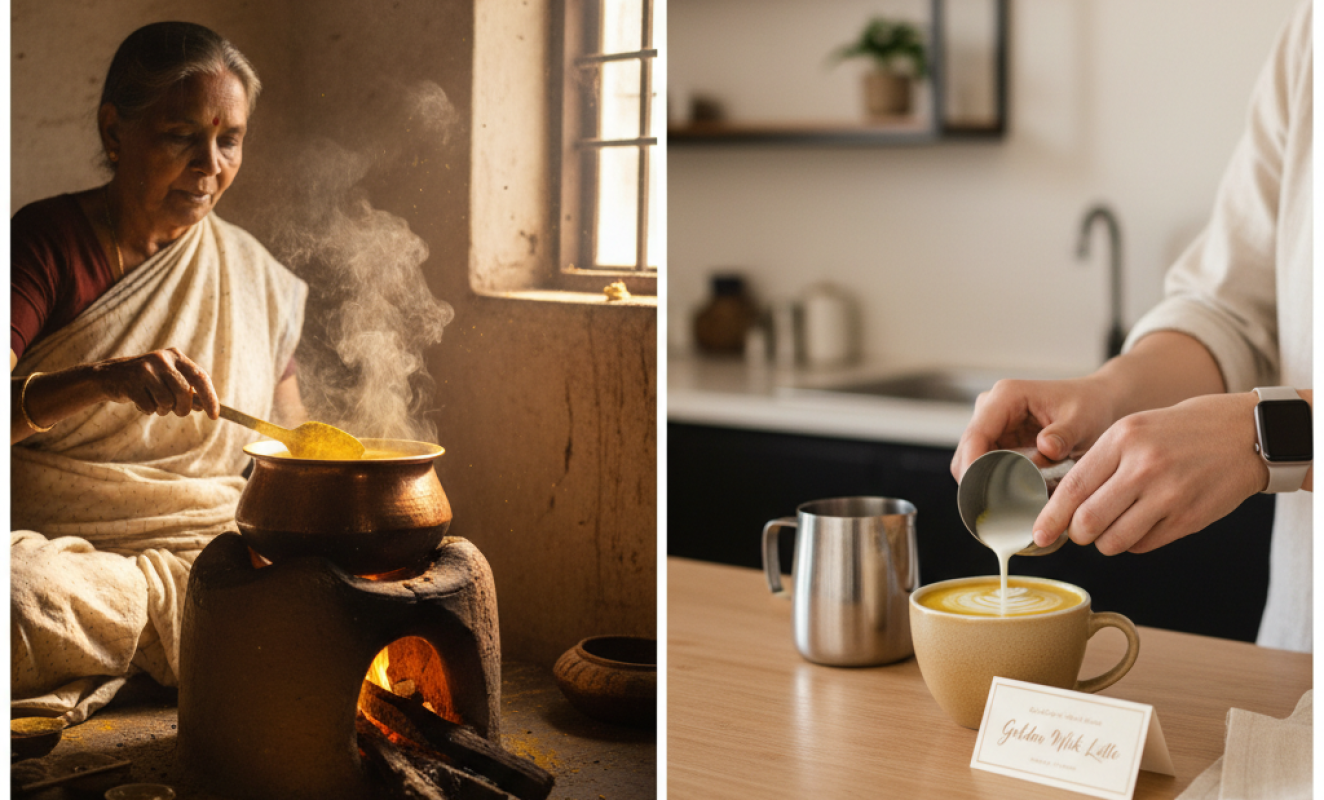
Indian food has carried the story of turmeric for over four thousand years — long before a single golden latte appeared on anyone’s Instagram feed. And in 2026, as wellness brands sell turmeric capsules for $40 a bottle and café menus list “golden milk” as a premium beverage, our team at 7 Spice Bistro keeps thinking about one thing: what would our grandmothers say? Probably something sharp, probably something funny, and almost certainly delivered while stirring a pot of dal that already had more haldi in it than any trendy drink could dream of.
We are not here to be dismissive of wellness culture. People genuinely want to feel better, eat better, live better — and turmeric really is remarkable. But there is a wide, fascinating gap between what the wellness industry says turmeric is and what it has always meant inside the kitchens of Indian families from Brampton to Bengaluru. That gap is worth talking about honestly.
⚡ QUICK ANSWER
Turmeric has been a cornerstone of authentic Indian cooking for millennia — used in curries, rice, dals, and home remedies — not primarily as a trendy drink. Golden milk exists in Indian tradition as haldi doodh, a simple healing tonic made with milk, turmeric, and sometimes black pepper or ghee. It was never meant to be a café upsell. Real Indian families use turmeric every single day, quietly and without fanfare, in the food on their table.
What Is Haldi Doodh, and How Is It Different from Golden Milk?
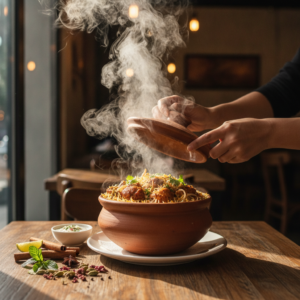
Haldi doodh is a traditional Indian home remedy made from warm milk and turmeric, passed down through generations as a healing drink — not a café menu item. It is the thing your Indian auntie made you drink when you had a cold, a sore throat, or a scraped knee. It arrived in a steel cup, not a mason jar. It was not garnished.
The modern “golden milk” trend takes this tradition, adds oat milk, maple syrup, cinnamon, cardamom foam, and sometimes vanilla, and charges somewhere between six and nine dollars for it. On one hand, that is a genuinely delicious drink. On the other hand, it has become almost unrecognizable from the original. The wellness industry discovered an ancient Indian kitchen staple and repackaged it for a global audience — which says something interesting about whose knowledge gets valued, and when.
In Brampton and Mississauga, where a large and beautifully diverse South Asian community has been making haldi doodh at home for decades, it is a little amusing to see it listed as a “superfood beverage” in downtown Toronto. The knowledge was always here. It just did not have the right branding.
“Haldi doodh was never a luxury — it was love made practical. A cup of warm milk with turmeric is what an Indian mother reaches for before she reaches for the medicine cabinet.”
The key difference is intention. Haldi doodh was functional and familial. Golden milk is aspirational and commercial. Both contain turmeric. Only one contains a generation of memory.
Why Does Turmeric Actually Work — and What Does the Science Say?
Turmeric contains curcumin, a bioactive compound with well-documented anti-inflammatory and antioxidant properties, though its absorption by the body is significantly improved when paired with black pepper or fat. This is exactly what Indian cooking has always done — turmeric goes into ghee-tempered dishes, into curries with fat-rich coconut milk, and in haldi doodh alongside a pinch of black pepper or a spoon of ghee.
According to a review published by the National Institutes of Health (NIH), curcumin has demonstrated significant anti-inflammatory effects in multiple clinical studies, but its bioavailability on its own is notably poor — piperine, the active compound in black pepper, enhances curcumin absorption by up to 2,000%. Indian cooks knew this intuitively for centuries. They just did not need a study to tell them to add kali mirch.
The wellness industry, in its enthusiasm, sometimes sells straight turmeric shots or capsules without fat or pepper. They are, nutritionally speaking, less effective than what your grandmother was already putting in the kadai every evening. Authentic Indian cooking is, in many ways, applied food science that simply predates the lab.
Additionally, according to the World Health Organization (WHO), dietary patterns rich in plant-based spices, legumes, and whole ingredients — the core structure of traditional Indian food — are consistently associated with reduced chronic disease risk. This is not an accident. It is a culinary philosophy that has been refined across thousands of years.
The Fat-Turmeric Connection in Indian Cooking
Every time our kitchen team at 7 Spice Bistro blooms turmeric in hot ghee or oil at the start of a dish, they are doing something that is simultaneously flavour-building and nutritionally intelligent. The fat carries the curcumin into the dish in a way the body can actually use. The aroma that rises from that first sizzle of haldi in ghee is one of the most grounding smells in any Indian kitchen — and now we know it is also one of the most functional.
This is a perfect example of why traditional food knowledge deserves genuine respect rather than trend-cycle extraction. When a wellness brand sells you a turmeric supplement without fat or pepper, they are giving you a fraction of what a well-made Indian meal delivers naturally.
How Do Real Indian Families in Brampton Actually Use Turmeric Every Day?
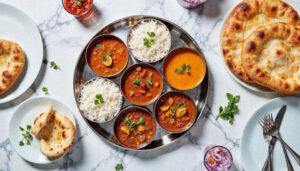
In most Indian households, turmeric is used multiple times daily — in dal, rice dishes, vegetable curries, marinades, and occasionally as a topical remedy — without any particular fuss or ceremony. It is the quiet workhorse of the Indian spice rack, not the star of the show.
Ask any auntie in a Brampton kitchen and she will tell you: turmeric goes in almost everything. A pinch in the boiling water for rice to give it colour and act as a mild preservative. A generous spoon in the dal. A rub on chicken before it hits the marinade. A small amount in the tadka that goes over lentils at the last moment. It is ambient, constant, and entirely unperformed.
Compare that to the wellness trend, where turmeric becomes something you do deliberately — you order the golden latte, you take the supplement, you make the special drink — and the difference in relationship becomes clear. For Indian families, turmeric is not a supplement. It is just dinner.
Turmeric Beyond the Pot: Skin, Ceremony, and Tradition
In Indian tradition, turmeric extends well beyond the kitchen. The haldi ceremony in Indian weddings — where turmeric paste is applied to the bride and groom for its skin-brightening and antibacterial properties — is one of the most joyful pre-wedding rituals in South Asian culture. Families across Brampton and Mississauga celebrate this tradition every weekend during wedding season.
Turmeric paste has also been used for generations on minor cuts and wounds, as a face mask for clear skin, and as a remedy for sore throats. It is a full-spectrum household tool — culinary, cosmetic, and medicinal. The idea that it needed a Western wellness trend to become “discovered” is, to put it gently, a little ironic.
When guests visit us as a go-to Indian restaurant in Brampton, they sometimes ask about the spices in a dish and are surprised to learn how layered the turmeric usage is — it is not just colour, it is structure, it is depth, it is history.
Is the Golden Milk Trend Harmful, or Is It Just Misunderstood?
The golden milk trend is not harmful in itself — turmeric is genuinely beneficial and the drink can be delicious — but it becomes problematic when it strips the cultural origin from the product and prices out the communities whose knowledge it borrows from.
This is a conversation worth having carefully and without defensiveness. We are not saying that non-South Asian people should not enjoy turmeric drinks. We are saying that the full story deserves to be told. When a café in a predominantly white neighbourhood sells “ancient healing golden milk” for $8, while the aunties in Brampton who have made haldi doodh every morning for fifty years are invisible in that narrative — something important is being lost.
The trend can be a bridge, not a boundary — but only if people take the time to understand where it comes from. If your golden latte inspires you to walk into an authentic Indian restaurant and ask about the spices in your butter chicken or your saag, that is genuinely wonderful. Curiosity that leads back to the source is a beautiful thing.
At 7 Spice Bistro, we welcome exactly that kind of curiosity. Our team loves explaining the role of each spice in our dishes — why we use turmeric the way we do, why black mustard seeds hit hot oil before anything else, why certain dishes have a warmth that does not come from chili at all. That conversation is part of what makes sharing food so meaningful.
You can also explore how we approach food traditions with a modern touch through our piece on The Butter Chicken Debate: Traditional Recipe vs. Modern Brampton Interpretations — which covers a similar tension between honouring heritage and adapting for contemporary tastes.
What 7 Spice Bistro Thinks About Turmeric — and Why It Shows Up in Everything We Cook
At 7 Spice Bistro, turmeric is not a trend ingredient — it is a foundational one, present in nearly every dish we serve because that is how authentic Indian cooking actually works. We use it not because it is fashionable, but because our recipes would be wrong without it.
We are proud to be among the best options for Indian food near Mississauga and Brampton for families who want that real kitchen experience — dishes where you can taste the intention behind every spice choice. Our 7 Spice Bistro Mississauga vs. Brampton: How We Serve Two Communities with One Philosophy story speaks directly to our commitment to consistency across both communities we call home.
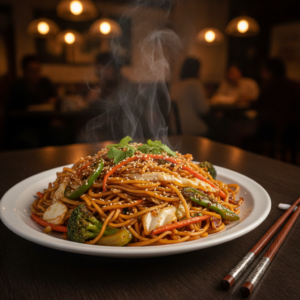
When someone types “Indian food near me” or “best Indian restaurant Brampton” into their phone and finds their way to us, what we want them to experience is not just a meal — it is an education in how these flavours belong together. Our hakka food offerings bring a completely different dimension to the table, showing how Indian culinary tradition absorbed and transformed Chinese cooking techniques into something uniquely its own. The cross-cultural layering in our menu reflects the actual lived reality of Indian food — which has always borrowed, adapted, and elevated.
Turmeric in our kitchen is never decorative. It is structural. It is in the base of our curries, in the marination of our proteins, in the golden hue of rice dishes that have been cooked with intention. Every pinch carries the weight of tradition, and we take that seriously.
For those curious about the full range of what traditional and bold Indian cooking can offer — from spice-forward land dishes to ocean-fresh preparations — our article on Seafood in Indian Cuisine: What Makes 7 Spice Bistro’s Fish & Shrimp Dishes Stand Out is a great next read. The turmeric in our fish marinades, specifically, is one of the purest expressions of the spice’s role in coastal Indian cooking.
The bottom line is this: if you want to understand turmeric, do not start with a café menu. Start with the food. Come to a real authentic Indian restaurant and taste how the spice actually behaves — how it shifts when it hits hot ghee, how it softens into a slow-cooked curry, how it gives that unmistakable warmth without heat. That is the education no wellness brand can give you.
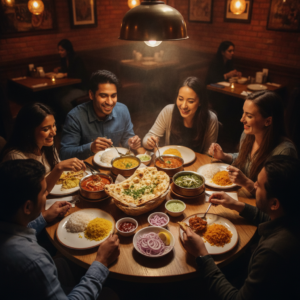
Whether you are exploring our full 7 Spice Bistro menu for the first time or you are a regular who already knows exactly what you are ordering — we are glad you are here. The turmeric in your dinner tonight has a longer story than any trend. And it has never tasted better.
Ready to Taste What Real Indian Food Tastes Like?
Skip the golden latte. Come in for a meal where every spice — including turmeric — is exactly where it belongs. Our team in Brampton is ready to welcome you to the table.
✍️ Written by the Team at 7 Spice Bistro — We are the chefs, hosts, and food lovers behind one of Brampton and Mississauga’s most beloved Indian restaurants. Every article we write comes from the same place as our cooking: a genuine love for the tradition, the stories, and the flavours that make Indian food extraordinary.
Frequently Asked Questions
What is the difference between haldi doodh and golden milk?
Haldi doodh is the traditional Indian version — warm dairy milk with turmeric and sometimes black pepper or ghee, made at home as a healing remedy. Golden milk is the Western wellness-industry adaptation, typically made with plant-based milk, added sweeteners, and multiple spices, served in cafés as a premium drink. The turmeric is the same; the context, cost, and cultural framing are very different.
How do Indian restaurants in Brampton use turmeric in their cooking?
At a genuine Indian restaurant in Brampton like 7 Spice Bistro, turmeric appears in curry bases, marinades, rice preparations, lentil dishes, and even some bread recipes. It is typically bloomed in hot oil or ghee alongside other whole spices at the beginning of cooking, which activates its flavour compounds and improves the bioavailability of its beneficial curcumin. It is a foundational ingredient, not a garnish.
Why is turmeric so important in authentic Indian cooking?
Turmeric serves multiple roles in authentic Indian cuisine: it adds a warm, earthy flavour, contributes a golden colour to dishes, acts as a natural preservative, and provides documented anti-inflammatory benefits. Its importance is both sensory and practical. Indian culinary tradition has understood turmeric’s value for thousands of years, building cooking techniques — like pairing it with fat and black pepper — that maximize its effectiveness long before modern food science confirmed the reasons why.
Can I experience traditional Indian spice use by visiting 7 Spice Bistro?
Absolutely — that is exactly what we are here for. Whether you visit us for a sit-down dinner, explore our food truck serving Brampton, or place a catering order for an event in Mississauga, every dish on our menu reflects how spices like turmeric, cumin, cardamom, and coriander function together in real Indian cooking. Our team is always happy to talk through the spice choices in any dish — we believe understanding your food makes it taste even better.
Related Articles
- How Fresh Spices Change Everything: Quality You Can Taste at 7 Spice Bistro
- The June Spice Calendar: What's Fresh, What's Peak, and Why Your Timing Matters
- The Cooling Curry Effect: Why Certain Indian Dishes Keep You Refreshed in June Heat
- Behind the Scenes: How 7 Spice Bistro Sources Fresh Spices Weekly