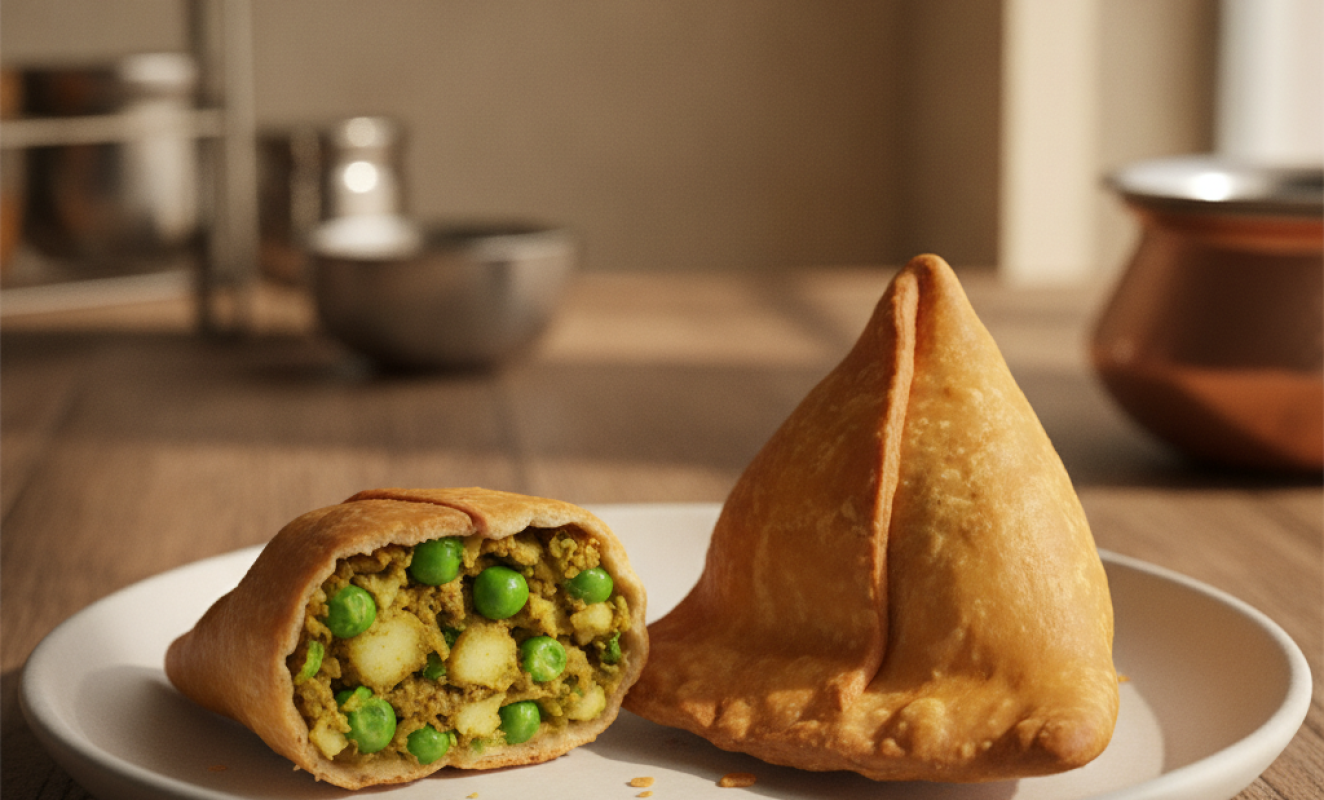
The phrase best samosa in Brampton: what fills, folds, and frying technique tell you about a kitchen’s standards might sound like a mouthful — but if you’ve ever bitten into a samosa and immediately known you were somewhere special, you understand exactly why it matters. A samosa is deceptively simple. Two or three bites. A pastry shell. A handful of filling. And yet, in those two or three bites, a kitchen either earns your trust completely or loses it forever. In 2026, with more dining options available across Brampton and Mississauga than ever before, families and food enthusiasts are becoming sharper, more discerning diners — and the samosa has quietly become one of the most reliable tests of whether an Indian restaurant truly knows what it’s doing.
⚡ QUICK ANSWER
The best samosa in Brampton is one where the filling is spiced from scratch, the pastry edges are hand-folded tight with no air pockets, and the frying is done in clean oil at a consistent temperature — producing a uniform golden shell with no grease seeping through. At 7 Spice Bistro, every samosa on our menu reflects seven years of disciplined Indian cooking tradition, made for the families and food lovers of Brampton who expect the real thing.
What Does the Filling of a Samosa Actually Tell You About the Kitchen?
The filling is the soul of the samosa, and a skilled kitchen never treats it as an afterthought. A great samosa filling is built in layers — aromatics first, then spice, then texture — and the result should be complex, cohesive, and satisfying without being heavy or one-dimensional.
The most traditional version you’ll find at a quality Indian restaurant near me search result starts with a base of cooked potato — not mashed into baby food, but broken with intention so that some pieces hold their shape and provide body while others meld with the spicing. To that base, a thoughtful kitchen adds green peas, fresh coriander, minced ginger, and a precise hand with cumin, coriander powder, dry mango powder (amchur), and garam masala. The amchur is what most shortcuts skip. It’s the dried mango powder that delivers that signature brightness — a gentle tartness that cuts through the starchiness of the potato and lifts the whole filling.
When you find Indian food near me and the samosa arrives tasting flat, one-note, or oddly sweet, it’s almost always because the kitchen either used a pre-mixed spice paste from a jar, skipped the tempering step entirely, or made the filling hours (or days) ahead without accounting for how the spices evolve over time. A filling that was perfectly balanced when freshly made can turn muddy and dull if it sits too long before being packed into the pastry.
At 7 Spice Bistro, our filling is made fresh with individual spices tempered in order — never a shortcut blend, never pre-packaged. That’s what seven years of authentic Indian cooking experience in Brampton has taught our kitchen team: the filling is where the story begins, and it has to be told honestly.
Beyond Potato: The Diversity of Samosa Fillings
Potato and pea is the classic, but a kitchen confident in its craft will offer variations that showcase range. Keema samosas — filled with minced meat, aromatics, and warm spice — test a completely different skill set. The meat must be cooked dry enough that no moisture leaches into the pastry, yet remain tender and deeply spiced. A dry, crumbly, overly salty keema filling is just as much a red flag as a watery one. When a kitchen navigates that balance consistently, you’re in the right place.
How the Fold Reveals Whether a Cook Learned from Tradition or a Shortcut
The fold is the fingerprint of the cook. A properly folded samosa is shaped by hand into a tight, seamless cone — edges pressed and sealed with a slurry of flour and water — so that not a single drop of steam escapes during frying. That sealed interior is what creates the pressure that keeps the pastry flaky and the filling moist without turning soggy.
When you order food near me and a samosa arrives with a visible seam crack along the edge, or the pastry has bubbled unevenly in patches, the fold was either rushed or improperly sealed. Those gaps are entry points for oil during frying. The oil seeps in, the pastry absorbs it, and what should be a crisp, shattering shell becomes a greasy, chewy one. You’ll taste it immediately — that heavy, oily film that coats the mouth and overshadows everything the filling was trying to say.
Traditional hand-folding also determines the ratio of shell to filling. A samosa folded too tightly has too much pastry relative to filling — you’re eating mostly dough. One filled too generously bursts during frying, spilling filling into the oil and ruining both the samosa and the next batch cooked in that oil. The sweet spot is generous but controlled, and finding it consistently is a skill that only comes with repetition and attention.
“A perfectly folded samosa is sealed like a promise — no gaps, no shortcuts, no excuses. The moment you see a crack in the pastry before it’s been eaten, you already know something went wrong in the kitchen.”
The iconic triangular shape itself is not arbitrary. It maximises surface area for even frying while minimising the thickness of any single pastry wall. A thick, doughy corner that doesn’t crisp properly is almost always a sign that the dough wasn’t rolled thinly enough before folding — another marker of a kitchen that’s cutting time, not caring for craft.
What the Dough Itself Should Feel and Taste Like
The pastry — called the samosa shell or cover — is made from maida (refined flour), a measured amount of fat (traditionally ghee or oil), salt, and water. The fat is worked into the flour until it resembles coarse breadcrumbs before any water is added. This technique, called “moyan” in traditional Indian baking parlance, is what gives the pastry its signature flakiness. Skip the moyan step, add the fat and water together carelessly, and you get a doughy, bread-like shell instead of the shatteringly crisp, layered casing that defines a great samosa.
Our team at 7 Spice Bistro in Brampton prepares the dough with the patience this step demands. The result — a shell that shatters slightly under pressure, releases steam rather than oil, and provides a clean, neutral canvas for the spiced filling — is not an accident. It’s the product of doing the same thing correctly, every single time, for seven years.
Why Frying Technique Is the Final — and Most Unforgiving — Test
Frying technique separates good samosas from great ones, and great samosas from unforgettable ones. The single most important variable in frying a samosa is temperature — and the most common mistake is frying at too high a heat.
When the oil is too hot, the exterior of the samosa browns rapidly while the interior pastry — especially near the seams and corners — remains undercooked and doughy. The result looks impressive on the plate: deeply golden, even dramatic. But bite through and you’ll find a pale, soft interior shell hiding behind that brown exterior. The filling, meanwhile, hasn’t had time to heat evenly, so the centre can still be cold or merely warm while the outside is scalding.
The correct approach is to start samosas in moderately heated oil and allow the temperature to rise gradually as the pastry sets. This is sometimes called “slow frying” in professional kitchens, and it’s counterintuitive in a busy restaurant environment where speed matters. But it’s non-negotiable for quality. Slow frying at a controlled temperature produces a shell that crisps uniformly from edge to tip, with the characteristic surface texture — slightly blistered, evenly golden, never greasy.
Oil quality matters just as much as temperature. Samosas fried in old, degraded oil absorb more fat, taste rancid or heavy, and lack the clean finish that makes you want a second one immediately. A kitchen that cares about its samosas changes its frying oil regularly — not just when it looks dark, but on a schedule that protects the integrity of every batch. This is a behind-the-scenes standard that diners rarely think about, but they always taste.
For those searching for tandoori chicken near me or the best chicken balti near me, it’s worth noting that the same discipline applied to frying a samosa is what governs everything else that comes out of a serious Indian kitchen. Temperature control. Timing. Attention. A restaurant that fries samosas beautifully is a restaurant that takes every dish seriously.
If you’re exploring restaurants in Brampton and want a simple on-the-spot test before committing to a full meal, order the samosas first. Hold one in your hand — it should feel light, not heavy with absorbed oil. Press gently on the shell — it should resist slightly and give a faint crackle. Bite through — the shell should shatter cleanly, the filling should be hot throughout, and the first flavour that hits should be the aromatics of the spice, not the taste of cooking oil. That’s the standard. That’s what a great kitchen delivers, every time.
Looking for more ways to evaluate the quality of an Indian restaurant? Our guide on Authentic Indian Cuisine: 8 Hallmarks That Tell You a Restaurant Is the Real Deal walks through the full picture — from spice sourcing to kitchen practices — so you can dine with confidence wherever you go in Brampton.
Where Does the Samosa Fit on the Broader 7 Spice Bistro Menu?
The samosa is a starter — but at 7 Spice Bistro, it’s also a statement. Our full menu extends well beyond this beloved snack, reflecting both the breadth and the depth of what Indian and Hakka cuisine can offer to families and food enthusiasts across Brampton and Mississauga.
The 7 Spice Bistro menu brings together traditional Indian classics — rich curries, aromatic biryanis, tandoor-cooked proteins, and slow-simmered lentils — alongside the bold, stir-fried, Indo-Chinese flavours of Hakka Chinese food. It’s a combination that speaks directly to the diverse food culture of the Greater Toronto Area, where families often want the comfort of familiar Indian dishes alongside something a little more adventurous.
Our dine-in experience is designed for families who want more than just a meal — they want a setting that’s relaxed, welcoming, and genuinely good value. Budget-friendly pricing is central to who we are. Quality ingredients and skilled preparation should not require a special-occasion budget. That’s a principle we’ve held for seven years in Brampton, and one that drives every decision we make about what goes on the menu and how it’s prepared.
Beyond dine-in, our catering service brings the same kitchen standards to your private events, family celebrations, corporate functions, and community gatherings. Whether you’re planning an intimate dinner or a large-scale event, the same attention to filling, fold, and frying technique that governs our samosas applies to every dish we send out. Catering with us means your guests receive restaurant-quality food, not a scaled-down version of it.
We’re proud to be one of the restaurants in Brampton that families across the city and in Mississauga return to again and again — not because we market ourselves aggressively, but because the food speaks clearly enough on its own. Reviews of 7 Spice Bistro consistently highlight consistency, warmth of service, and the sense that someone in the kitchen actually cares. That’s the only kind of reputation worth building.
If you’re curious about the full range of our menu, exploring dishes like paneer prepared in multiple classic styles is a wonderful next step. Our friends at Paneer 101: Every Dish, Every Style, and Why Indian Cheese Deserves a Spot on Your Table break down exactly how this versatile ingredient shows up across the Indian kitchen — and why it belongs on every table.
How to Use the Samosa Test When You’re Exploring Restaurants in Brampton
The samosa test is a reliable shorthand for evaluating any new Indian restaurant, and it takes less than five minutes. Order one samosa. Pay attention to four things: the weight, the colour, the shell, and the filling temperature. Those four data points will tell you almost everything you need to know about whether the kitchen is operating with care or cutting corners.
Weight: A great samosa feels surprisingly light for its size. If it feels dense or heavy, it has absorbed oil — a sign of either incorrect frying temperature or a pastry that was too thick before frying.
Colour: Uniform, warm gold — not pale and blond (under-fried), not deep mahogany with dark patches (over-fried or fried in old oil). Even colouring signals even frying, which signals temperature control.
Shell: The pastry should shatter at the first bite, not bend, compress, or feel rubbery. A soft, pliable shell almost always means either over-hydrated dough or steam trapped inside from a poor seal — both avoidable with proper technique.
Filling temperature: The filling should be uniformly hot — not just warm on the outside and lukewarm at the centre. Cold centres in a fried samosa mean the oil was too hot and the exterior cooked too fast, or the samosa was partially pre-cooked and not properly finished to order.
Pass all four checks, and you’re sitting in front of a kitchen that takes its craft seriously. From that point, you can order with confidence — because the same discipline that produces a great samosa is at work in every dish that follows. Searching for the best Indian restaurant Brampton has to offer? Start with the samosa. It will tell you everything.
And if you’d like to see how Brampton’s dining scene maps out across different neighbourhoods and cuisines, our piece on Top Restaurants in Brampton Right Now: A Neighbourhood-by-Neighbourhood Breakdown is a great companion read for anyone exploring the city’s food culture.
Ready to Put Our Samosas to the Test?
Come dine with us in Brampton and experience seven years of authentic Indian cooking — or let us cater your next event with the same kitchen standards that go into every single samosa we make. Budget-friendly, genuinely crafted, and always consistent.
✍️ Written by the 7 Spice Bistro Team
We are the kitchen and hospitality team behind 7 Spice Bistro, Brampton’s home for authentic Indian and Hakka cuisine built on seven years of consistent, craft-driven cooking. Everything we write reflects what we cook, how we think, and why we believe that great food starts with uncompromising standards in the smallest details.
Frequently Asked Questions
What makes a samosa filling authentic versus a shortcut version?
An authentic samosa filling uses individual whole or freshly ground spices tempered in sequence — cumin seeds, ginger, coriander powder, dry mango powder (amchur), and garam masala added at specific stages of cooking. A shortcut version typically uses a pre-blended spice paste from a jar or a single commercial mix, resulting in a flat, one-dimensional flavour with no brightness or complexity. The presence of amchur — that gentle tartness — is often the easiest way to tell the difference in a single bite.
How can I tell if a samosa has been fried correctly before I even bite into it?
Lift the samosa and assess its weight — it should feel noticeably light relative to its size, with no oiliness on the surface of the pastry. Look at the colour: uniform warm gold with no pale patches or dark spots. Run your finger lightly along the shell — it should feel dry and slightly crisp, not tacky or soft. These three checks take seconds and will reliably indicate whether the frying was done at a controlled temperature in clean oil.
Why does the fold of a samosa affect how it tastes?
The fold determines whether the samosa is properly sealed before frying. A tight, seamless fold keeps steam inside the pastry during frying, which creates the internal pressure that makes the shell flaky and keeps the filling moist. An improperly folded samosa with gaps or loose seams allows oil to enter during frying, which makes the pastry greasy, heavy, and chewy rather than crisp and shattering — fundamentally changing the eating experience regardless of how good the filling is.
Can I order samosas as part of a catering package from 7 Spice Bistro?
Yes — our catering service at 7 Spice Bistro includes samosas and a full range of Indian and Hakka dishes, prepared to the same kitchen standards as our dine-in menu. Whether you’re hosting a family gathering, a corporate lunch, or a larger community event in Brampton or Mississauga, our catering team works with you to build a menu that suits your guest count, your preferences, and your budget. Contact us directly through our website to discuss your event requirements.