⚡ Quick Answer
Paratha is a pan-fried Indian flatbread made from whole wheat flour, served plain or stuffed with spiced fillings like potato, cauliflower, or fenugreek leaves. In Brampton, the best versions are made fresh to order, cooked on a tawa with butter or ghee, and served alongside fresh yogurt and pickle. 7 Spice Bistro is one of the go-to spots in the area to experience authentic, freshly made paratha that rivals what you’d find at a family table in Punjab.
If you’ve been searching for the best paratha in Brampton, you already know the craving is real. It’s that warm, slightly crisp flatbread — slicked with ghee, stuffed with something fragrant and spiced — that no other food quite replicates. In 2026, Brampton’s food scene has grown enormously, but paratha remains one of the most searched, most loved, and surprisingly under-discussed staples of Indian home cooking. Whether you grew up eating it every morning or you’re discovering it for the first time, this guide walks you through every major variety, what separates a truly great paratha from a mediocre one, and how to order it with confidence the next time you’re out.
At 7 Spice Bistro, we’ve spent seven years crafting Indian food that feels like it was made with a grandmother’s hand and a chef’s precision. Paratha is one of those dishes that lives at the heart of what we do — and we want to help you understand it better before you take your first (or next) bite.
What Exactly Is Paratha — and Why Is It Different from Other Indian Breads?
Paratha is a layered or stuffed whole wheat flatbread cooked on a hot griddle (called a tawa) with butter or ghee, distinct from roti by its richness and from naan by its technique and texture. While roti is thin and dry-cooked, paratha is deliberately fried in fat — giving it a golden, slightly crispy exterior that shatters gently when torn.
The word “paratha” comes from the Sanskrit words for layers of cooked dough — and that layering is the key to its character. A good paratha has distinct, flaky layers that trap steam and hold stuffing without becoming soggy or dense. It’s a technique that takes practice, patience, and the right ratio of fat to dough.
Unlike naan, which is traditionally baked in a tandoor oven and made with leavened dough, paratha is unleavened and cooked on a flat surface. That distinction matters enormously for texture. Naan is chewy and bread-like. Paratha is flaky, rich, and intensely satisfying in a way that’s more intimate, more homestyle. It’s the bread that most Indian families grew up making in their own kitchens — and that nostalgia is part of why it connects so deeply.
In the context of Brampton food culture, where a large and vibrant South Asian community calls this city home, paratha is not exotic — it’s everyday. But finding one that’s made with real care, the right amount of ghee, and a properly spiced filling? That’s worth seeking out.
How Many Types of Paratha Are There — and Which Should You Order First?
There are dozens of paratha varieties across India, but for first-timers and regulars alike, the essential types can be grouped into stuffed parathas, layered parathas, and regional specialties. Start with aloo paratha if you want a classic introduction — it’s the most universally loved and the most forgiving for new palates.
Aloo Paratha — The People’s Champion
Aloo paratha is the most iconic stuffed flatbread in Indian cuisine — a whole wheat dough encasing a filling of spiced mashed potato, cooked on a tawa until golden and served with yogurt, butter, and pickle. The filling is typically seasoned with green chili, ginger, cumin, and fresh coriander, creating a warmth that builds slowly and comfortably.
What makes a great aloo paratha isn’t just the spice — it’s the ratio. Too much potato and the bread tears. Too little and every bite feels dry. The best versions we make at 7 Spice Bistro get that balance exactly right: a thin, pliable dough that stretches around a generous, well-seasoned filling, crisped in a pool of ghee until both sides are spotted golden-brown.
Gobi Paratha — The Underrated Alternative
Gobi paratha swaps potato for finely grated, lightly spiced cauliflower — and the result is earthier, slightly nuttier, and more texturally interesting than its aloo counterpart. The challenge with gobi paratha is moisture control: cauliflower releases water as it cooks, which can turn the filling soupy and cause the bread to split. Properly made gobi paratha has a filling that’s almost dry to the touch before it goes in — squeezed, salted, and drained — with spice added at the end.
If aloo paratha is comfort, gobi paratha is character. It’s the one that Indian food lovers often return to once they’ve built a relationship with the cuisine.
Methi Paratha — Bitter, Bright, and Beautiful
Methi paratha is made by kneading fresh fenugreek leaves directly into the dough rather than using a stuffed filling — giving the flatbread a distinctly green tinge, a pleasantly bitter edge, and an aroma that is wholly its own. Fenugreek is one of those ingredients that polarises people at first but wins them over completely once they understand it.
Methi paratha pairs beautifully with a simple yogurt and a smear of white butter. It’s also lighter than stuffed varieties, making it a great option if you’re ordering paratha alongside a curry or a dal.
Laccha Paratha — Layers Upon Layers
Laccha paratha is a layered flatbread made by rolling and folding the dough multiple times to create distinct, flaky strata — no filling, all technique. The name comes from the Hindi word for layers, and when it’s done right, you can pull apart strand after strand of crisp, buttery dough like a savoury Indian croissant.
Laccha paratha is the bread you want alongside a rich curry — something like a paneer makhani or a dark, smoky dal makhani — because its layers soak up sauce brilliantly while still holding their structure. It’s also the paratha that impresses people the most on first sight, arriving at the table stacked and spiralled like edible architecture.
“A laccha paratha made well is not just food — it’s a small display of craft. Every fold is intentional. Every layer tells you someone took their time.”
— Our kitchen team at 7 Spice Bistro
| Paratha Type | Key Filling / Technique | Flavour Profile | Best Paired With |
|---|---|---|---|
| Aloo Paratha | Spiced mashed potato | Warm, hearty, mildly spiced | Yogurt, white butter, pickle |
| Gobi Paratha | Spiced grated cauliflower | Earthy, nutty, layered heat | Mint chutney, chai |
| Methi Paratha | Fresh fenugreek in dough | Bitter, fragrant, bright | Plain yogurt, dal |
| Laccha Paratha | Multi-fold layering technique | Buttery, flaky, rich | Paneer makhani, dal makhani |
What Makes a Great Paratha — and How Do You Tell the Difference When Ordering?
A great paratha is defined by three things: properly rested dough, adequate fat during cooking, and a filling that’s dry enough to hold its shape without tearing the bread. When any of these three elements fall short, the whole dish suffers.
Dough that hasn’t rested will be stiff and difficult to work with, producing a paratha that’s tough rather than pliable. Most home cooks and experienced restaurant kitchens rest their dough for at least 20–30 minutes after kneading — this develops the gluten gently, making the dough elastic enough to be rolled thin without snapping back.
Fat is non-negotiable. A paratha cooked dry on a tawa is technically possible but culinarily disappointing. The fat — whether ghee, butter, or a combination — creates the golden crust that separates a restaurant-quality flatbread from a dry, pale imitation. At 7 Spice Bistro, our kitchen doesn’t cut corners here. The ghee goes in generously, and the paratha cooks until both sides are properly golden, not just warmed through.
When you’re ordering at any Indian restaurant near me or specifically at a Punjabi restaurant in Brampton, look for these signs of quality: the paratha arrives hot (never lukewarm), the surface has visible golden patches rather than uniform pale dough, and it comes with proper accompaniments — at minimum a bowl of yogurt and some house pickle. A restaurant that serves paratha cold or without sides is cutting corners somewhere in the kitchen.
You should also feel the weight of it in your hand. A well-stuffed paratha has substance — it’s not paper-thin. But it shouldn’t feel dense or doughy either. That sweet spot, that perfect heft, is what our team works toward with every order that leaves our kitchen in Brampton.
Why Amritsari Kulcha Is the Close Cousin You Should Also Know About
Amritsari kulcha is a close relative of paratha — a stuffed leavened flatbread from the Punjab region of India, traditionally cooked in a tandoor oven rather than on a tawa, giving it a charred, crisp exterior with a soft, chewy centre. If you’ve been searching for amritsari kulcha near me in the Brampton area, understanding how it differs from paratha helps you order exactly what you’re looking for.
The key difference is in the dough. Paratha uses unleavened whole wheat flour (atta), while kulcha uses a leavened dough made with maida (refined flour), giving it a softer, airier crumb. Kulcha also tends to be larger and flatter, with the filling pressed into a wider surface area rather than bundled into the centre like a paratha.
Amritsar — the city this bread originates from — is famous for serving kulcha with a thick, deeply spiced chhole (chickpea curry), and this pairing has become one of the most iconic street food combinations in all of North India. The bread absorbs the dark, tangy gravy in a way that no other flatbread quite manages. For anyone exploring Indian food near me for the first time, kulcha-chhole is one of those landmark dishes that tells you everything about what Punjabi cuisine values: boldness, richness, and extraordinary generosity of flavour.
At 7 Spice Bistro, our deep roots in authentic Indian cooking — built over seven years of serving the Brampton community — mean that dishes like kulcha and paratha are made with the same respect we give to every item on our menu. These are not afterthoughts. They are the foundation.
If you’d like to explore more of the broader Indian dining scene in Brampton while you’re planning your next meal out, our guide to Downtown Brampton Restaurants: A Diner’s Guide to the Neighbourhood’s Best Eats gives you a full picture of what’s worth your time and money in this city.
How to Order Paratha Like a Local — and Build the Perfect Indian Meal Around It
To order paratha like a local, start by deciding whether you want it as a standalone meal (go stuffed — aloo or gobi) or as bread alongside a curry (go laccha or plain paratha, which soaks up sauce better). Then confirm your accompaniments: any proper Indian restaurant worth its salt will offer yogurt and achaar (pickle) as a minimum.
Here’s how we’d build a complete paratha-based meal at 7 Spice Bistro, starting from the bread outward:
The Standalone Paratha Meal
Order two aloo parathas with a side of full-fat yogurt, a small cup of pickle, and a fresh green chutney if available. That’s the classic. If you want something with a bit more substance, add a small bowl of dal — either yellow dal tadka or the richer, smokier dal makhani — and eat it alongside. The dal isn’t for dipping; it’s a separate course that completes the nutritional and flavour arc of the meal.
Paratha as Part of a Larger Indian Spread
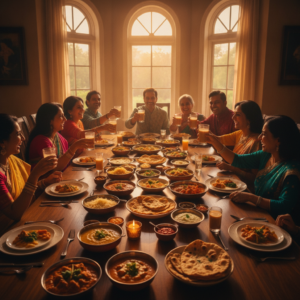
When you’re building a shared spread for a table, laccha paratha or a plain butter paratha works best as a companion to curries. The layered, flaky texture tears into satisfying pieces that scoop and hold sauce brilliantly — think paneer butter masala, shahi paneer, or a rich rajma. The flatbread becomes the utensil, the side dish, and part of the main event all at once.
Paratha also pairs wonderfully with our rice-based dishes. If you’re torn between bread and rice for a table, order both — one paratha per person alongside a shared biryani. Our guide on Veg Biryani vs. Chicken Biryani: Which Version of India’s Most Loved Dish Is Right for You? can help you decide which biryani style best completes that combination.
What to Drink with Paratha
Paratha’s richness calls for something that cuts through fat and refreshes the palate. Lassi — sweet or salted — is the traditional pairing, and for good reason. The cool, lightly tangy yogurt drink balances the ghee-forward richness of a well-cooked paratha perfectly. A masala chai works equally well if you’re eating paratha as a morning or midday meal, which is, truthfully, the most traditional way to enjoy it.
Whatever you’re ordering — whether it’s your first paratha or your hundredth — the team at 7 Spice Bistro in Brampton is always happy to walk you through the menu and help you build a meal that suits your taste and your budget. We’ve been doing this for seven years, and the thing that never gets old is introducing someone to a dish they immediately fall in love with.
Where Does Paratha Fit in the Broader Story of Brampton’s Indian Food Scene?
Brampton is home to one of the most vibrant South Asian food communities in all of Canada, and paratha sits quietly at the centre of it — not as a flashy restaurant showpiece, but as the everyday food that ties community to culture. It’s the dish that shows up at family breakfasts, at weekend brunches with extended relatives, and at the end of a long day when you need something honest and filling.
What’s shifted in recent years is that more Brampton restaurants are treating paratha with the same intentionality they bring to their curries and biryanis. It’s no longer a perfunctory bread option on the side of the menu. It’s a feature — something people seek out specifically, something worth driving across the city for.
At 7 Spice Bistro, we see this every week. Customers who grew up in Punjab or Haryana come in specifically for the paratha because they want something that tastes like home. Customers who are new to Indian cuisine come in because they’ve heard about it from a friend or discovered us while searching for Indian food near me — and paratha becomes their gateway into everything else the cuisine has to offer.
That dual role — comfort food for those who know it, entry point for those who don’t — is what makes paratha genuinely special. Very few dishes in any cuisine manage to hold both of those spaces simultaneously. Paratha does, and it does it every single day, on tables across Brampton and beyond.
If you’re planning a group visit or catering a family event where you want to showcase authentic Indian flatbreads — including paratha — our catering team can design a custom menu that brings this food to your table, on your terms. Seven years of serving Brampton has taught us exactly how to do that well.
For more on how Brampton’s Indian dining scene comes together — including where to find the best rice dishes to pair with your flatbread — take a look at our complete resource: Biryani in Brampton: Chicken, Veg, and Everything In Between.
Ready to Try the Best Paratha in Brampton?
Come in, sit down, and let our team take care of you. Whether you’re in the mood for a classic aloo paratha, a flaky laccha, or a full Indian spread with all the trimmings, 7 Spice Bistro is where Brampton comes for the real thing. Budget-friendly pricing, seven years of experience, and a kitchen that genuinely cares — that’s what you’ll find every time.
✍️ Written by the Team at 7 Spice Bistro
We’re the people behind the tawa — seven years in, still just as passionate about making Indian food that feels authentic, honest, and worth every bite. Everything we write comes from the same place our food does: real experience, real flavour, and a genuine love for sharing Indian cuisine with the Brampton community.
Frequently Asked Questions
How is paratha different from naan or roti?
Paratha is an unleavened whole wheat flatbread cooked on a tawa (griddle) with ghee or butter, which gives it a flaky, layered, and slightly crispy texture. Roti is also unleavened and cooked on a dry griddle, but without fat — making it thinner and less rich. Naan, by contrast, uses leavened dough and is traditionally baked in a tandoor oven, resulting in a softer, chewier, more bread-like texture. Each has its place, but paratha is the richest and most filling of the three.
What is the best paratha to order if I’m trying Indian flatbread for the first time?
Aloo paratha is the best starting point for first-timers. Its filling of spiced mashed potato is familiar and comforting without being overwhelming, and it pairs beautifully with the yogurt and pickle that come alongside it. It gives you a complete picture of what a stuffed Indian flatbread should taste and feel like, without any of the more assertive flavours that might take a little more experience to fully appreciate.
Why does paratha taste so different at restaurants versus at home?
The biggest factor is usually fat and heat. Restaurant kitchens use a very hot, well-seasoned tawa and don’t scrimp on ghee or butter — both of which create the golden crust and distinct flavour that home cooks sometimes avoid for health reasons. The quality of the resting time for the dough also makes a significant difference: a rushed home cook might skip or shorten that step, resulting in a tougher, less pliable flatbread. At 7 Spice Bistro, our kitchen team follows the same time-honoured process every time, which is why our paratha consistently delivers that restaurant-quality result.
Can I order paratha as part of a catering order for a large event?
Yes — 7 Spice Bistro offers full catering services for events of all sizes in Brampton and the surrounding area, and Indian flatbreads including paratha can absolutely be part of a custom catering menu. Paratha is an excellent choice for large gatherings because it travels well, is universally loved, and pairs with a wide range of curries and accompaniments. Reach out to our catering team directly through our website to discuss your event, your headcount, and your menu preferences — we’ll take care of the rest.