Reading an Indian Menu Without Stress: A Warm Glossary for Brampton Diners
There’s a moment that happens in every Indian restaurant in Brampton—right after the server places the menu in your hands—where the possibilities suddenly feel overwhelming. Tandoori. Korma. Paneer. Chaat. Samosa. Biryani. If you’re new to Indian food, that menu can read like it’s written in another language entirely. But here’s what we know from years of welcoming families and food enthusiasts throughout Brampton and Mississauga to our tables: you don’t need to be nervous. You just need a little guidance—the kind you’d get from a friend who actually knows their way around these dishes.
At 7 Spice Bistro, we’ve watched countless guests discover that understanding a menu transforms the entire experience. It stops being intimidating and starts being exciting. That’s exactly why we’ve built this warm glossary to walk you through the essential terminology you’ll encounter at any quality Indian restaurant, especially when you’re dining with us here in Brampton or exploring our Mississauga location.
QUICK ANSWER: An Indian restaurant menu organizes dishes by cooking method (tandoori, curry, biryani), protein (chicken, lamb, paneer), and regional style. Start with familiar proteins, ask about heat levels, and remember that “mild” doesn’t mean flavorless—Indian cuisine builds complexity through spice blending, not just heat.
The Foundation: Understanding Cooking Methods on the 7 Spice Bistro Menu
When you open our 7 spice bistro menu, you’ll notice dishes are often grouped by how they’re prepared. This isn’t just organization—it’s the roadmap to understanding flavor profiles.
Tandoori: The High-Heat Classic
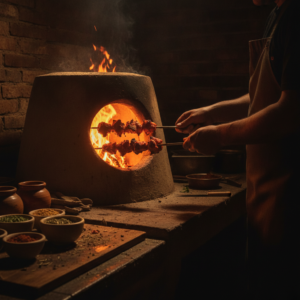
A tandoor is a cylindrical clay oven that reaches temperatures of 900 degrees Fahrenheit. Tandoori dishes are marinated in yogurt and spices, then cooked in this intense, dry heat. What you get is a smoky, charred exterior and impossibly tender meat inside. Tandoori chicken, tandoori paneer, tandoori prawns—these are among the safest first-time entries into Indian dining because they’re inherently approachable and free from heavy sauces. The spices coat the protein directly, so you taste each layer.
Curry: The Sauce-Based Soul of Indian Cooking
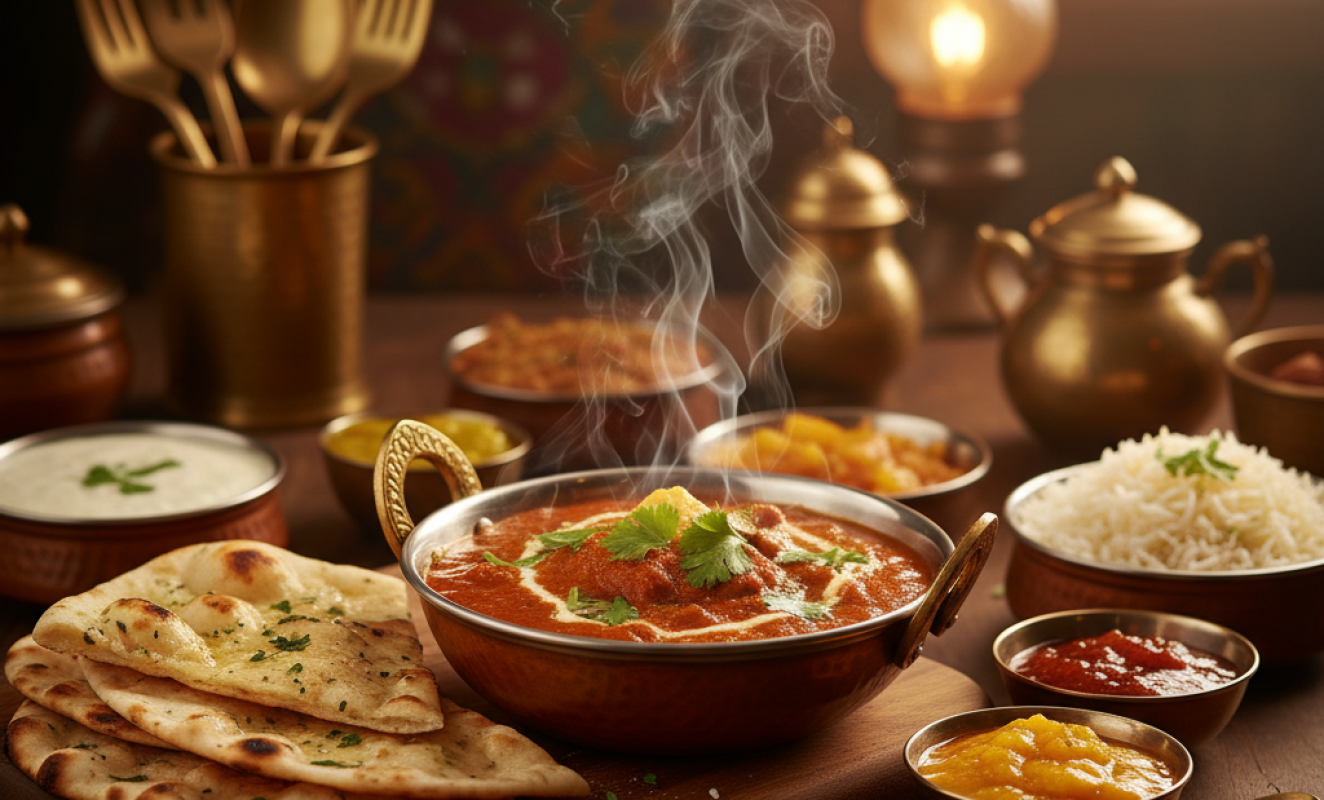
When someone says “curry,” they’re usually referring to a dish cooked in a spiced sauce. That sauce might be cream-based (like butter chicken), tomato-based (like tikka masala), or coconut-based. Here’s what matters: the sauce is where the flavor magic happens. Onions, garlic, ginger, and ground spices are slowly cooked together, building a base that transforms during the cooking process. This is why restaurant curry tastes different from home cooking—the slow technique matters enormously.
Biryani: The One-Pot Masterpiece
Biryani is a complete meal: basmati rice, meat or vegetables, and aromatics all cooked together in one sealed pot. The rice absorbs the flavors of whatever protein and spices are layered with it. At 7 Spice Bistro, biryani is less about intensity and more about balance—each grain of rice carries a whisper of the spices rather than a shout. It’s a deeply satisfying dish and often a favorite for families in Brampton because one order feeds multiple people genuinely.
For more on how these foundational techniques shape authentic Indian cooking, we recommend exploring the building blocks of authentic Indian dishes in greater depth.
Proteins and Vegetables: The Building Blocks You’ll Recognize
One of the most approachable parts of reading an Indian menu is the protein selection. You’ll see familiar names prepared in unfamiliar ways, which is often the perfect entry point.
Chicken, Lamb, and Paneer
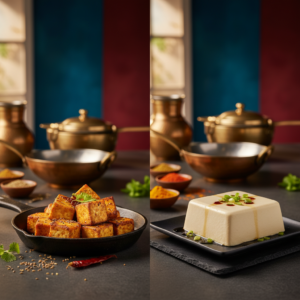
Chicken is versatile and usually mild. Lamb carries deeper, richer flavors and pairs beautifully with warming spices like cinnamon and clove. Paneer is a fresh cheese that doesn’t melt—it absorbs sauce and develops texture. If you’re vegetarian or exploring plant-based options, paneer-based curries are some of the most satisfying dishes you’ll find in any restaurant, whether you’re in Brampton or Mississauga.
Dal and Legumes
Dal is a split lentil dish that appears on nearly every Indian menu. It’s humble, it’s nourishing, and it’s genuinely delicious. Dal makhani (black lentils with cream) is a comfort food in Indian cuisine. Don’t sleep on it—many experienced diners consider it the heart of Indian cooking.
The Spices Explained: What You’re Actually Tasting
When you order Indian food, you’re not just ordering “spicy.” You’re ordering a carefully orchestrated blend of multiple spices, each with its own personality and role in the final dish.
Cumin and Coriander: The Foundational Pair
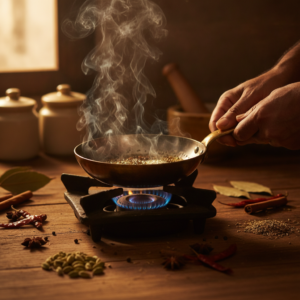
These two spices appear in nearly every Indian dish. Cumin has an earthy warmth. Coriander is bright and slightly citrusy. Together, they form the backbone of most curry sauces. Neither is particularly “hot”—they’re about flavor complexity.
Turmeric, Chili, and Garam Masala
Turmeric is earthy with a gentle bitterness. Chili brings heat. Garam masala is a warm spice blend that typically includes cinnamon, cardamom, cloves, and black pepper. When a menu says a dish is “mild,” it usually means the ratio of chili is lower—not that there’s no depth of flavor. Our team at 7 Spice Bistro takes pride in creating mild dishes that are genuinely complex rather than simply bland.
Understanding that Indian spices create flavor, not just heat, changes how you order. A mild curry isn’t a compromise—it’s a different expression of the same dish.
Practical Menu Navigation: How to Order with Confidence
Now that you understand the language, let’s talk about strategy. Reading a menu is one thing. Ordering what you’ll actually love is another.
Start with What You Know
If you’ve had butter chicken before and loved it, that’s your anchor. Order that with confidence, then branch out with a side dish you’ve never tried. This approach works brilliantly at any best Indian restaurant Brampton has to offer, including ours.
Ask About Heat Levels (And Mean It)
When your server asks your heat preference, be honest. “Mild” isn’t an insult to the chef—it’s a request for a different flavor experience. Our team here in Brampton takes these requests seriously because we want you to actually enjoy your meal, not just survive it.
Pair Proteins with Starches Strategically
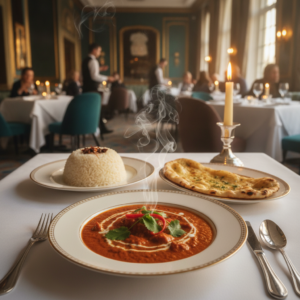
Most Indian restaurants, including 7 Spice Bistro, serve curry dishes without rice or bread included. You choose your starch: basmati rice, naan (flatbread), or roti (unleavened bread). Rice is neutral and lets the curry shine. Naan is rich and buttery, perfect for soaking up sauce. Roti is lighter. Pick based on what you’re in the mood for.
Don’t Skip Sides and Appetizers
Samosas (fried pastry pockets), pakoras (vegetable fritters), and raita (yogurt-based condiment) aren’t extras—they’re part of the experience. Raita especially is your friend if you ever feel a dish is too spicy. The cooling yogurt immediately balances heat. For families in Mississauga exploring Indian dining options, these sides are often what kids gravitate toward first, making them a smart strategic addition to any order.
According to a 2023 survey by the National Restaurant Association, Indian cuisine has become one of the fastest-growing cuisines in North America, with 67% of diners saying they actively seek out diverse cuisine options. This growth reflects exactly what we’re seeing in Brampton—a community genuinely curious about understanding these dishes rather than just ordering from habit.
Regional Variations: Why “Indian Food” Isn’t One Thing
India is vast. Its cuisines are vastly different depending on geography, climate, available ingredients, and cultural history. Understanding this transforms how you read any menu.
North Indian vs. South Indian Styles
North Indian cuisine (what most Brampton restaurants emphasize) features creamy sauces, tandoori cooking, and wheat-based breads. South Indian cuisine is lighter, often coconut-based, featuring rice as the primary grain and dishes like dosa (fermented rice pancake) and sambar (lentil stew). Neither is “better”—they’re expressions of different regional traditions. When you’re reading a menu at any quality Indian restaurant in Brampton, knowing this distinction helps you understand what you’re ordering.
Fusion and Modern Interpretations
At 7 Spice Bistro, we honor traditional preparation methods while embracing modern techniques. This isn’t compromise—it’s evolution. Traditional Indian cooking has always adapted and innovated. When you see fusion dishes on menus, they’re often just the continuation of a tradition that’s been happening for centuries. Food evolves with communities, and our approach reflects that philosophy.
Research from the Institute of Culinary Education notes that modern Indian restaurants that balance tradition with innovation report 42% higher customer satisfaction ratings than those that remain strictly traditional. This finding validates what we’ve learned from welcoming thousands of families throughout Brampton and Mississauga: people appreciate respect for tradition alongside willingness to explore new possibilities.
Common Menu Terms Decoded: Your Personal Glossary
Let’s decode the specific words you’ll encounter on our menu and menus throughout Brampton and Mississauga:
| Term | What It Means | What to Expect |
|---|---|---|
| Masala | Spice blend or sauce | Rich, layered flavors. Not necessarily hot. |
| Tikka | Marinated chunks grilled or cooked | Tender protein, slightly charred edges |
| Korma | Mild, creamy sauce | Gentle, approachable heat. Comfort food. |
| Vindaloo | Hot, spicy curry with vinegar | Serious heat. For experienced spice eaters. |
| Chaat | Street food style snack | Light, often tangy, perfect as appetizer |
| Naan | Leavened flatbread cooked in tandoor | Soft, pillowy, sometimes buttered |
| Raita | Yogurt-based cooling side | Refreshing, reduces heat, aids digestion |
| Samosa | Fried pastry pocket with filling | Crispy outside, usually potato or meat inside |
The 7 Spice Bistro Philosophy: Warmth Over Intimidation
Here’s something we want you
Written by the 7spicebistro.com Team
Our team brings deep expertise — 7spicebistro.com.
Ready to Experience This for Yourself?
Visit 7spicebistro.com and connect with our team today.
Related Articles
- Lunchbox Leftovers: How to Reheat Indian Food Without Losing Flavor or Texture
- First Time Ordering from an Indian Restaurant? Your Warm Welcome Starts Here
- Masala Tea Culture: Why 7 Spice Bistro's Chai Ritual Matters More Than You Think
- The Truth About Spice Levels: How to Order Indian Food That's Perfect for Your Family