Why Reheating Indian Food the Right Way Actually Matters
If you love indian food brampton as much as we do, you already know that leftovers from a great meal are one of life’s small but genuine pleasures. Whether you ordered a fragrant lamb rogan josh, a creamy butter chicken, or a sizzling Hakka noodle dish, the flavour you brought home deserves to taste just as wonderful the next day — not ruined by a rushed reheat in the microwave that turns your gravy into rubber and your bread into cardboard.
In 2026, food waste is a growing concern for families across Brampton and Mississauga. According to Love Food Hate Waste Canada, the average Canadian household throws away approximately $1,300 worth of food every single year — and a big chunk of that is perfectly edible leftovers that simply weren’t stored or reheated properly. That’s money leaving your pocket unnecessarily, especially when the food in question came from a restaurant you actually love.
At 7 Spice Bistro, we cook every dish with care — layered spices, slow-built sauces, hand-prepared proteins — and we genuinely want you to enjoy every last bite of what you ordered. So our team put together this practical, honest guide to help you reheat Indian food the right way. Think of it as our kitchen tips coming home with you.
⚡ Quick Answer
The best way to reheat Indian food is on the stovetop over low to medium heat with a splash of water or stock to loosen the sauce, stirring gently to preserve spice depth and texture. Avoid the microwave for curries and rice dishes whenever possible — it dries out proteins and breaks down the emulsified fats that give Indian gravies their signature richness. Store leftovers in airtight containers within two hours of your meal, and most dishes will keep beautifully for up to three days in the fridge.
How Should You Store Indian Food Leftovers to Protect Flavor?
Proper storage is the foundation of a great leftover experience — before you even think about reheating, you need to get the storage step right. Indian curries, biryanis, and Hakka dishes reheat beautifully when they’ve been stored correctly, and they become a disappointing mess when they haven’t.
Airtight Containers Are Non-Negotiable
Transfer your leftovers from the takeout containers into proper airtight glass or BPA-free plastic containers as soon as you get home. Takeout containers are designed for transport, not storage — they allow air in, which accelerates the oxidation of spice oils and causes your curry to taste flat and stale by the next morning. Glass containers are particularly good for Indian food because they don’t absorb odours or stain from turmeric and masalas the way plastic sometimes does.
Keep Wet and Dry Separate
One of the most common mistakes families in Brampton make with Indian food leftovers is storing the rice and the curry together. Don’t do it. The rice absorbs moisture from the gravy overnight and becomes a clumped, overly soft mass that reheats unevenly. Keep your biryani or steamed basmati in a separate container from your curries and dals. The same rule applies to naan, roti, and any fried items like pakoras — keep them away from liquid at all costs.
The Two-Hour Rule
According to Health Canada’s food safety guidelines, cooked food should be refrigerated within two hours of preparation or serving to prevent bacterial growth in the “danger zone” between 4°C and 60°C. This is especially important for protein-heavy dishes like butter chicken, lamb curry, and Hakka chicken — dishes where a cold chain break can lead to spoilage you might not even smell. When in doubt, refrigerate promptly and consume within three days.
“Great Indian food doesn’t expire after one meal — it evolves. A well-stored curry almost always tastes deeper and more complex the next day as the spices continue to meld.” — The team at 7 Spice Bistro
What Is the Best Method to Reheat Indian Curries and Gravies?
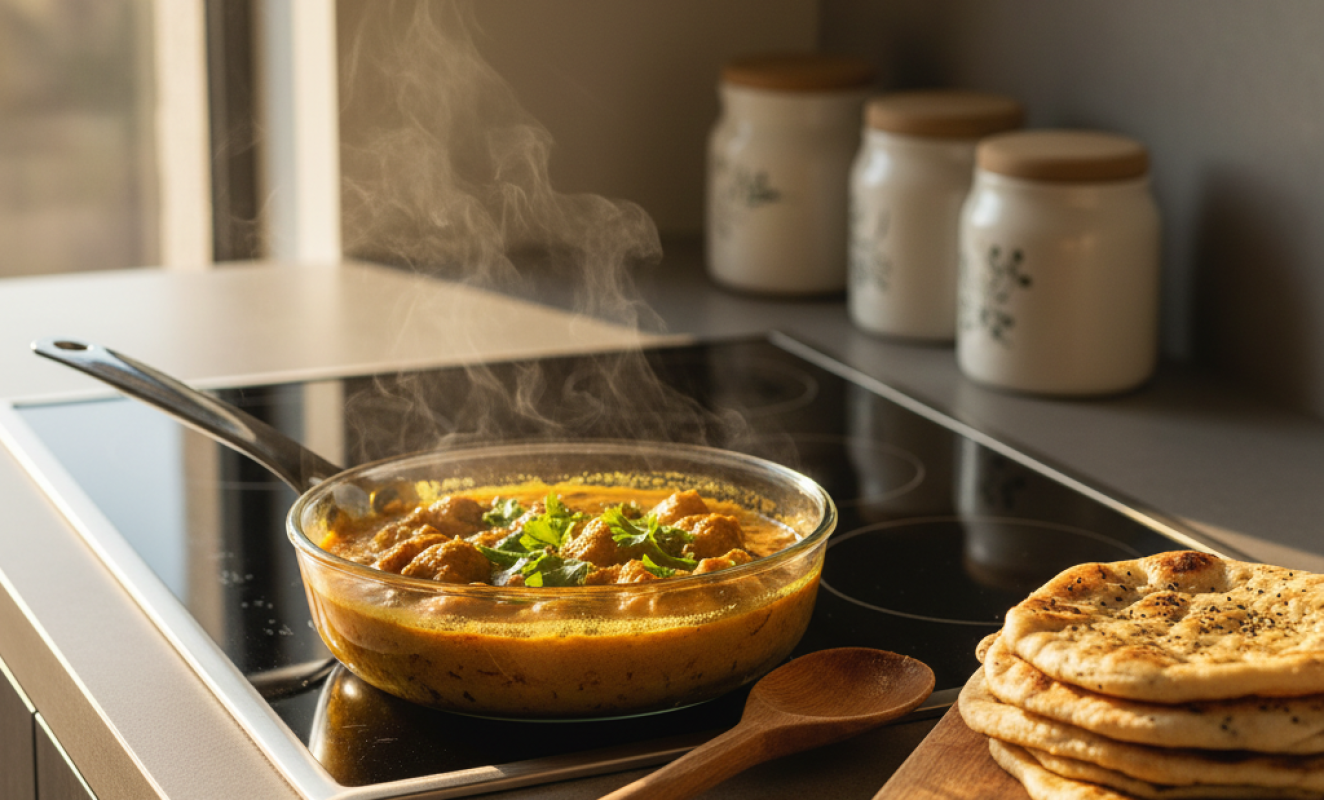
The stovetop is the gold standard for reheating Indian curries and gravies — it gives you control over heat, moisture, and texture in a way no microwave or oven can replicate. Set your pan to low to medium heat, add your curry, and stir in two to three tablespoons of water, stock, or even a small splash of cream for butter-based sauces. This prevents the base from scorching and brings the emulsified sauce back to life.
Stovetop Reheating: Step by Step
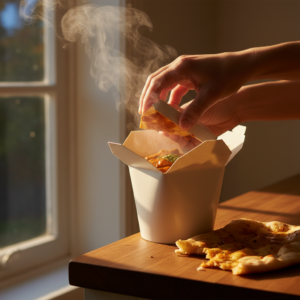
Start with a heavy-bottomed pan — a cast iron skillet or a non-stick saucepan works beautifully. Add your leftover curry directly from the fridge. Don’t wait for the pan to get hot first; letting the curry warm gradually prevents the proteins from seizing and the fats from separating. Stir every 30 seconds or so, and add liquid in small increments until the sauce reaches its original consistency. The whole process should take no more than five to seven minutes.
When the Microwave Is Your Only Option
We get it — life in Brampton and Mississauga is busy, and sometimes the microwave is all you have time for. If that’s the case, here’s how to do it properly. Transfer the curry into a microwave-safe bowl, cover it loosely with a damp paper towel (this traps steam and prevents the surface from drying out), and heat it in 60-second bursts on medium power rather than full blast. Stir between each interval. Never reheat on full power — the outer edges will overheat and split while the centre stays cold.
A Quick Bloom of Fresh Spice Goes a Long Way
Here’s a tip our kitchen team genuinely loves: when reheating any curry on the stovetop, add a tiny pinch of the same spice that anchors the dish — a dash of garam masala for a North Indian curry, a few drops of coconut milk for a South Indian preparation, or a small spoonful of chili-garlic sauce for a Hakka dish. This “bloom” of fresh flavour bridges the gap between day-one freshness and day-two depth. It takes ten seconds and makes a noticeable difference.
How Do You Reheat Rice, Biryani, and Bread Without Drying Them Out?
Rice and bread are the trickiest leftovers to reheat well — get it wrong and you’re left with dry, crumbly grains or stiff flatbreads that crack when you fold them. The key in both cases is controlled moisture and gentle heat.
Reheating Basmati Rice and Biryani
For plain basmati rice, the microwave actually works — but only with the right technique. Place the rice in a microwave-safe bowl, sprinkle one to two tablespoons of water over the top, and cover tightly with a plate or microwave-safe wrap. Heat for 90 seconds on medium-high power, then fluff with a fork. The steam created under the cover rehydrates each grain from the outside in, restoring the fluffy texture you expect from a good basmati.
For biryani, the stovetop is better. Spread the biryani in a wide, lidded pan over low heat, sprinkle water across the surface, and cover for three to four minutes. This gentle steam method heats the rice evenly without pressing the grains together or burning the caramelized bottom layer — which, in a good biryani, is the best part of the whole dish.
Bringing Naan and Roti Back to Life
Nothing saddens us more than a beautiful naan turned stiff overnight. The fix is simple: wrap the bread loosely in a slightly damp paper towel and microwave for 20 to 30 seconds. Alternatively, place it directly on a dry pan over medium heat for about 30 seconds per side, with a small brush of ghee or butter on top. That 30-second pan method genuinely revives the charred, tandoor-adjacent quality of a good naan. Families across Brampton and Mississauga who try this method once never go back to the microwave-only approach.
Why Does Indian Food Often Taste Better the Next Day?
Many of our guests at 7 Spice Bistro have noticed this, and it’s a real culinary phenomenon — Indian curries, dals, and Hakka sauces genuinely improve after a night in the fridge. This happens because the fat-soluble aromatic compounds in spices like cumin, coriander, turmeric, and fenugreek continue to dissolve and redistribute throughout the sauce even after cooking has stopped. The proteins in the meat or paneer also continue to absorb flavour from the surrounding liquid, creating a more cohesive, unified taste.
This is one of the reasons we take such pride in the depth of flavour in every dish at 7 Spice Bistro — our spice blends are built to perform both on the day of cooking and the day after. When you search for the best indian restaurant brampton and choose us, you’re not just getting one great meal. You’re getting two, sometimes three, if you play your leftovers right.
That said, some dishes are better fresh than leftover. Anything fried — samosas, pakoras, spring rolls from our hakka food menu — will lose their crunch in storage no matter what you do. For crispy items, an air fryer at 180°C for three to four minutes is the closest you’ll get to fresh-fried texture as a leftover. It’s genuinely impressive what a little circulating heat can do.
For those curious about how specific dishes are built to carry flavour across multiple meals, check out our deep-dive into The Butter Chicken Debate: Traditional Recipe vs. Modern Brampton Interpretations — because butter chicken, in particular, is one of those magical dishes that is arguably better on day two.
Is Reheating Indian Food Safe? What Families in Brampton Should Know
Yes, reheating Indian food is completely safe when done correctly — the key rule is to heat all leftovers to an internal temperature of at least 74°C (165°F) before eating. This applies universally to all protein-based dishes: chicken curries, lamb preparations, shrimp and fish dishes, and paneer in creamy sauces. A simple meat thermometer takes the guesswork out of this entirely.
One important caveat: reheat only the portion you plan to eat, not the entire container. Every time food goes through a heat-and-cool cycle, it spends time in the bacterial danger zone, incrementally increasing risk and degrading texture. Portion your leftovers into individual servings when you first store them — this is a habit that busy families in both Brampton and Mississauga find enormously practical for weekday lunches and school lunchboxes alike.
Rice, specifically, deserves a special mention. Uncooked rice can carry Bacillus cereus spores that survive cooking and can multiply rapidly when cooked rice is left at room temperature. This is why the two-hour refrigeration rule is especially important for rice dishes. Consume refrigerated rice within one day for best safety and quality, and never reheat rice more than once.
If you’re interested in exploring more of our menu beyond the classics — including our fresh seafood preparations that are best enjoyed day-of — read our feature on Seafood in Indian Cuisine: What Makes 7 Spice Bistro’s Fish & Shrimp Dishes Stand Out. Some dishes are simply designed to be savoured at their freshest.
Making the Most of Your Indian Food Investment: A Practical Reheating Reference
One of the best things about choosing affordable indian food from a quality kitchen is that a single family order can genuinely stretch across two or three meals when you handle it right. Here’s a consolidated reference table our team put together — covering the most common dishes from an indian restaurant near me search result and matching them with the ideal reheating method:
| Dish Type | Best Method | Liquid to Add | Time |
|---|---|---|---|
| Butter Chicken / Creamy Curries | Stovetop, low heat | 2–3 tbsp cream or water | 5–7 min |
| Dal / Lentil Dishes | Stovetop or microwave | 2–4 tbsp water or stock | 4–6 min |
| Biryani | Stovetop, lidded pan | 1–2 tbsp water (sprinkled) | 4–5 min |
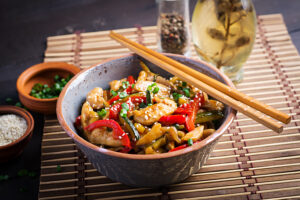
| Hakka Noodles / Fried Rice | Stovetop, wok or pan | Few drops of soy + water | 3–4 min |
| Naan / Roti | Dry pan or damp microwave | Brush of ghee (optional) | 30–60 sec |
| Samosas / Fried Snacks | Air fryer or oven | None | 3–4 min at 180°C |
| Plain Basmati Rice | Microwave, covered | 1–2 tbsp water | 90 sec, medium-high |
When you’re ordering from a trusted indian restaurant brampton families rely on, knowing these techniques means you’re never wasting a single dollar of your meal — or a single spoonful of a great chef’s work.
Ready for Leftovers Worth Reheating?
The best leftover Indian food starts with the best original meal. Whether you’re feeding the family on a weeknight, planning an event, or just craving something real and flavourful, our team at 7 Spice Bistro is ready for you — in Brampton, in Mississauga, and wherever our food truck rolls up near you.
✍️ Written by the 7 Spice Bistro Team — We’re the cooks, hosts, and food lovers behind one of Brampton’s most-loved Indian and Hakka kitchens. We write from our own experience preparing and serving authentic Indian food every day, because we believe that great food deserves to be understood, not just eaten.
Frequently Asked Questions
How many times can you safely reheat Indian food?
You should only reheat Indian food once after it has been cooked and stored. Reheating food multiple times repeatedly pushes it through the bacterial danger zone (4°C–60°C), which increases the risk of harmful bacteria multiplying to unsafe levels. The best practice is to portion your leftovers into individual servings before refrigerating, so you only ever reheat exactly what you plan to eat in that sitting.
What happens if you microwave Indian curry on full power?
Microwaving Indian curry on full power causes the outer edges and surface of the dish to overheat rapidly while the centre remains cold — this uneven heating splits the emulsified fat in the gravy, leaving you with a greasy, separated sauce and overcooked protein pieces. Always use medium power in short 60-second intervals, stirring between each burst, to bring the curry back to temperature evenly and gently.
Why does my leftover curry taste different from when I first ordered it?
Leftover curry tastes different — and often better — because the fat-soluble aromatic compounds in spices like cumin, coriander, and garam masala continue to infuse the sauce and protein overnight in the fridge. If your curry tastes flat or less vibrant after reheating, it’s usually because it was stored improperly (in an open or loose container), reheated too quickly on high heat, or needs a small bloom of fresh spice to revive the top notes of flavour.
Can I freeze leftover Indian food from a restaurant?
Yes, most Indian curries, dals, and gravies freeze extremely well for up to two to three months — in fact, dishes like butter chicken, palak paneer, and lamb rogan josh are among the most freezer-friendly foods in any cuisine. Portion them into individual freezer-safe containers, leaving a small gap at the top for expansion, and label with the date. Rice and bread do not freeze as successfully and are better consumed fresh or within the first couple of days of refrigeration.
Related Articles
- Reading an Indian Menu Without Stress: A Warm Glossary for Brampton Diners
- Masala Tea Culture: Why 7 Spice Bistro's Chai Ritual Matters More Than You Think
- First Time Ordering from an Indian Restaurant? Your Warm Welcome Starts Here
- The Truth About Spice Levels: How to Order Indian Food That's Perfect for Your Family